

THE STRATEGY SIGNAL — READER’S DIGEST Week of March 25–31, 2026
Four writers this week named the same problem from completely different angles. That tends to mean it’s become a pattern.
Nina Koskivaara said it about AI visuals. Category Pirates said it about careers. Neha Kabra said it about organizations. Ilaria Colasanti said it about the work nobody’s been naming. The thread across these three is this: access to the tool is everywhere. The scarcity is direction.
Regarding our authors below… too good looking to be writers in my view. Is this reader’s digest? or Model’s digest?
I seriously can’t tell. Now onto the good stuff.
The camera, not the slot machine
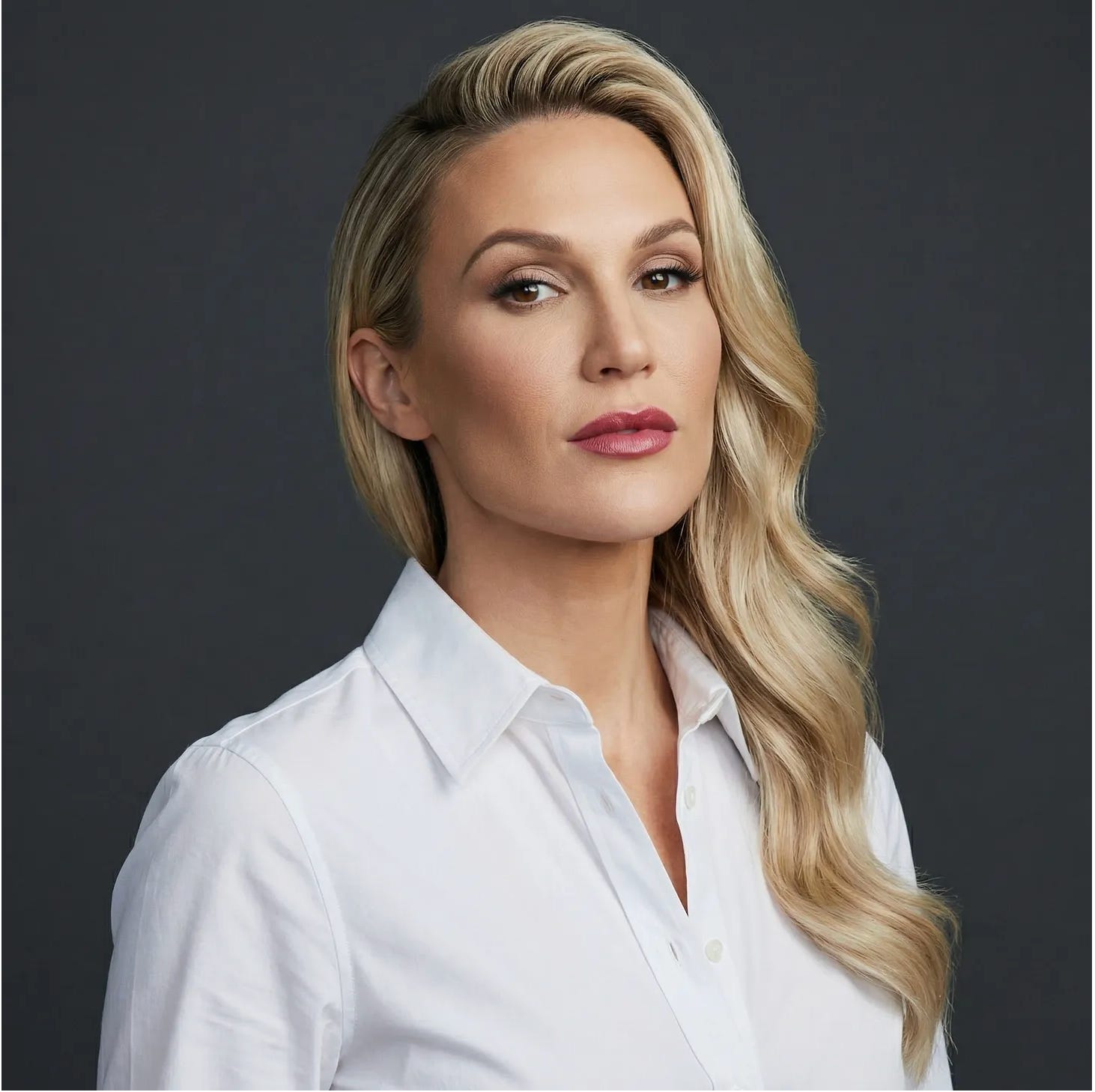
Nina runs Nina Studio AI, one of three newsletters I’m spotlighting in this issue.
Her framework repositions the relationship between creator and tool. Many people treat AI image generation like a slot machine. You type in words, pull the lever, hope for something good. She teaches the camera. You’re the director. The AI is a photographer in your studio. Give it the lighting, the film stock, the mood.
Describe the world your subject exists in.
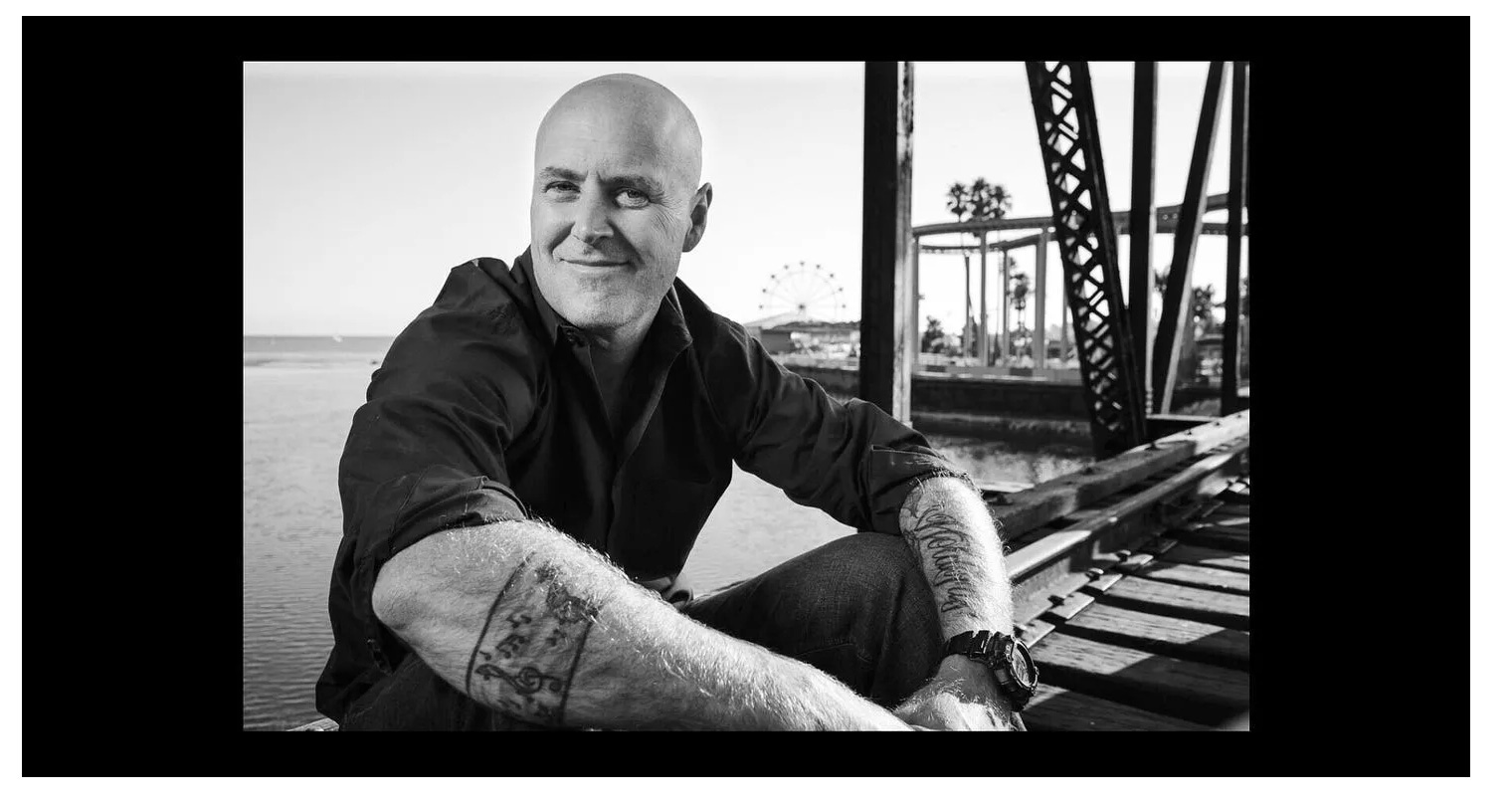
Christopher Lochhead of Category Pirates made the same argument at a San Diego keynote last week.
“If you connect your different to making the biggest possible difference at scale with AI, you will have a different career. If not, you’ll suffer the fate of a knowledge worker.”
His perspective? A five-year-old creates freely and without permission. By fifty-five, most people have been trained to execute. AI made execution the cheapest thing available. Creation is the variable now: an original point of view, a framework that belongs to you.
That’s what the market pays for. Check out their new book Creator Capitalist here.
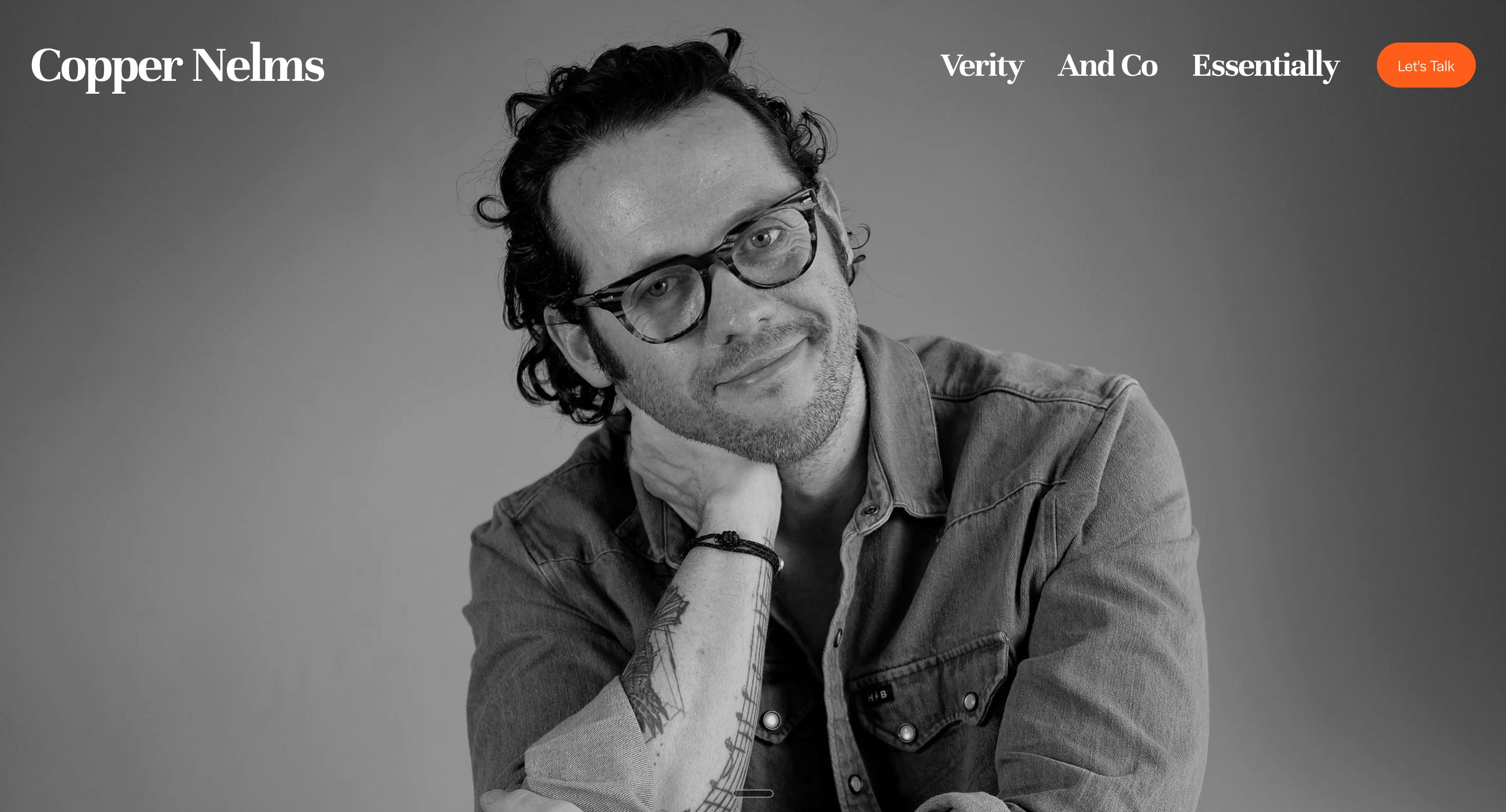
Copper Nelms of Essentially made an adjacent argument from a completely different industry.
He writes for church leaders, but his framework lands in any organization. His term for it? He calls it threshold variables vs. scalable variables. Threshold variables are what get you in the room. For instance, adequate preaching, clean systems, a kids ministry that works. Scalable variables are the fat-tail events you notice and then go all in on. The dangerous middle is where most growth strategy lives: medium-sized bets on things that are already good enough, dressed up as vision. His line is the one I keep coming back to:
“The church growth canon is essentially a collection of lottery winners explaining why they won.”
AI made the threshold cheaper. The variable that scales is still the one nobody can buy.
The scarcest input in any AI setup is the vision behind it.
What breaks at 10am
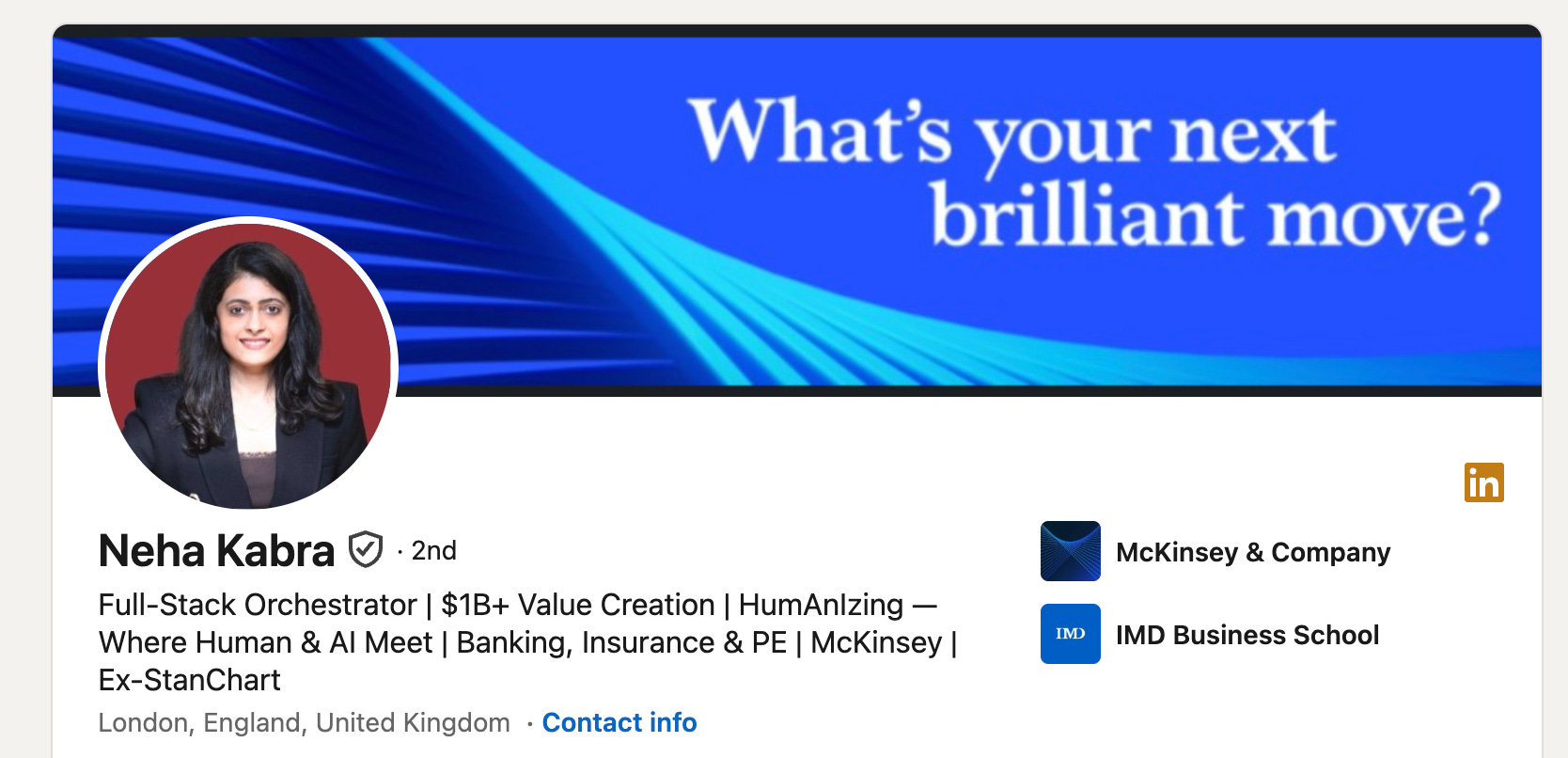
Neha Kabra spent two decades at McKinsey and inside banking.
She published the first piece of a three-part enterprise AI series this week, and her opening observation got us thinking about sociological implications.
At 10pm, AI is private.
At 10am, it’s monitored. Same person, same tool, different social cost. Employees keep using AI at work. They run it where nobody can see. The organization loses visibility into where data is flowing, where quality is degrading, where incidents are accumulating. Neha’s prescription for this?
It’s a one-page permission charter, signed by the CDO, COO, Risk, and HR, written in plain language.
It removes the need for employees to guess what visible AI use will cost them personally.
AI-Ready CMO added the structural version of that story.
China’s Communication University suspended 16 undergraduate creative degree programs (photography, visual design, translation) and merged them into AI-integrated curricula, a Ministry of Education policy. Jilin University cut 19. East China Normal suspended 24. The junior creative pipeline is closing from both ends: frozen on the hiring side, eliminated at the source.
The entry-level creative work AI handles in under a minute is probably still in your job descriptions.
Audra Carpenter of The Intelligence Era put it more precisely this week.
Google’s Gemini 3.1 Flash Live dropped the latency in real-time voice AI to near zero. The awkwardness tax is gone. Her response: “The tech can finally keep up. Are you ready to deploy it?” That’s a direction question dressed up as a tech announcement. Her background is 28 years of operations, NLP, and behavioral science.
Her take on this? The fix to poor AI output is a better sequence. Structured systems create the strategic leverage.
Prompts fill them.
Name the invisible work

Ilaria Colasanti runs Contentish, a newsletter on content marketing. Her February piece put language to something most content teams have never named.
The title: “You were hired for one. You’re doing three.”
Content work has three distinct functions: Strategy (deciding what to make and why), Coordination (managing the who, when, and how), and Execution (actually making the thing). Execution is the one in the job description. Coordination is the one in the calendar. It consumes 40 to 60 percent of most content people’s time, produces no visible artifact, and earns no title or budget.
Her diagnostic strategy is to tag every task for two weeks as strategy, coordination, or execution.
The invisible work becomes undeniable once it has a name.
Build what belongs to you
Wes Pearce was a career coach. Five, six, sometimes seven calls a day, and no real security underneath any of it. He started a Substack with no plan. Fourteen months later: 16,000 subscribers, $100K+ in revenue from simple digital products, a winter working from Puerto Rico.
His framework? two types of people right now. Those whose income depends entirely on one employer’s decision. And those who’ve built something that belongs to them completely regardless.
The second group built it before they needed it.

Myrthe Warmenhoven of The CEO Journal made the same bet from a different angle.
Last year she shut down a successful five-year community business, left Bali after six years, walked away from Instagram and LinkedIn, and went all in on Substack. She quit a business that was working but wrong. Her framework, “The only real stability in life is the one you build within yourself.”
Direction clarity comes first. The asset follows.
Worth Your Attention: Free & Paid
The Direction Method Nina Koskivaara — Free starter guide for building an editorial AI visual identity using directorial techniques. The shift from prompting to directing, in practical steps. Free.
AI Adoption Breaks at 10 a.m. Neha Kabra — Part 1 of a three-part enterprise AI adoption series. Parts 2 and 3 cover the workflow layer and the enterprise spine. Part 2 coming next week. Free.
Free 30 min fit call Ilaria Colasanti / Contentish — The three-function framework for content work: Strategy, Coordination, Execution with a free 30 min consultation here. She designs content marketing systems that make the right audience notice, trust, and choose your brand.
Substack Side-Hustle Sprint Timo Mason and Karen Spinner at Wondering About AI — Includes a 7-step AI-assisted writing workflow worth studying on its own. Free.
Content Hub OS Audra Carpenter — AI-led content system for founders and agencies. One idea in, dozens of assets out. Built around structured workflows and sequenced automation. Paid.
The Shift Myrthe Warmenhoven — Myrthe’s signature program for entrepreneurs operating below their actual capacity. Build the life and business that matches who you actually are. Paid.
Essentially Copper Nelms — Newsletter for church leaders on the real drivers of scalable growth. The threshold vs. scalable variable framework applies well outside ministry. Also building a community and apprenticeship connecting experienced marketers with new ones entering the AI era. Free.
Matt’s Take
The tools are everywhere. Access is cheap.
What differentiates any output is the quality of direction behind it.
Seven writers this week landed on the same gap from completely different industries: AI visual identity, enterprise strategy, content operations, church growth, business operations, entrepreneurship, and marketing.
What scales is the thing that requires a genuine point of view: a named framework, a direction bet you’re willing to go all in on when it fires. That gap is the job now.
What would you build differently this month if you treated your AI setup as a direction problem first?
Matt at The Strategy Signal
Wow, such a cool round up here with some seriously heavy hitters. And a humble thank you for the kind mention in a group of such producers. 🙌
I think you hit a nail. Everyone is going for AI and the direction is not always clear. It makes us sometimes feel behind.