


Intro
I’ve been out for about two weeks. I got slammed with a number of clients, which is a good thing, so Substack kind of fell behind, but we’re back this week talking about Coach.
Coach added 2.4 million new customers in a single quarter.
More than a third were Gen Z. Revenue grew 29% in constant currency, handbag units rose more than 20%, and Tapestry raised its full-year guidance to $7.95 billion on the strength of it.
Those are the hard numbers.
The harder question is why this happened, and what marketers can actually learn from it.
Here’s what I think…Coach won by making the brand more remixable, then letting younger consumers author meaning around it.
That’s the play.
How Coach grew with Gen Z while spending less on ad volume
Michael Kors was running roughly 280 active Meta ads when I checked the Ad Library.
Coach was running about 48.
The brand spending at nearly 6 times the ad volume was Michael Kors, and almost every one of those 280 ads said the same thing…
”Semi-Annual Sale. Extra 40% off. Best prices at the outlet.”
Coach’s 48 ads were doing something else entirely. They handed the microphone to a NASCAR driver, a WNBA rookie, and Charli XCX, then let them speak in the first person.
The brand spending the most was saying the least.
It matters because it points to the larger strategic move. Coach could have bought impressions but instead they were building a system where the audience could see itself inside the brand.
According to Coach’s own marketing VP, the shift was deliberate:
“For Gen Z, we identified a shift toward identity, self-expression, and connection over status and exclusivity.”
Prefer to watch? The full breakdown of Authorship as Aspiration is on YouTube.
Watch the 12-minute breakdown.
What “Authorship as Aspiration” means in marketing

Most luxury marketing tells you who to want to be.
It dictates the ideal from the top down, and you buy the bag to get closer to it.
Coach did the opposite.
It stopped selling a finished identity and started handing Gen Z the pen.
I’m calling this pattern Authorship as Aspiration.
The move is simple to name and hard to copy.
You make yourself useful in the story your audience is already writing about themselves. You become a tool they build identity with, and you let them hold the pen. Prestige stops coming from distance. It starts coming from participation.
“Gen Z wants to participate, comment, co-create, and be part of the story, not just receive messages.” — Marketing analysis cited in Lorphic’s Gen Z brand research
That’s why this worked as more than a fashion campaign. It was participatory brand design, and brands are increasingly treating audiences as collaborators rather than just customers.
Watch how it actually worked.
Inside Coach’s “Explore Your Story” and “&Coach” campaigns

Coach ran this as two linked plays, not one.
“Explore Your Story”: turning a cultural behavior into a $95 product

The first was “Explore Your Story,” the Spring 2026 campaign that launched February 25.
The centerpiece was the Tabby bag and a collection of twelve tiny, fully readable book charms made with Penguin Random House.
Real miniature books you clip to your bag, with legible pages and embossed leather spines
Cute huh?
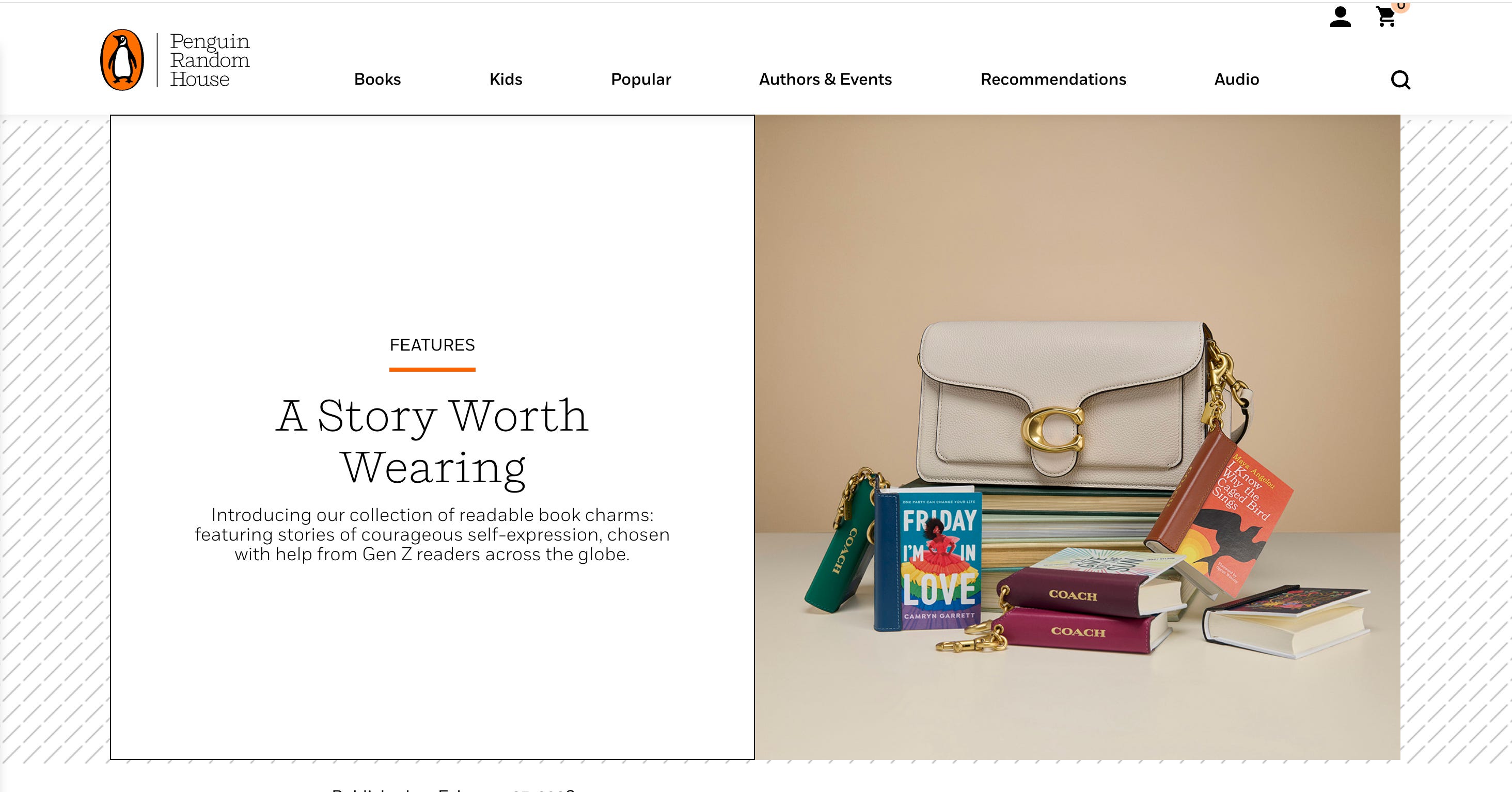
.
The insight underneath was also sharp.
A growing share of Gen Z consumers are pushing back against frictionless digital sameness and finding identity in tangible, culturally legible objects. Coach turned that behavior into a product.
The charms retailed for $95, and the first drops sold out quickly.
“&Coach”: a permanent editorial operation, not a seasonal campaign
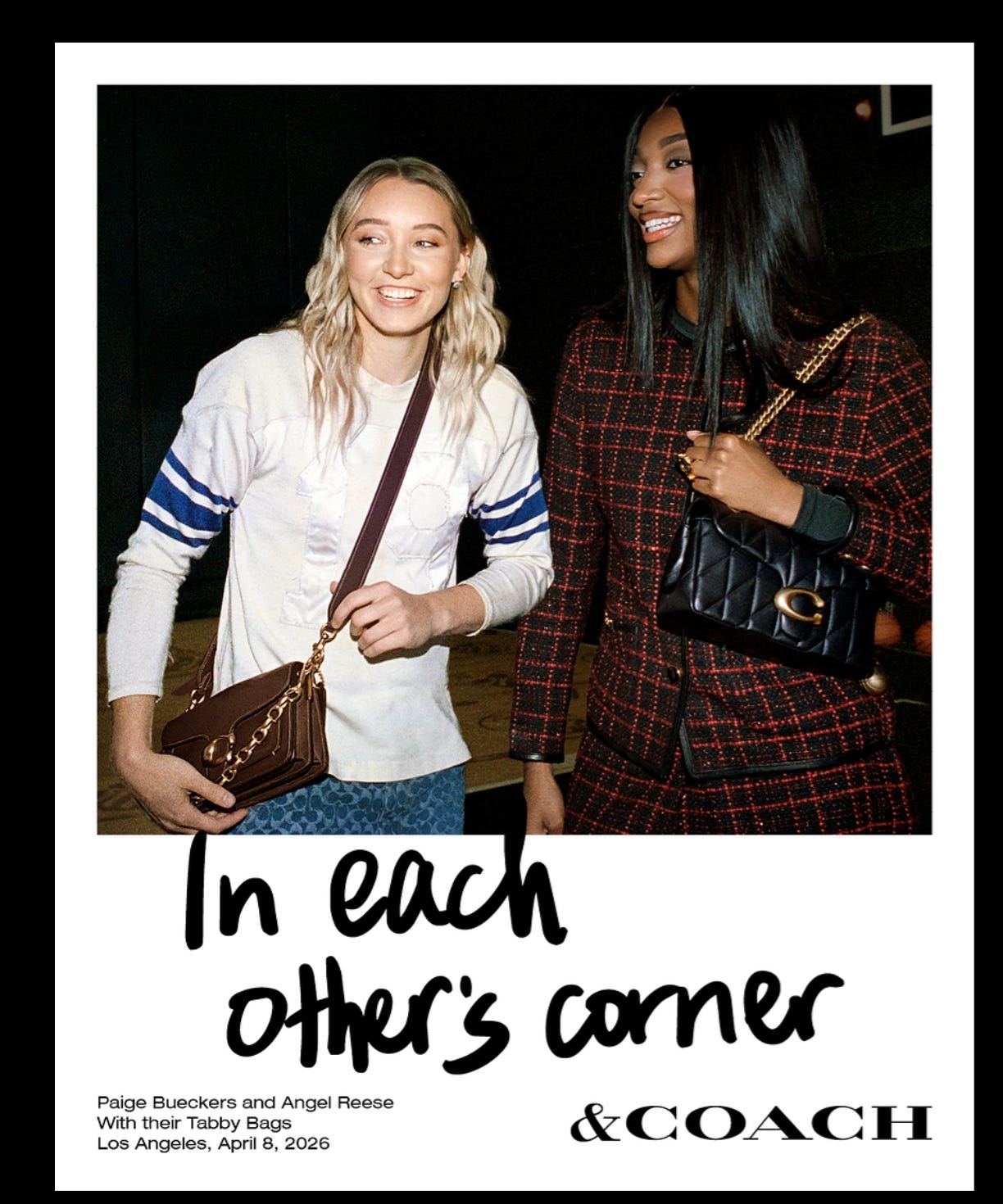
The second play was “&Coach,” launched June 16 as an always-on platform with its own Instagram and TikTok presence.
This is the part that matters most.
Coach could have run a seasonal campaign and go home.
It stood up a permanent editorial operation and staffed it with Gen Z creative directors helping shape the thing from the inside.
As Marketing Dive reported, the brand “deliberately co-creates campaigns with Gen Z communities worldwide.”
The ambassador films are shot in the first person, with captions written as the talent’s own inner monologue.
“On to the next chapter.” “I set the rules.” “In each other’s corner.”
No tagline. The bag is often off to the side. The person is the story.
What the numbers actually show
Here’s the honest part, and precision is the whole job here.
The financial numbers are available, but they are brand-and-quarter level, not campaign-isolated. Coach has not published a clean before-and-after proving “&Coach” caused the revenue.
What we can say with confidence.
Coach grew 29% in constant currency, acquired 2.4 million new customers with more than a third from Gen Z, and Tapestry raised full-year guidance to $7.95 billion. A separate Think with Google case study reported more than 15 million organic engagements, 450,000 pieces of user-generated content, a 60% lift in top-of-mind awareness, and a sixfold jump in consideration. Treat that second set as vendor-reported, because it is.
The growth is undeniable.
Why this Gen Z marketing strategy works in 2026

3 forces are converging to make this pattern hit harder now than it would have five years ago.
Artifical fatigue. AI can now produce infinite polished, top-down brand content for almost nothing. So polish stopped being proof of effort. Messy, verifiable, human participation became the scarce thing, and scarce is what the eye stops on.
A generational shift in what aspiration means. A lot of Gen Z consumers do not want inherited, prescribed versions of status. They want to shape identity, not receive it. A brand that hands them the pen is speaking their language. A brand that dictates the ideal sounds like their parents. NielsenIQ research consistently points to Gen Z’s preference for participation over passive consumption as a defining behavioral trait.
Better economics than they look. When the audience and the creators do part of the distribution through their own content and conversation, the marketing dollar stretches further. Coach’s community reportedly generated 450,000 pieces of content around the campaign ecosystem. UGC is increasingly a core brand asset, not a nice-to-have. You cannot buy that outcome directly. You can only earn it by giving people something worth authoring with.
The pattern repeats: LEGO, Lay’s, and Starbucks
This is where it gets useful, because Authorship as Aspiration is not a luxury-only trick.
It shows up anywhere a brand hands real authorship to its audience.
LEGO Ideas.
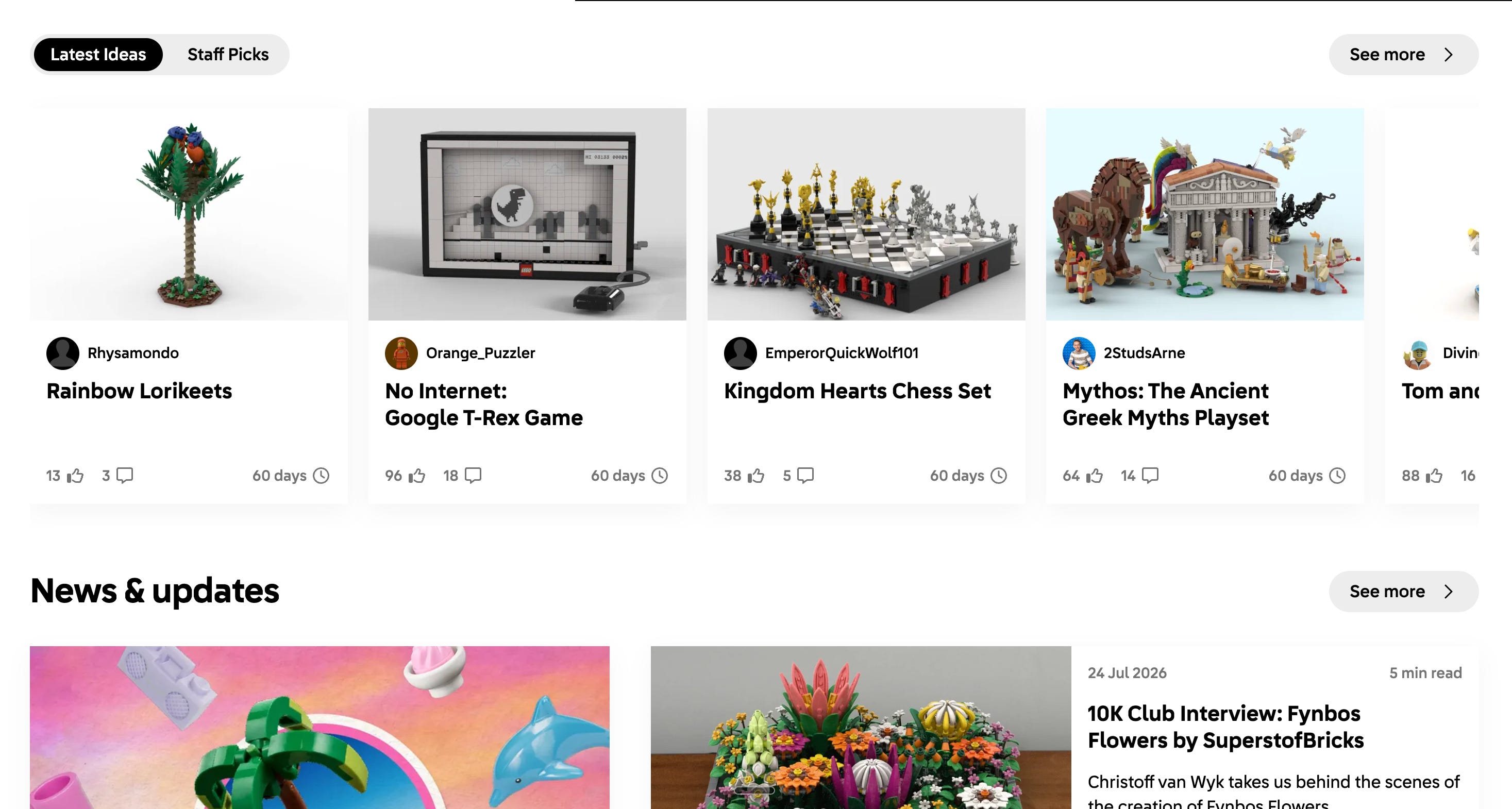
Fans design sets, the community votes, and winning designs go into production with a royalty to the creator. LEGO turned its fan base into part of its product pipeline. As of 2026, LEGO Ideas has produced dozens of official sets from fan submissions.
Lay’s “Do Us A Flavor.”
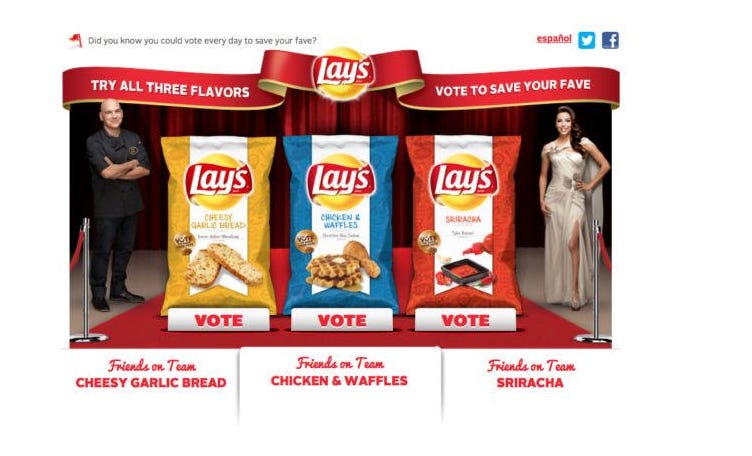
Consumers submitted and voted on new chip flavors.
The 2014 run pulled over 14 million submissions and produced real products people helped invent. PepsiCo ran it multiple times because it worked multiple times.
Starbucks “My Starbucks Idea.”
Launched in 2008 as a suggestion platform, it collected more than 150,000 ideas and shipped hundreds of them over its first five years. Cake pops, mobile pay, free Wi-Fi. Customers built the roadmap.
Toys, snacks, coffee, handbags. Same strategy playbook.
Give the community structural authorship, then commercialize the meaning it creates.
One marketing pattern per week. Each issue breaks down what worked, why it spread, and what it means for the next 12 months. Free.
Subscribe to The Strategy Signal →
Where co-creation marketing breaks down
Now the part most breakdowns skip.
This pattern fails when a brand fakes the handoff. Three cases make the failure mode precise.
Mountain Dew “Dub the Dew” (2012).
They asked the internet to name a new green-apple flavor and set no guardrails. Trolls flooded the vote, the top entries were unusable, and the site got suspended. They handed over the pen without handing over any structure.
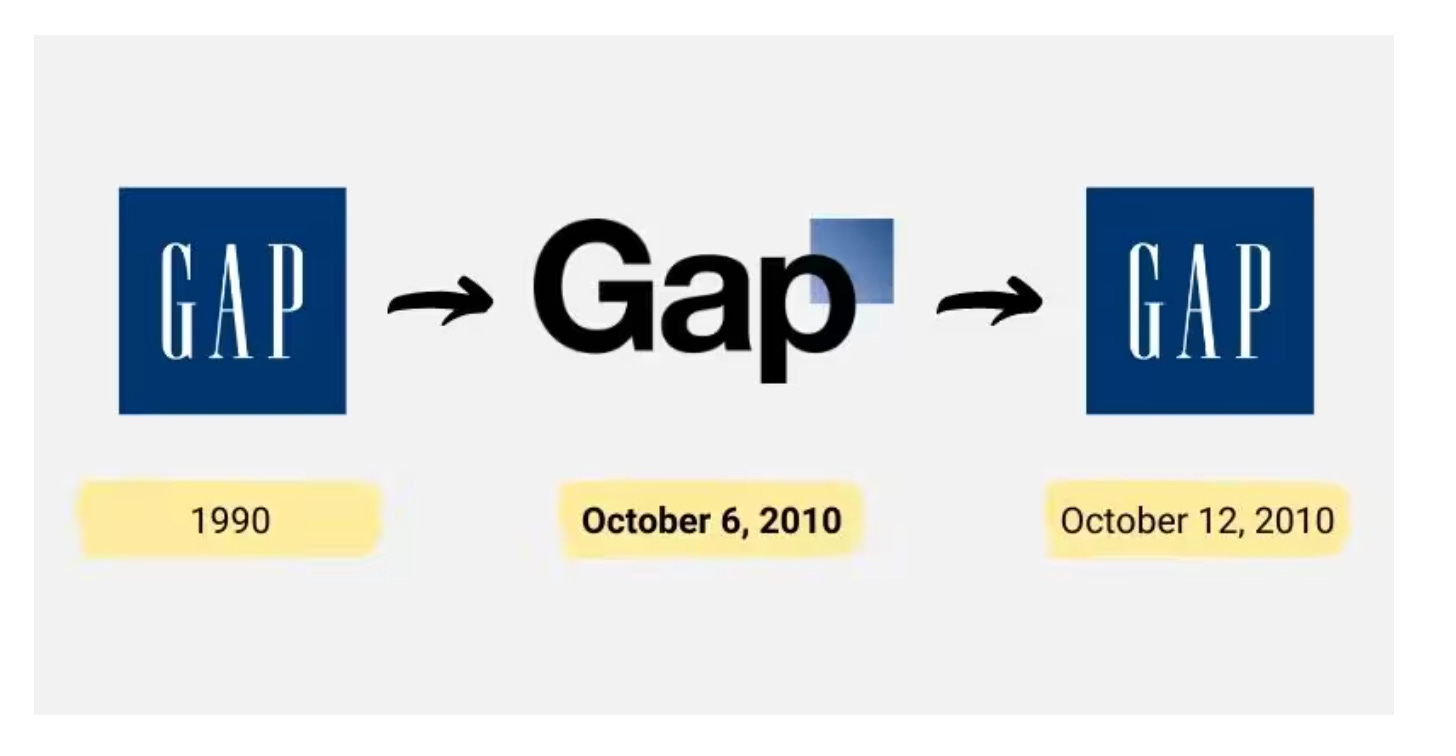
They swapped their iconic logo, got roasted, then scrambled to “crowdsource” a new one as damage control. Everyone could smell the reactivity. They reverted within days.
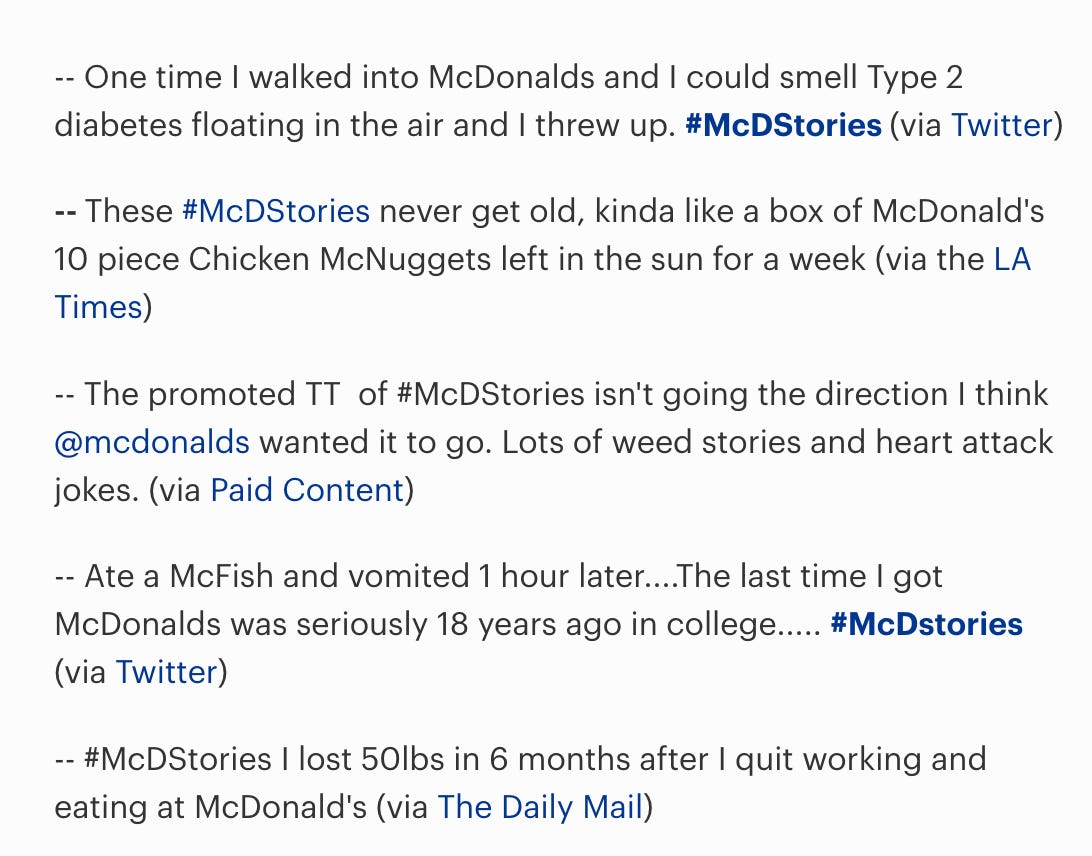
They invited people to share warm memories on Twitter and got a firehose of complaints instead. It was an open mic in a room that already had grievances. Pulled in about two hours.
Here’s the through-line. Coach practiced curated co-authorship: named collaborators, real products, actual feedback loops. The failures practiced unstructured crowdsourcing and called it participation.
The difference between the two is the difference between a moat and a liability.
How to tell if your brand can use this play
Run these four questions before you pitch Authorship as Aspiration to a client.
Does the product plausibly carry identity? A handbag already signals who you are. A commodity usually does not. If the product cannot hold meaning, the pattern has nothing to attach to.
Has the brand earned enough trust to be invited into identity? Coach spent multiple quarters rebuilding relevance with younger consumers before “&Coach.” That step is not optional.
Is the participation curated or open chaos? Named collaborators and defined products, or a public prompt and a prayer? One builds equity. One builds a cautionary tale.
Can the client measure beyond last click? This pattern pays out in awareness, consideration, and future demand before it pays out in immediate conversion. If the client only counts clicks, they will kill it before it works.
You have clients in half a dozen different industries. Every one of them is waiting on you to tell them where their market is heading, and which move to make before their competitors do.
That’s the job. Read the signal, name the pattern, hand them the play. Running that research by hand for every client and every trend is the slow part.
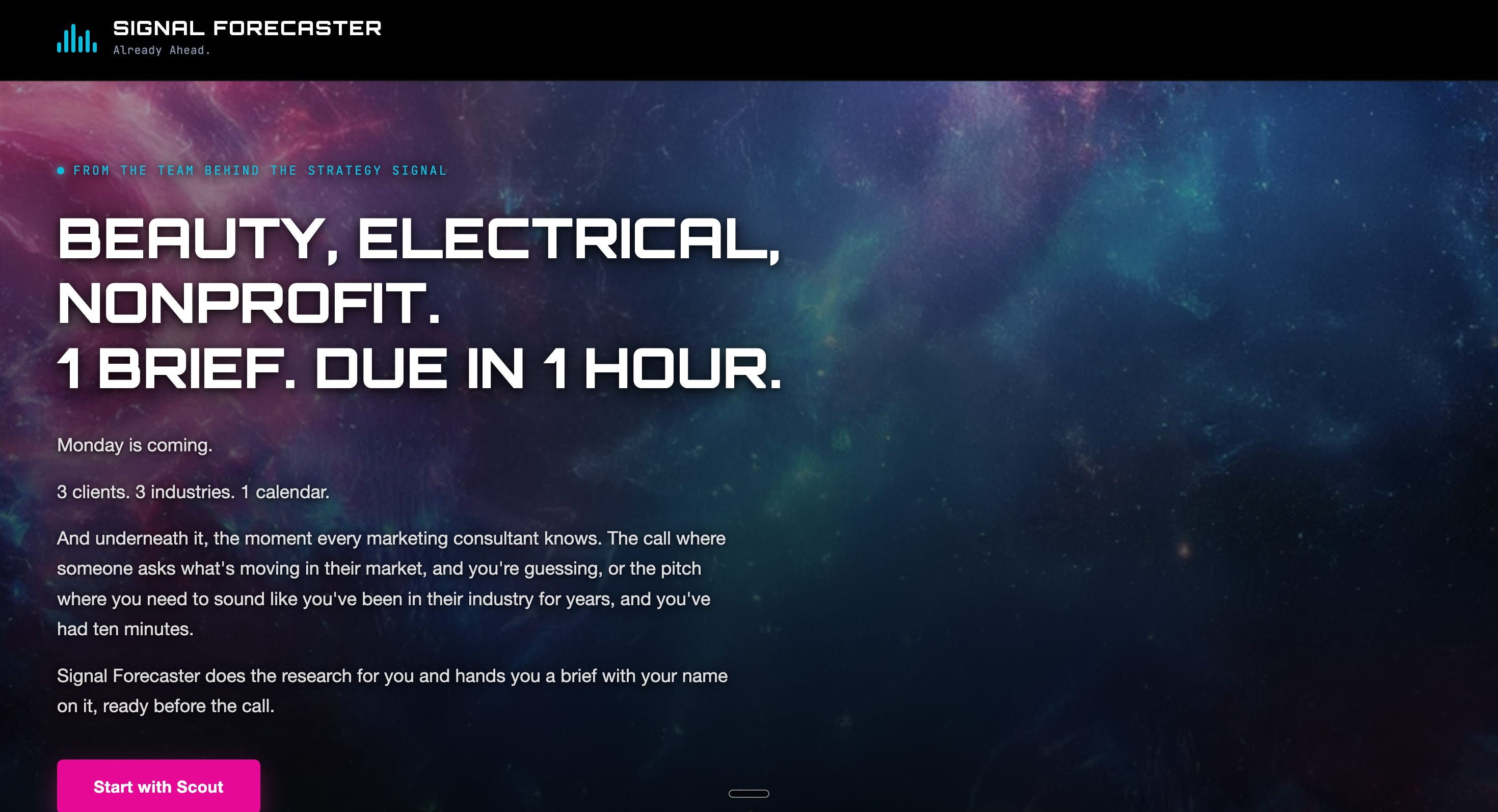
The Signal Forecaster does that research for you. Type any campaign or trend, and it searches the live web and returns a Signal Brief in about 30 seconds: the pattern name, a three-scenario Forward Hypothesis, and the recommended move. The same structure you just read, for any topic a client throws at you. You walk into the meeting already holding the answer.
I’m opening 5 pilot spots to marketing consultants at no cost, in exchange for a 20-minute feedback call.
Matt’s take
The Rational Narrative: the lane nobody is racing Coach for yet
This pattern is growing.
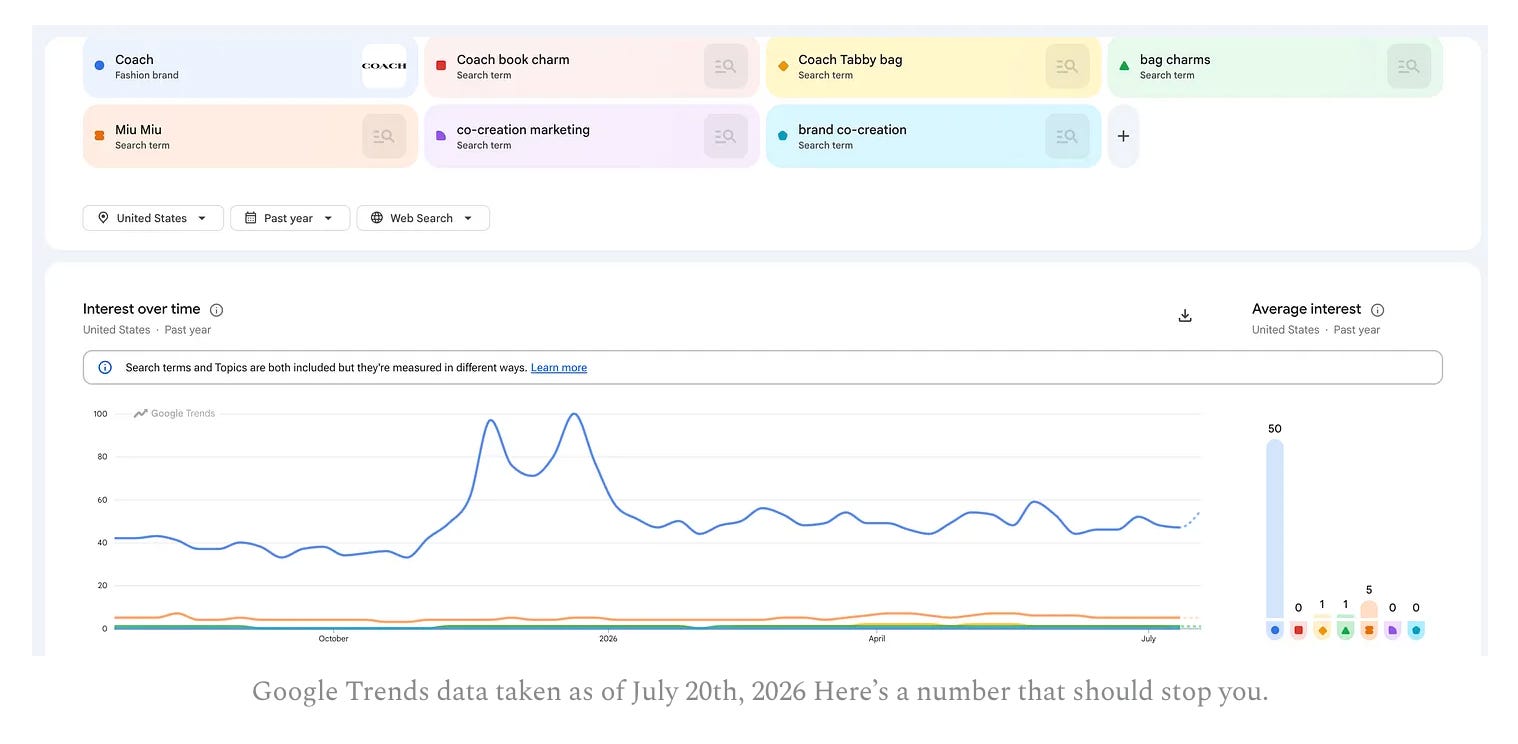
The campaign moment likely peaked back in February. The brand-level behavior is still climbing, and it has real runway before it becomes table stakes.
Start with the high-confidence read.
3 signals point the same way. Search behavior around ambassador names appears to convert into product curiosity. Meta shows Coach still putting paid weight behind the authorship story into mid-July. The earnings confirm demand is landing. So the most likely call over the next 6 to 12 months is simple: Coach keeps turning attention into product demand, and it owns this lane alone.
I’d put that around 65%.
There is a second direction worth watching, and it is not confirmed yet. The real engine may be the archive, not the platform. If that is true, the move travels to any heritage brand with a deep catalog.
What would confirm it inside 90 days: a Gap or a Ralph Lauren spike driven by its own archive, without any co-creation platform attached.
Then there is one signal that could change everything, and I am not calling it yet.
Coach built a machine that pumps culturally legible product into social every week. That same machine gives resellers and counterfeiters a repeatable way to strip-mine the brand.
And Gen Z turns on staged authenticity fast.
What would elevate that risk: clustered oversaturation, quality complaints in Coach fan communities, or elevated search interest falling back toward its old baseline.
Here is what surprised me most.
I expected competitors to be copying already.
They’re not.
Michael Kors is still running top-down studio shoots. Marc Jacobs went the opposite direction entirely, into scripted entertainment with a Rachel Sennott micro-drama called “The Scene.”
Two big names, two bets, and neither one is handing over the pen. So Coach may own the lane longer than the “everyone copies this by 2027” story assumes.
One source-discipline note, because it changes how you sell this.
Search behavior shows demand, not proof. Meta creative counts show activity, not performance.
And the strongest revenue numbers are brand-level, not campaign-isolated.
The Signal: Coach handed Gen Z a canon, not just a Pen.
Here’s what I did not expect to find.
I went looking for co-creation and found very little evidence that co-creation itself is what people are searching for. Meanwhile, interest around Coach’s archive appears to be climbing: the Rogue bag, the Chelsea, the Ergo, even specific ambassador-driven spikes around individual products. People are not searching to co-author with Coach. They are hunting Coach’s parts to author with on their own.
That reframes the whole thing.
Coach handed them a canon, maybe even a library. A deep, culturally legible archive of characters and objects that the audience remixes into its own story, mostly without the brand in the room.
We have seen this signal before in another category. Nike and Air Jordan did not really “co-create” with sneakerheads in the formal sense. Instead, they released a deep retro archive and let culture author its own meaning through resale, styling, collection, and custom interpretation.
The signal many people misread at the time: the resale and gray market were not cannibalizing the brand.
They were proof the brand had become a canon. That same signal may be flashing at Coach right now.
The Keystone: Build a canon, not a plateform
Put the 3 pieces together and the real lesson flips.
Every competitor is about to hear “co-creation platform” and try to build the platform. That’s the wrong noun. The platform is not what worked. The remixable canon underneath it is what worked. Coach spent years rebuilding a deep, legible archive of bags with names and histories, and Gen Z pulled that canon forward and made it theirs.
So the play to bring your clients is not “let’s launch a co-creation microsite.”
It’s….what in your brand is deep enough, specific enough, and legible enough to be worth remixing?
If the answer is nothing, the platform will not save you. If the answer is something, you might not even need the platform. You need to stop guarding the canon and start feeding it.
That is the move a pattern-connector sees that a dashboard misses. The data says co-creation. The behavior says canon. Build for the behavior.
FAQ: Some Direct Answers and Summary on this campaign strategy.
How did Coach attract Gen Z customers?
Coach attracted Gen Z by shifting away from top-down luxury messaging toward participatory branding. Instead of presenting a finished identity, it made the brand more remixable through creator-led storytelling, culturally legible products like the Tabby book charms, and an always-on Gen Z platform called “&Coach.”
What is Coach’s Gen Z marketing strategy?
Coach’s Gen Z strategy combines creator-led first-person storytelling, identity-driven product design, and curated audience participation. The pattern described in this piece is called Authorship as Aspiration: making the brand useful inside the story Gen Z is already writing about itself.
What is Authorship as Aspiration?
Authorship as Aspiration is a marketing pattern where a brand stops dictating identity from above and instead becomes a tool its audience uses to build meaning. The brand earns prestige through participation, not distance.
Why does co-creation marketing fail?
Co-creation fails when brands hand over the pen without handing over any structure. The “Dub the Dew,” Gap logo, and #McDStories cases all failed because they invited open participation without curation, guardrails, or genuine feedback loops.
Can legacy brands win with Gen Z?
Yes, but not by trying to sound younger. Legacy brands tend to win when they make their history, products, and symbols legible enough for younger consumers to remix into their own identity. Coach’s archive is the mechanism, not the platform.
Close
That’s the read this week.
Coach handed Gen Z a canon and got out of the way, and the market is still trying to name what it saw.
If this one landed, hit reply and tell me the one brand you think has a canon deep enough to run this. I read every response.
Thank you. Have a great week. We’ll see you on the flip side.
Matt
P.S. The Signal Forecaster turns any campaign or trend into a full Signal Brief in about 30 seconds, so you can run this play for any client, on demand. I have 5 free pilot spots open for fractional CMOs, in exchange for a 20-minute feedback call. Request a pilot spot →
The archive point is what stayed with me.
A lot of brands will probably copy the visible part — creator-led content, community campaigns, co-creation platforms.
But the platform only works because Coach already had something rich enough to remix.
The names, old bags, symbols, histories, and cultural associations gave people material to build with.
You can copy participation tactics quickly.
You cannot manufacture a canon overnight.