

substack gif here
On July 17, the CDC named shredded iceberg lettuce served at Taco Bell as the source of a multistate Cyclospora outbreak.
At that point 1,644 people who reported eating there had gotten sick. 94 went to the hospital.
Placer.ai measured Taco Bell foot traffic down 18.1% on July 15 and nearly 31% on July 17.
11 days later, Taco Bell had the highest-performing promotional day in the history of its loyalty program.
The coverage called it a comeback.
Then I went looking at what Taco Bell’s own customers were saying, and they barely discussed the outbreak at all.
They spent that month arguing about menu prices.
That insight is the whole issue.
Prefer to watch? The full breakdown of The Uncapped Drop is on YouTube.
The pattern: The Uncapped Drop
Here’s the play in one sentence.
Under acute pressure, a brand strips every limiter off a promotional channel its audience already checks, and delivers at scale the thing that audience has been asking for anyway.
The recovery reads like crisis response.
Underneath, the brand is paying down a debt it was already carrying.
That distinction decides whether this transfers to your clients.
So let’s look at what Taco Bell actually did.
What they removed
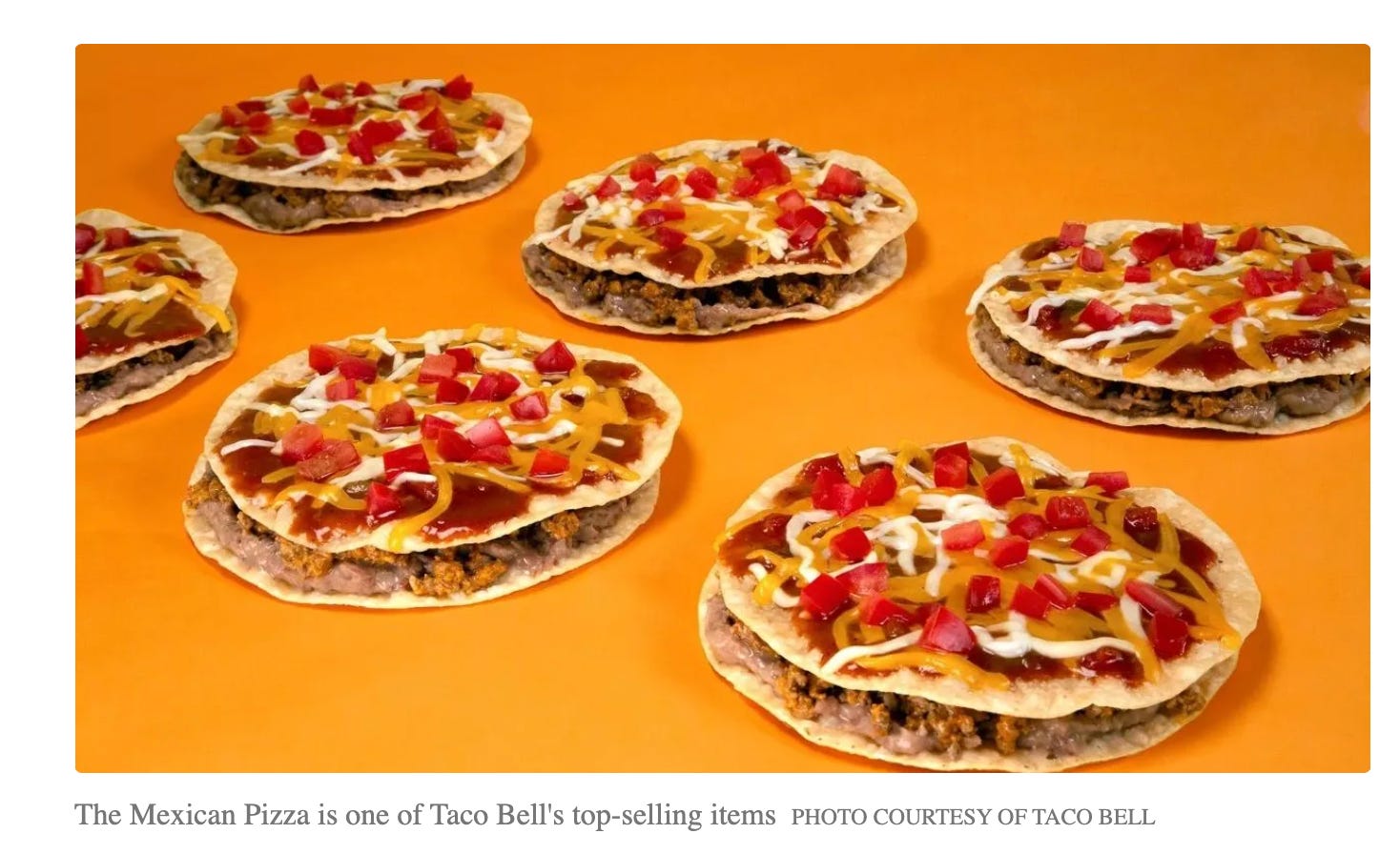
Taco Bell runs a weekly promotion called Tuesday Drops.
A new app deal every Tuesday, crisis or no crisis.
The format is normally tight. Two o’clock Pacific. One hour. App only. Capped at a specific number of redemptions. A customer post from this month describes a recent drop this way: “Only 400 people get this Tuesday drop and its all going to be bots.”
400 people.
Taco Bell published its June calendar on June 22, weeks before any of this was public. That calendar scheduled a $1 Enchirito for July 21, listed as “for the first 20,000 Rewards Members from 2PM to 3PM PT.”
Standard terms.
Already on the books.
What ran that day carried different terms.
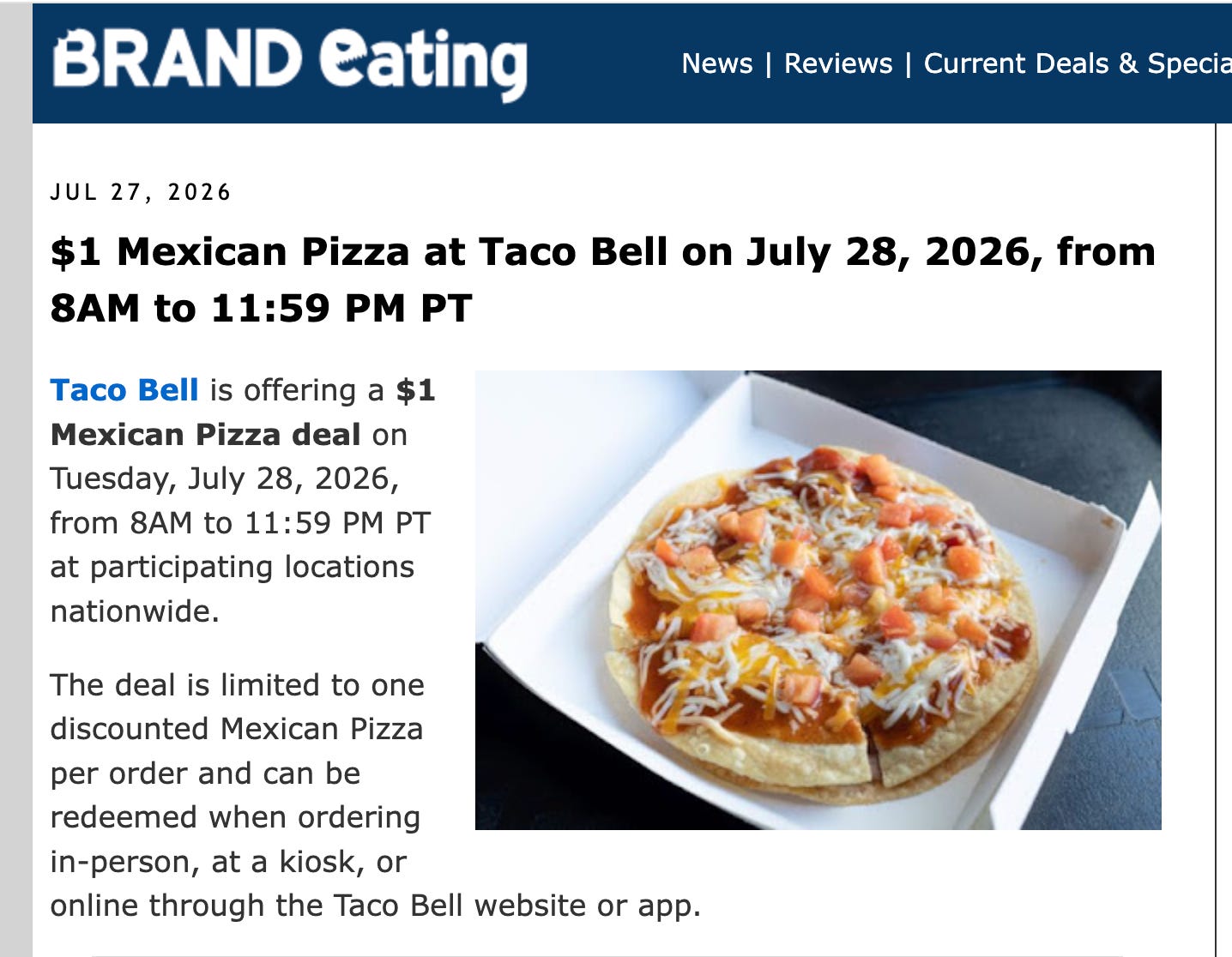
Two independent deals outlets covered it with the same headline phrasing: available all day, for all members. The following Tuesday, the $1 Mexican Pizza ran from 8AM to 11:59PM Pacific, one per transaction, in restaurants, at kiosks, on the website, and in the app. A third offer, $1 Nacho Fries, ran in the same window.
Fox Video on the "Lettuce Paracite!"
So four limiters came off.
The redemption cap.
The one-hour window. The membership gate. The app-only restriction.
Every piece of this already existed. The slot was scheduled, staffed, and sitting inside the audience’s habit.
Under pressure, the company opened the valve.
What it produced
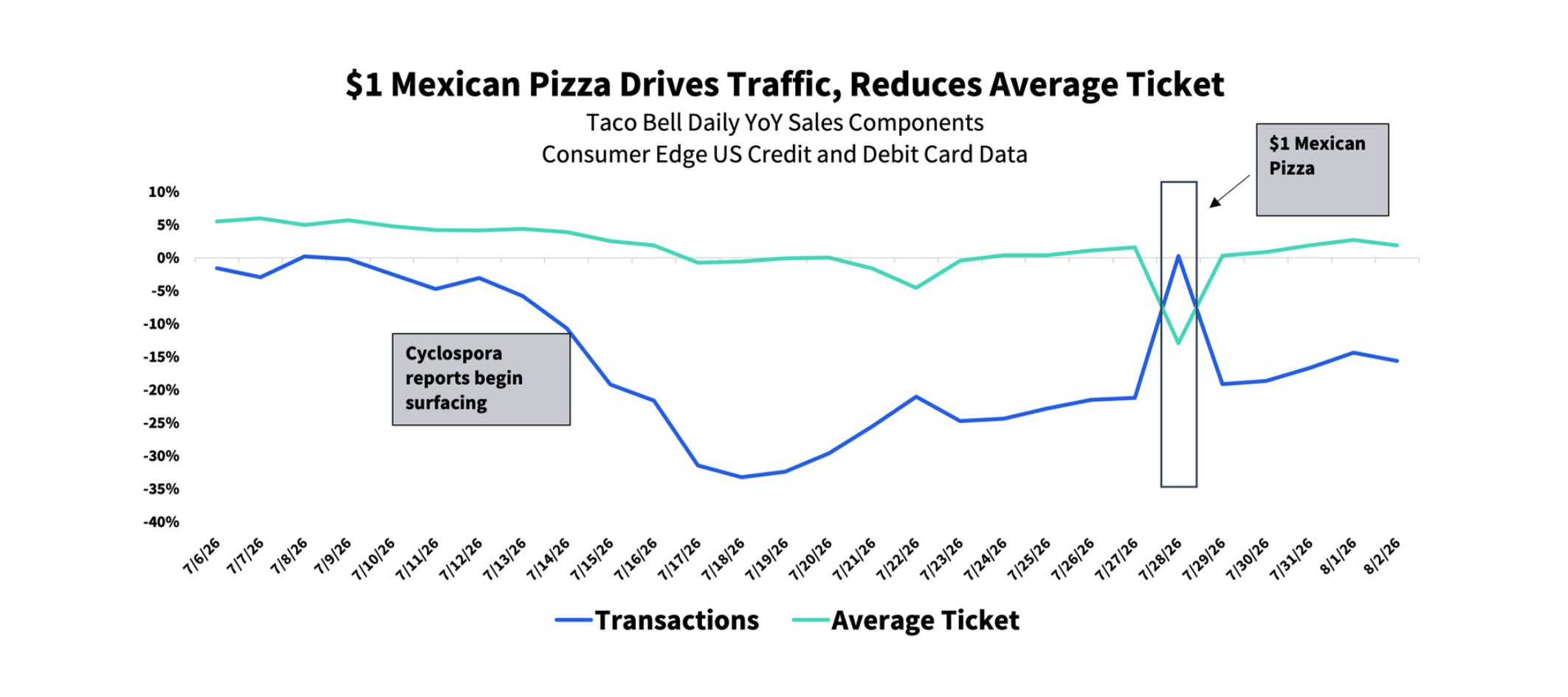
Two independent measurement firms caught the same day from different angles.
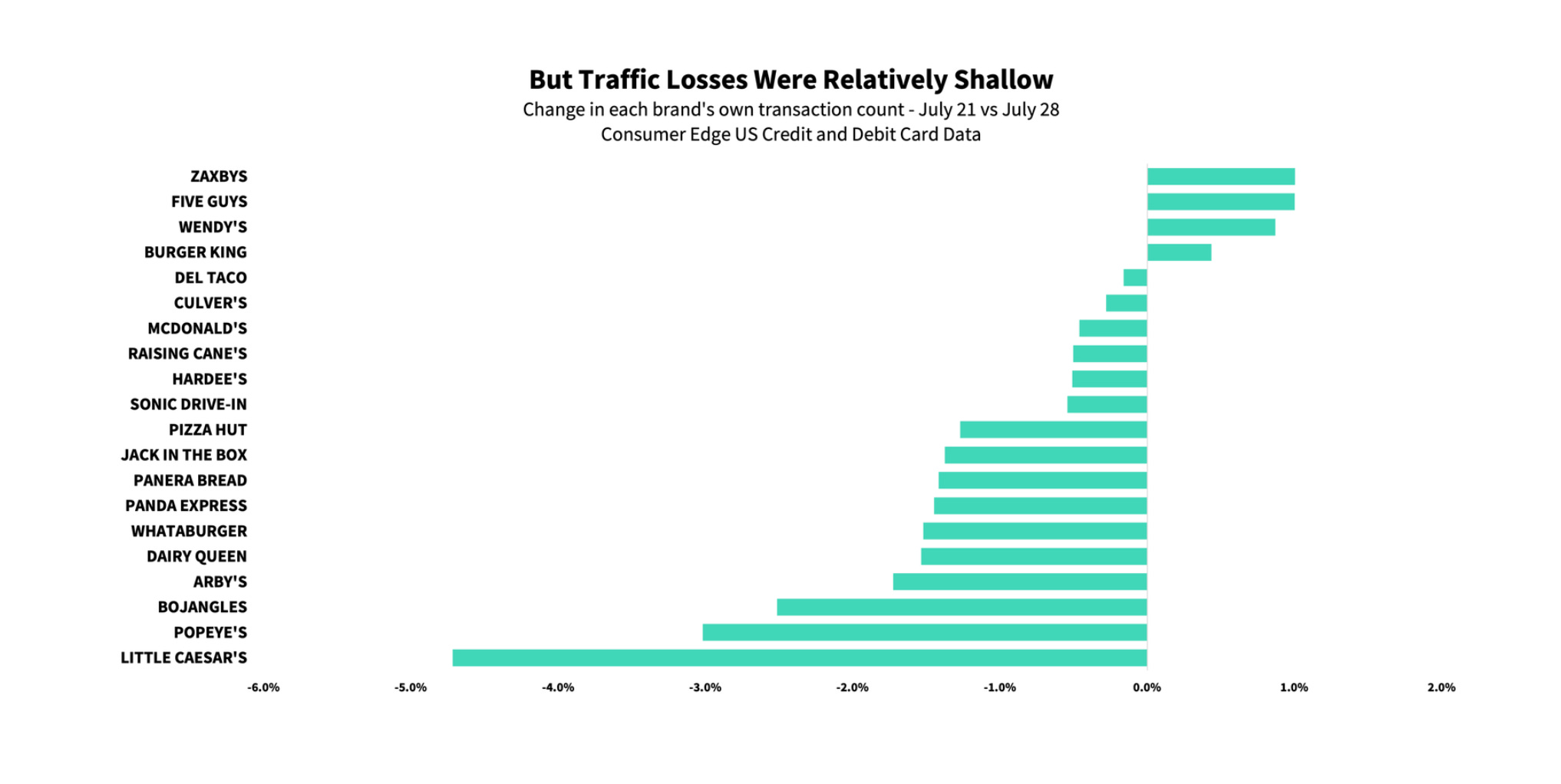
Consumer Edge, working from a card transaction panel, found year-over-year transaction growth accelerated more than 20 percentage points from July 27 to July 28, turning positive for the first time since the outbreak broke.
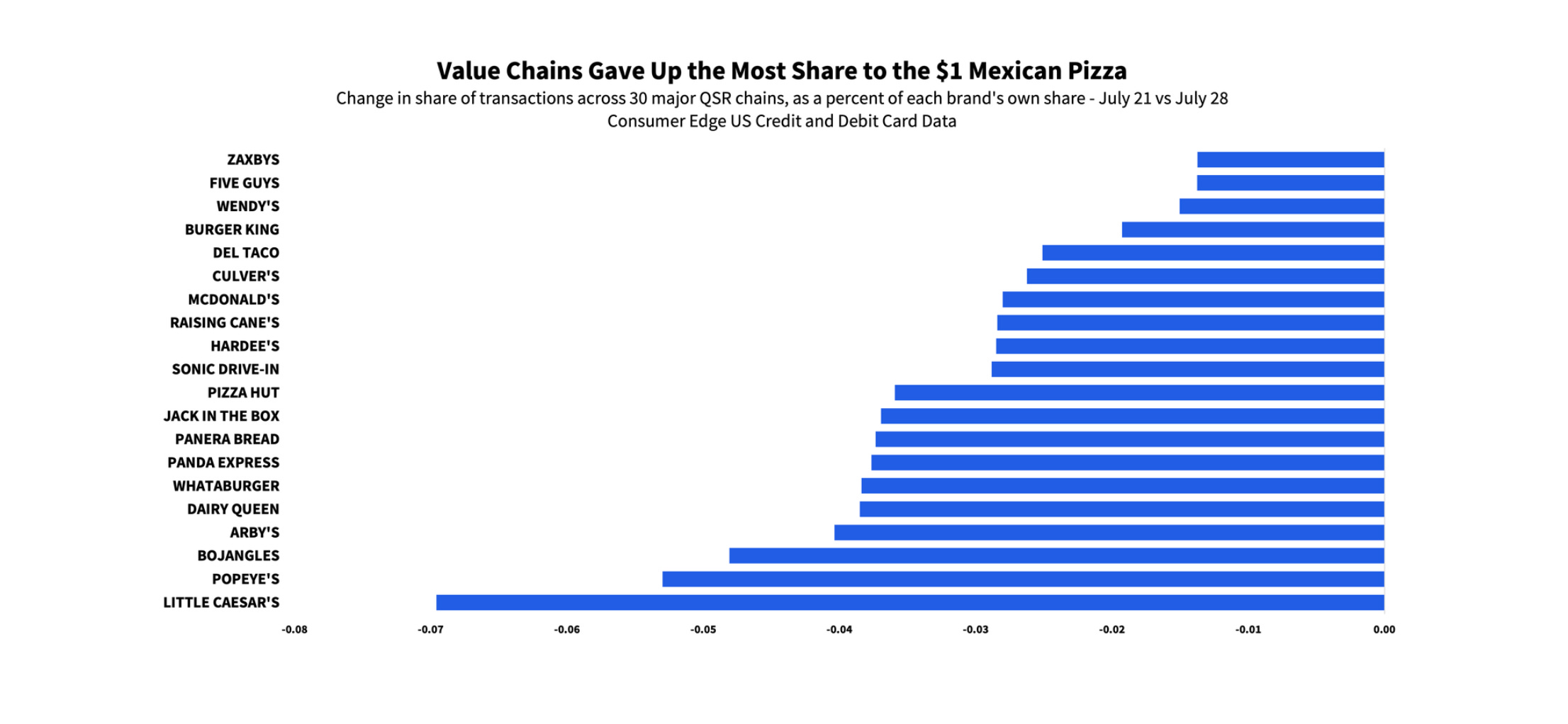
Placer.ai, modeling physical visits, measured traffic up 4.2%. Average ticket fell double digits to its lowest point of the summer.
On the earnings call, Yum CEO Chris Turner put it this way.
The Enchirito and the Mexican Pizza “became our two highest performing Tuesday drop promotions in brand history.”
He added that the Mexican Pizza drop “generated the most app traffic, the most app transactions, and the most loyalty acquisitions of any Tuesday drop ever.”
Now the harder read.
Traffic was already recovering before July 28.
Placer.ai had Taco Bell at 20.8% down by July 23, improving from that 31% trough. Draw the line forward and you land somewhere between 12% and 20% down on July 28 with no promotion at all.
And the week after the record, visits sat 8% below baseline. The week after that, 4.5% below.
July 28 sits above the recovery curve as a spike. The curve continues at roughly the same slope on the other side of it.
So the promotion accelerated something already in motion. It moved a specific group of people on a date the brand chose. Consumer Edge split the buyers three ways: 51% had been buying through the outbreak anyway, 28% had paused and came back that day, and 21% were already long gone.
That 28% is the only number in this case that matters, and nobody has published whether they stayed.
Where else this shows up
The cleanest version of this pattern ran seventeen years ago, in the same category.
Domino’s, 2009.
In April, an employee prank video shot in a Domino’s kitchen went viral and became a national story.
In December, eight months later, Domino’s launched the Pizza Turnaround.
The two events were separate, and that’s the point.
The Turnaround went after the recipe. The ads aired real customers calling the pizza “totally void of flavor” and “even worse than microwave pizza,” and then Domino’s reformulated it.
Same-store sales grew 14.3% in the first quarter after launch, a company record.
The crisis was the loud problem. The recipe was the old one. Domino’s fixed the old one.
Tylenol, 1982.
Johnson & Johnson redesigned the packaging first, communicated the fix second, and distributed $2.50 coupons third.
An Information Resources four-city panel tracked share falling below 7%, climbing to 21.3% by mid-November, then reaching about 30% after the mass coupon program.
Samsung, 2016.
After the Note7 recall, Samsung offered a $100 bill credit to owners who exchanged for another Samsung phone and $25 to anyone taking a refund or a competitor’s device.
The money priced the direction of the next decision.
3 brands, 3 industries, 1 shape. Fix the thing, make the fix visible, then lower the cost of the next transaction enough that people test it themselves.
One marketing pattern per week. Each issue breaks down what worked, why it spread, and what it means for the next 12 months. Free.

Why this works right now
3 forces converged to make July 28 possible.
Owned channels finally have real scale.
Taco Bell’s digital mix runs near half of sales, and McDonald’s counts its active loyalty base in the hundreds of millions.
For the first time, a brand can reach its committed audience the same day, at no media cost, with no agency in the loop.
The value wars exhausted the generic version.
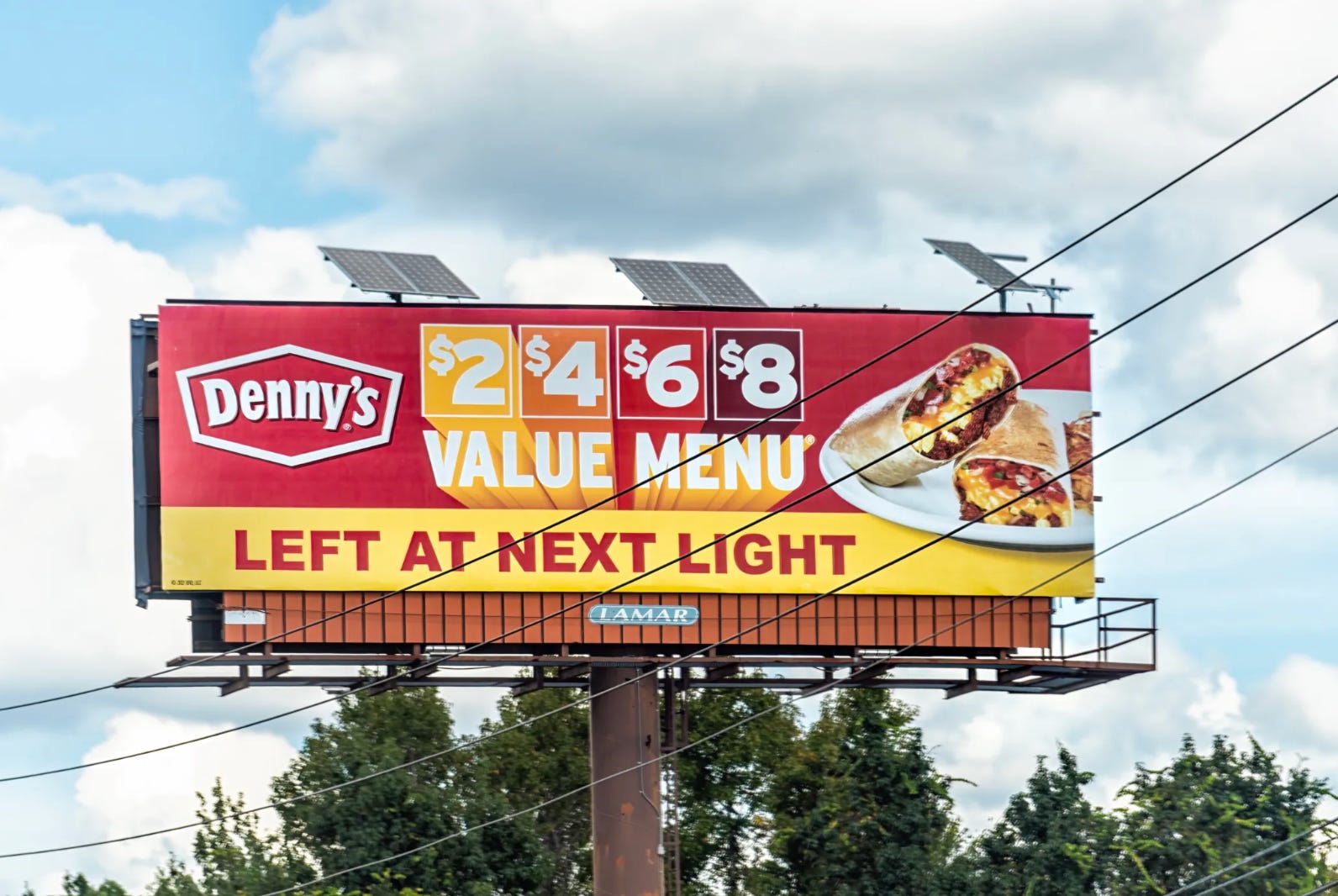
Facteus tracked 18 major QSR brands and found 15 of them with lower customer retention than two years earlier, down 1.69 percentage points on average.
Wendy’s fell from 41.3% to 38.2%, the biggest drop in the set. Two years of aggressive discounting bought traffic and lost loyalty.
So a discount that works now has to do something a normal discount stopped doing.
External blame stopped sticking.
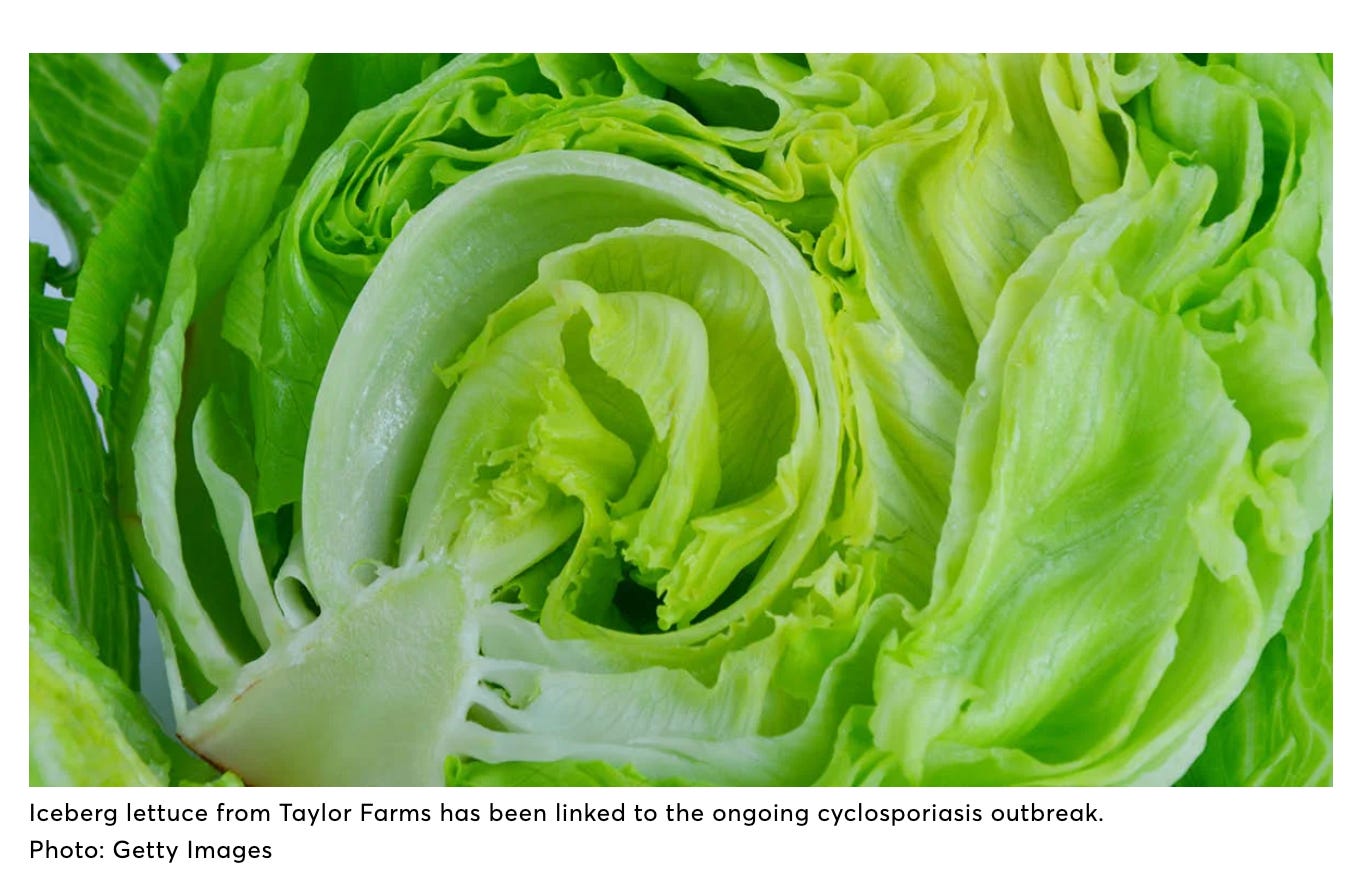
The same recalled lettuce went to Walmart stores, Jack in the Box restaurants, and Sysco across 28 states.
Google Trends shows searches for “Taylor Farms” spiking on the recall day and collapsing within three days, while searches for “cyclospora” stayed elevated for weeks.
The public learned the supplier’s name, filed it, and moved on. The fear had a long tail. The culprit had none.
Where this same move fails
Three brands ran a version of this and got punished for it. Each one broke the same rule.
Equifax, 2017.
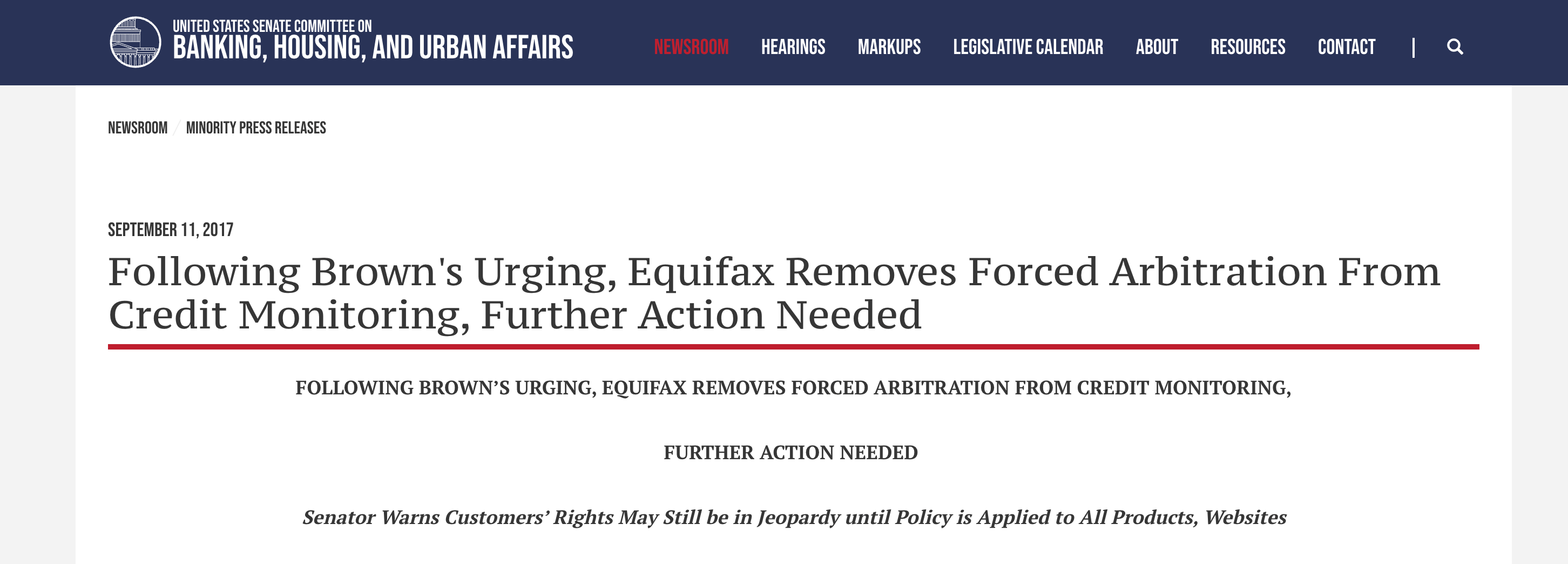
After a breach exposing 143 million Americans, Equifax offered free credit monitoring.
The product was its own paid service, sold by the company that lost the data, and the original terms carried a forced arbitration clause that came out only after Senate pressure.
YouGov’s Buzz score for the brand fell from 0 to negative 33 in ten days, steeper than comparable breaches.
Target, 2013.
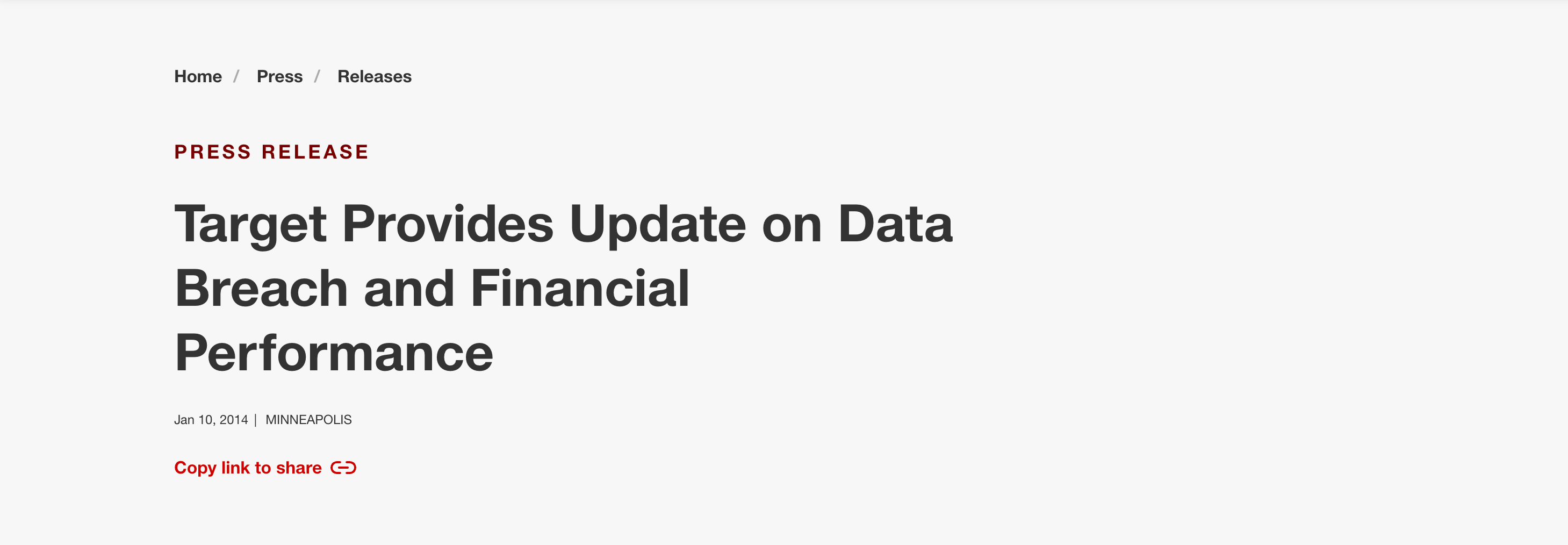
The day after announcing its payment card breach, Target offered 10% off storewide for a weekend. Three weeks later the company disclosed the breach reached up to 70 million people and cut quarterly comparable sales guidance from roughly flat to negative 2.5%. The offer arrived while the scope was still growing.
Southwest, 2022.
After the holiday operational collapse, Southwest sent affected travelers 25,000 Rapid Rewards points.
Bookings kept decelerating. In January the company estimated a negative revenue impact of $300 to $350 million for the first quarter, concentrated in January and February.
Demand returned in March, when the operational action plan did.
Here is the shared condition.
In all three cases the company asked the subsidy to do the proving. Equifax sold the remedy for a problem Equifax caused.
Target’s breach was still growing. Southwest’s operation was still broken.
Taco Bell removed the lettuce on July 17 and ran the offer on July 28. Containment came first.
The offer only had to lower the cost of trying again.
The questions to bring to your next client meeting
This is the part that transfers.
What has your client’s audience been asking for that the company keeps withholding? Go read their community. Their reviews, their subreddit, their comment sections, their support tickets. Find the complaint that repeats.
Do you have a channel they check without being told? A list, an app, a slot, a standing habit. If reaching them requires buying media, you are renting that audience by the impression.
Can you name the standing debt in one sentence? If the answer takes a paragraph, you have a hypothesis. If it takes six words, you have a play.
And what have you already scheduled that could carry it? The fastest instrument in a crisis is one that already exists.
The second question on that list is the one most people skip past.
Do you have a channel they check without being told?
Taco Bell had one. Four hundred people were showing up for a one-hour app drop on an ordinary Tuesday, which is the entire reason July 28 was possible at all.
Most of us are still building ours.
So last week I read everything 3 people have published about Substack Notes.
Wes Pearce, who built a seven-template system around giving before you ask. Carrie Loranger, who went from 11 subscribers to 5,800 in six months with 60% of that growth coming from Notes alone. And Nicolas Cole, who supplies the structural layer underneath both.
Then I combined their 3 systems into one free Claude skill. It runs a weekly interview, pulls material from your newsletter, your own life, and your community on Carrie’s 40/40/20 split, and builds a full week of Notes in a single session.
It’s free, and there’s no upsell sitting behind it.
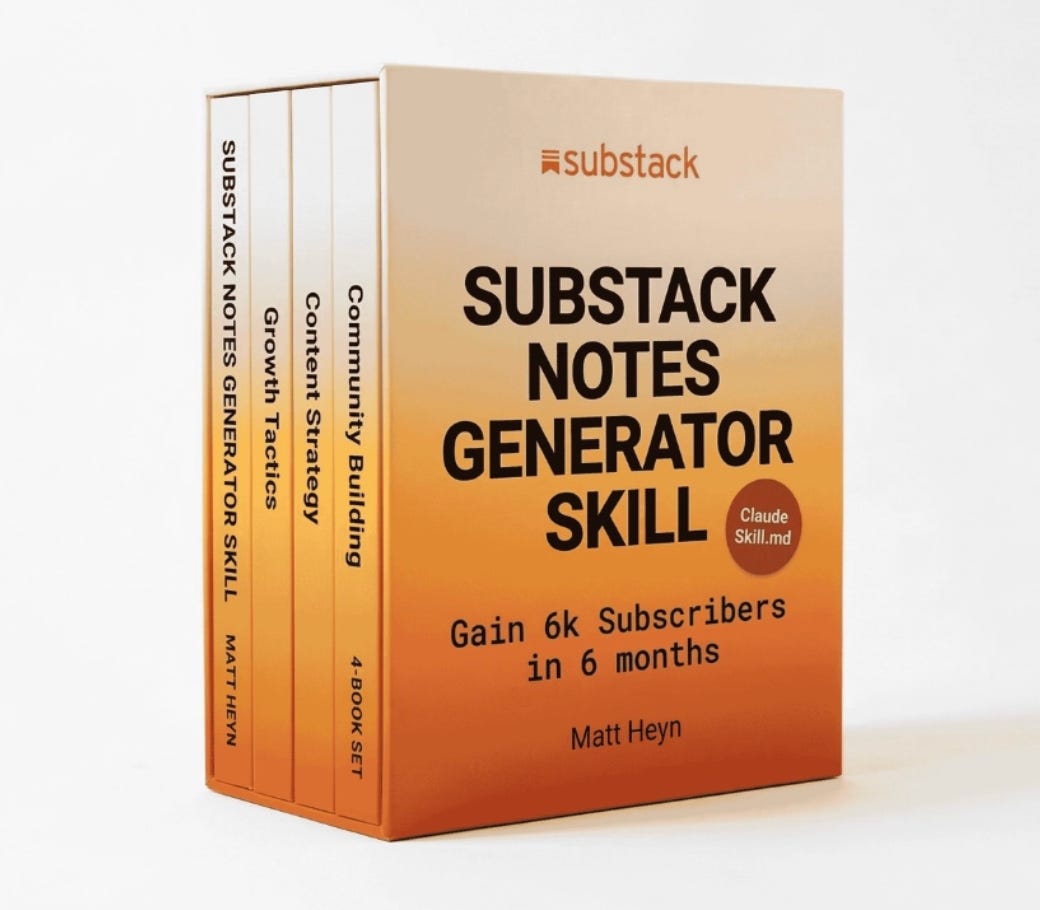
Free Substack Notes Skill + Claude Set up Skill here.
The Rational Narrative: The Play Your Competitors Will Copy Wrong
The Uncapped Drop is Emerging.
One clean instance, one strong precedent in the same category.
Runway is roughly twelve months before somebody names it onstage.
Three scenarios sit on the table.
The first one says brands with mature owned channels adopt throttle-release as the standard opening move after a demand shock. I put that at 25%. The market data argues against it. McDonald’s grew loyalty sales through personalized targeting. The 2026 loyalty platforms are built to prevent generic discounting. The industry is walking away from blunt playbooks while I forecast a blunt playbook.
The second scenario is the one I favor at 50%. Uncapping is only as strong as the specific grievance it discharges. A brand that opens the valve on a promotion nobody was angry about gets an ordinary Tuesday. This reading is diagnostic. It tells you where to look before it tells you what to do.
The third scenario sits at 20% and it is the dangerous one. The same recalled lettuce reached Taco Bell, Walmart, Jack in the Box and Sysco. When one processor sits behind several brands’ incidents, naming the supplier stops working for anyone.
Confidence on the play is medium. Confidence on Taco Bell’s own outcome is low.
Here is what changes the call. If the 28% cohort returns at full price within 30 days, scenario two confirms. If they come back only for the next discount, Taco Bell trained a habit and bought a headline. Watch Yum’s Q3 report for whether management still credits the drops.
One honest limit before you take this anywhere.
On July 28 the price changed, the product changed, the time window changed, the eligibility cap changed, the channels changed, and the scale changed. Six variables at once.
The record can’t tell us which one carried the day.
The Signal: They Were Never Angry About the Lettuce
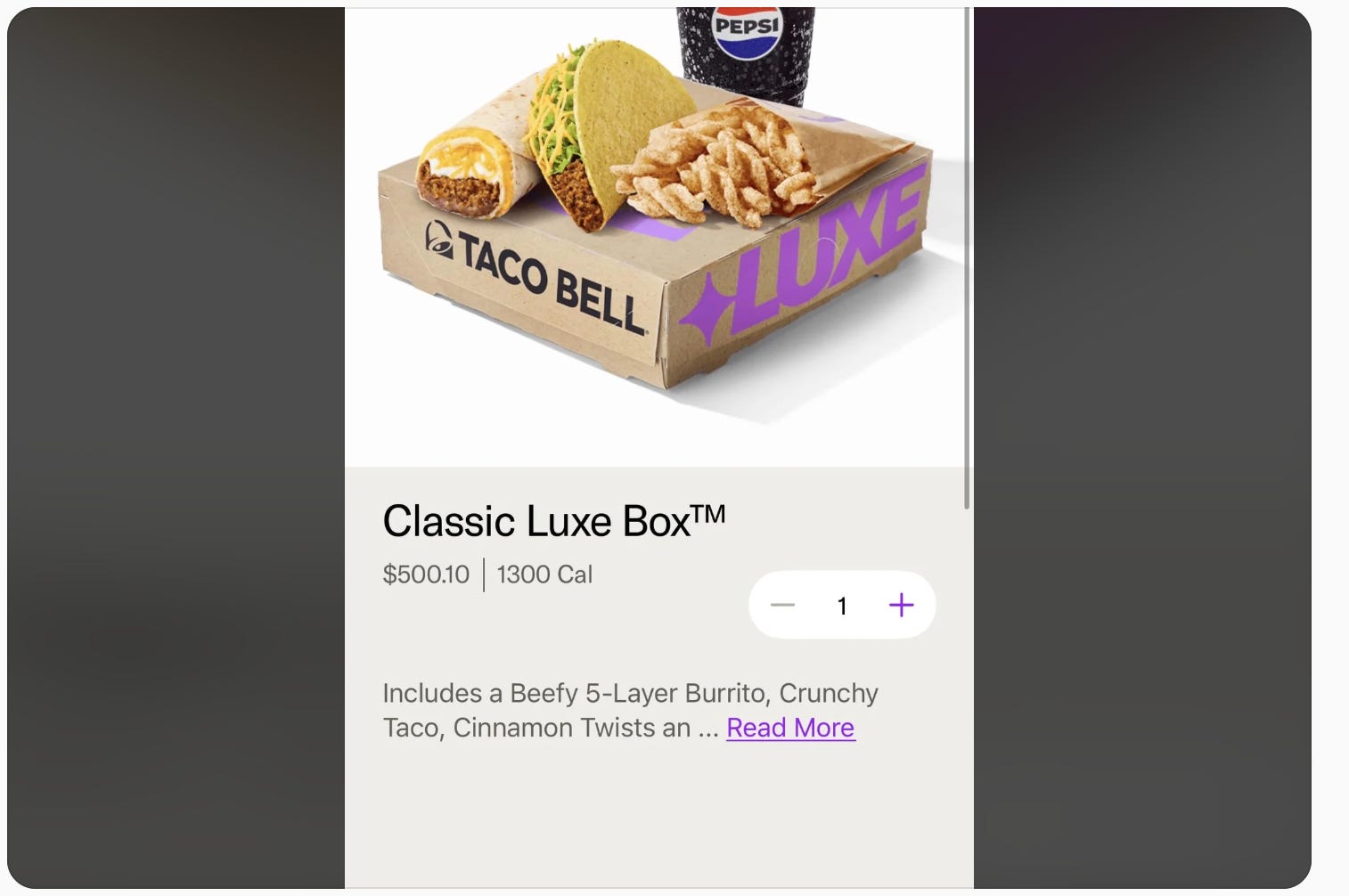
Here’s what I did not expect to find.
I went into the fan community looking for fear. Threads about safety, about whether the food was clean, about whether people would go back.
The top posts in r/tacobell right now are a joke about a $500 Luxe Box and a nostalgia post for the 2010 two-dollar meal deals.
Recent weeks brought “I AM DONE WITH YOU TB” at 1,400 votes and a thread asking whether Taco Bell is actively trying to put itself out of business at 451. Nobody was talking about Cyclospora.
Rational analysis predicts a community processing a health scare. The data shows a community returning to a fight it was already having about price.
I’ve sat with families in hospital rooms for fifteen years, and this is a familiar shape. An acute crisis arrives, and within days people go straight back to the long-running grievance the crisis interrupted. The acute event gets absorbed because it was never personal. The chronic one stays open because it is.
That reframes the record.
Taco Bell gave its audience the exact thing that audience had been demanding, at the moment attention was highest. 2 months before the outbreak, a thread titled “The Enchirito needs to become a permanent item, listen to your customers” pulled 105 votes.
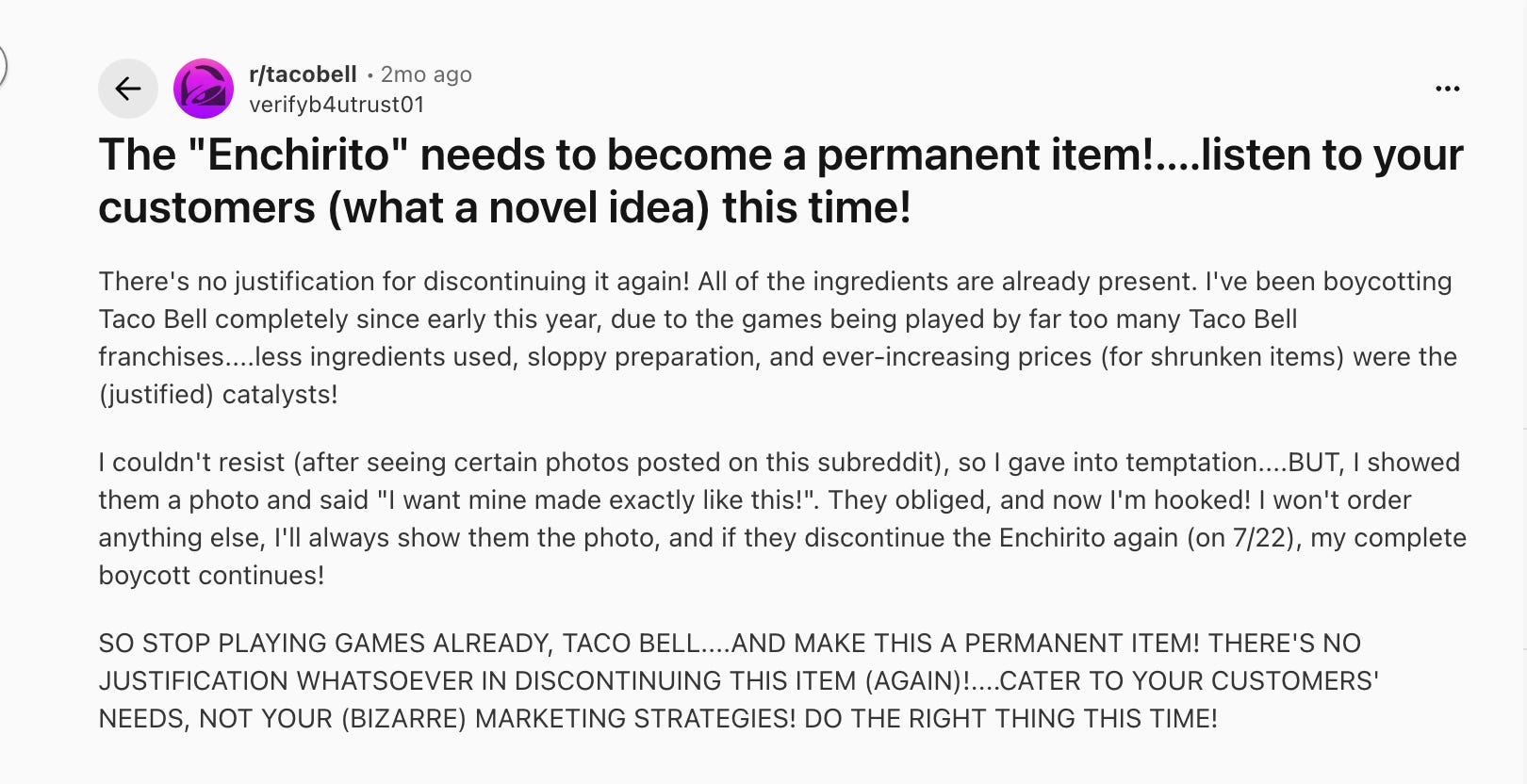
Then Taco Bell put the Enchirito on the menu for a dollar.
The Keystone: Every Client You Have Is Keeping Score of Something
Your client has an acute problem and a chronic one.
The acute one is loud, dated, and on the agenda. The chronic one is quiet, undated, and older than anyone in the room.
Almost every crisis plan is built for the acute problem. And almost every audience is keeping score on the chronic one.
That is the move here. When the emergency creates a window of maximum attention, the brand that spends it discharging the standing debt gets a result that looks impossible on the crisis timeline. Domino’s fixed the recipe. Taco Bell dropped the price. Both moves answered a complaint that was years old.
So the sharpest question in a crisis meeting has nothing to do with the crisis. It’s this: what have we been withholding, and could we hand it over this week?
The window closes fast.
And the debt is already on the books, whether you name it or not.
That’s this week’s signal.
If you’re carrying a client through something right now, hit reply and tell me what their chronic complaint is. I read every one.
See you next Monday, Matt
P.S. 3 people have written the best material that exists on Substack Notes, and one of them took an account from 11 subscribers to 5,800 in six months. I combined their systems into one free Claude skill that builds a full week of Notes in a single session. Send me the free skill →