

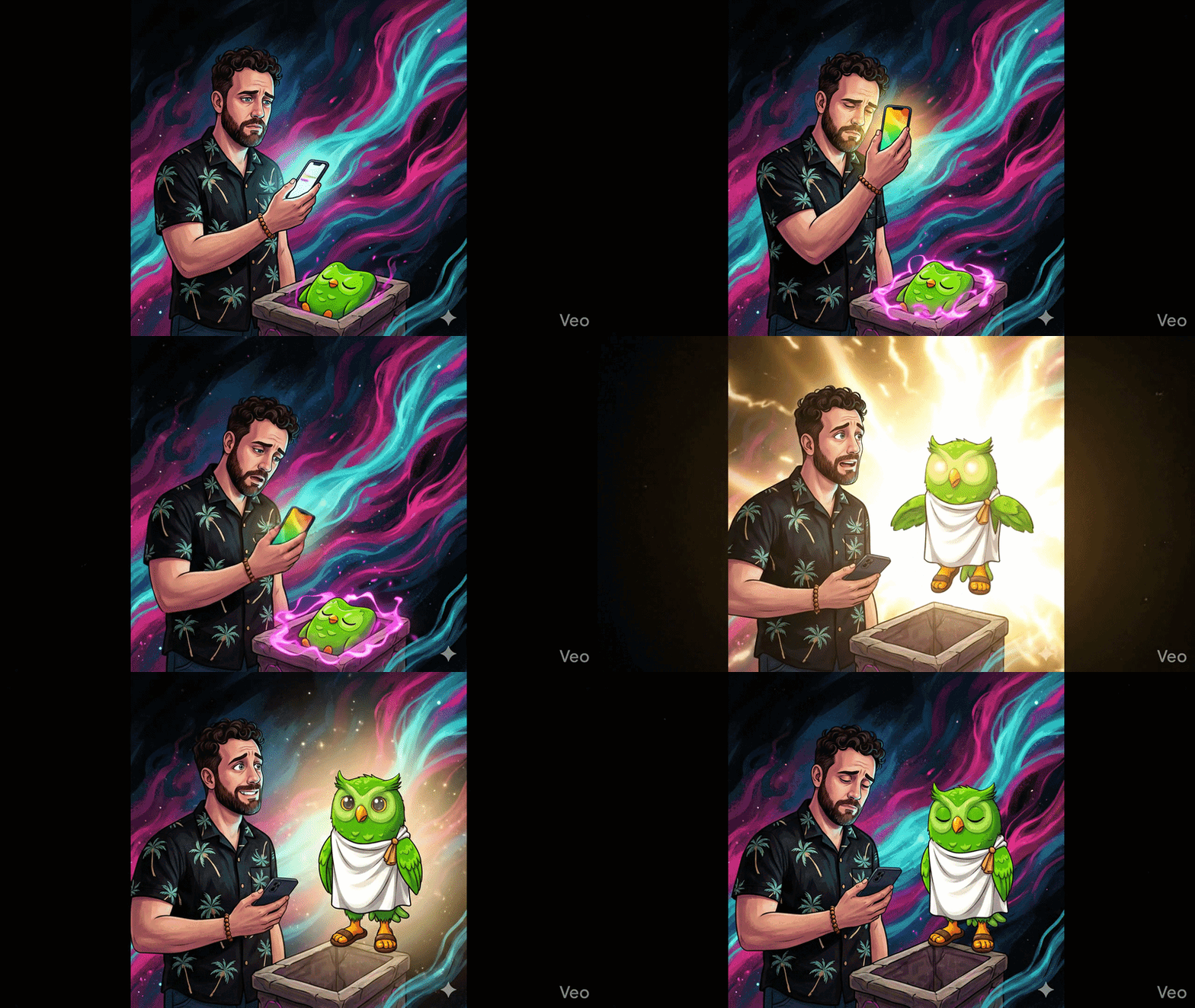
Duolingo killed its mascot. Here’s why 5.1 billion lessons followed.
In this issue:
The Resurrection Quest: the pattern behind Duolingo’s “Dead Duo” campaign and why 1.7B impressions converted into 5.1B actual lessons
How Tinder, Burger King, and Deadpool ran the same architecture in three different industries
Two brands that tried to copy the form within days of Duolingo’s campaign and paid for it
A full video breakdown on The Strategy Signal YouTube channel
A custom GPT that builds client-ready strategy decks using the Resurrection Quest pattern
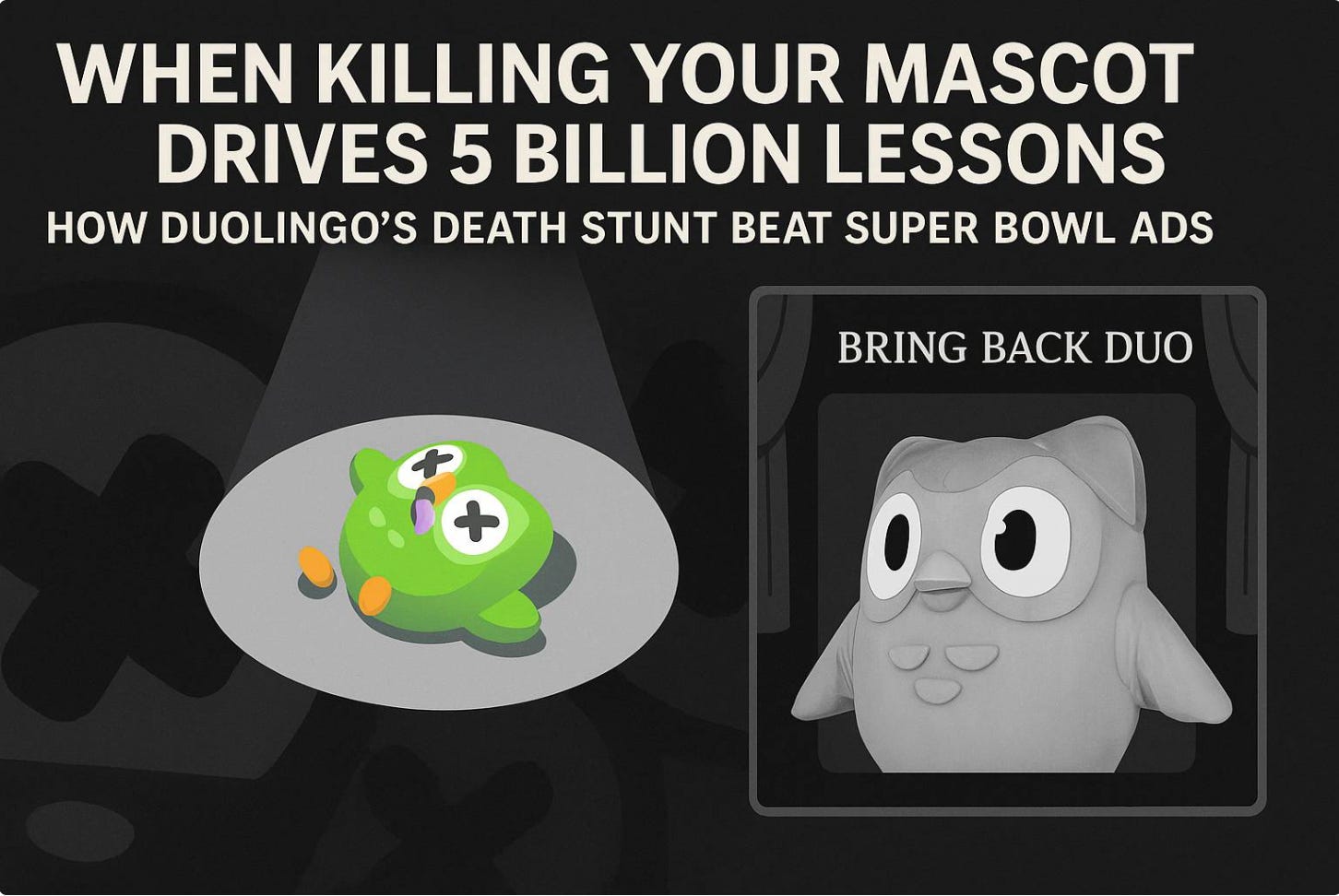
In February 2025, Duolingo posted a simple black card across every social platform at once.
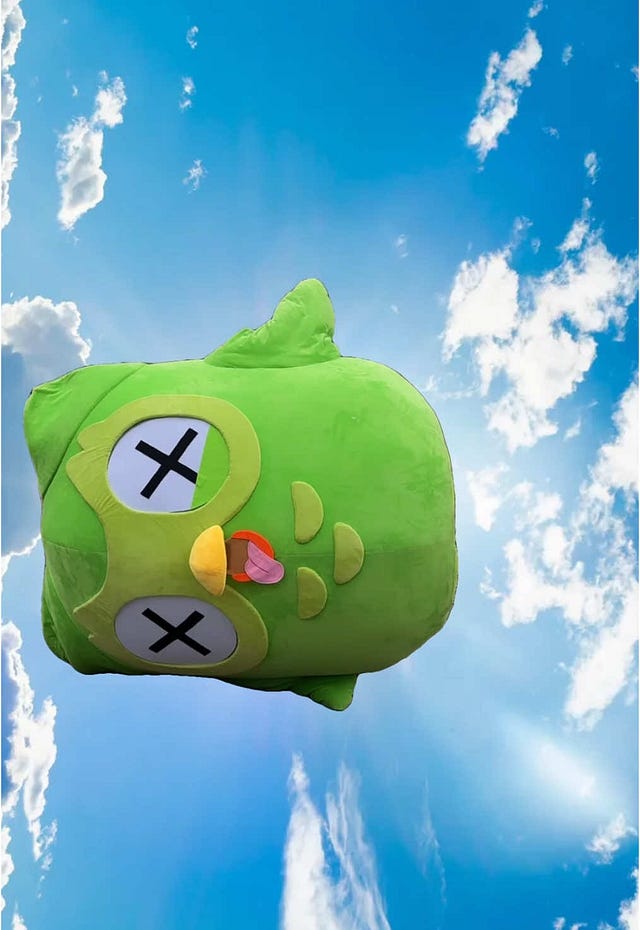
“It is with heavy hearts that we inform you that Duo, formally known as The Duolingo Owl, is dead.”
Then the second line:
“Tbh, he probably died waiting for you to do your lesson.”
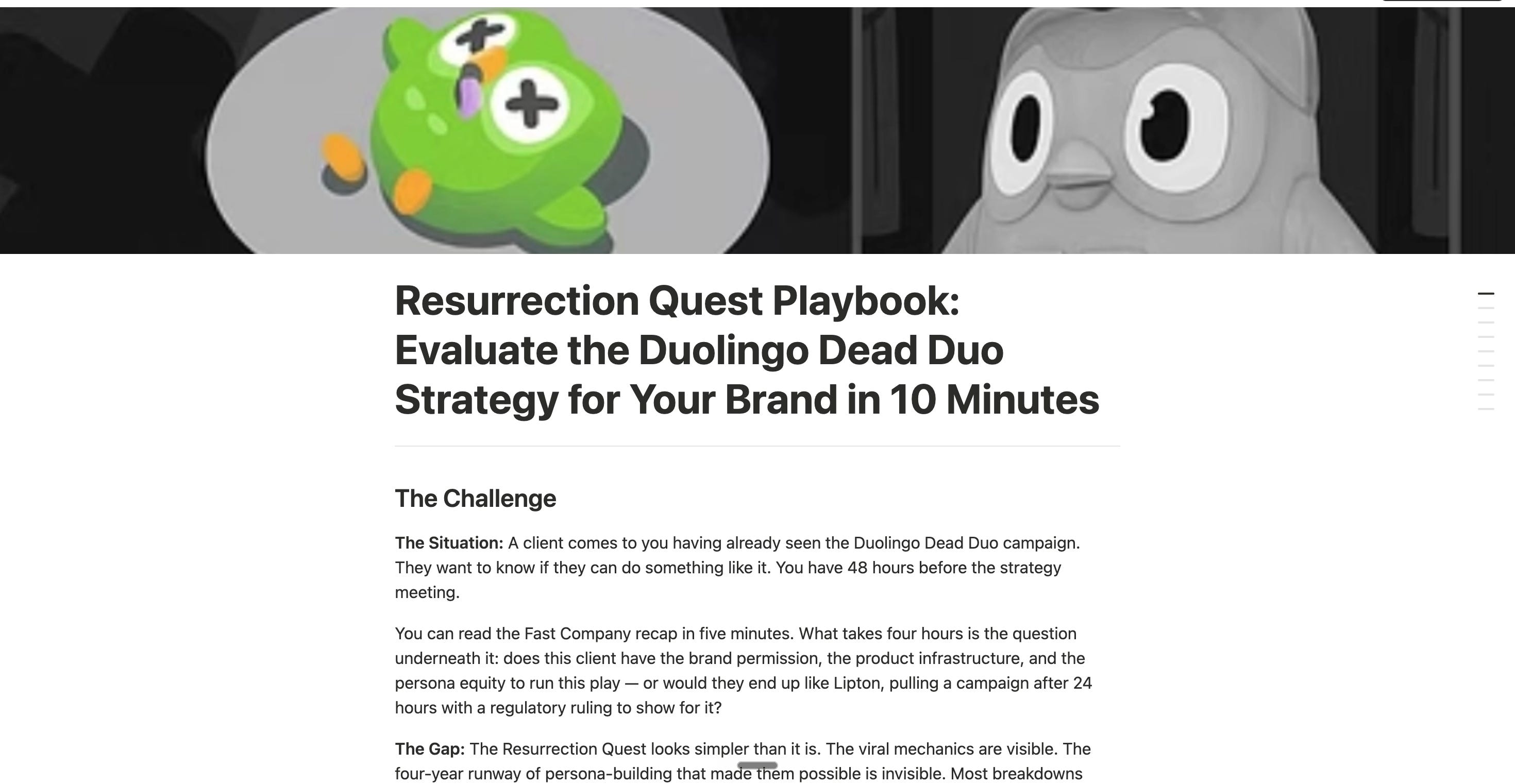
The app icon changed. Dead owl. X’s for eyes. Tongue out. Just gross and sad…
And then Duolingo did something most brands can’t bring themselves to do.
They stopped advertising. They handed the story to their users.
Which is a tadddd…risky.
The number everyone’s citing. The 1 that actually mattered.
The viral numbers were a marvel.
1.7 billion impressions in two weeks.
More social conversation than the top 10 Super Bowl ads of 2025 combined. A six-person in-house team. Concept to launch in six days. Media spend the CEO described as “practically nothing.”
So every breakdown you’ll read focuses on the scale. The bold creative. The speed.
But the impressions weren’t only the achievement.
What happened after the impressions? Well…That’s the actual story.
The Resurrection Quest
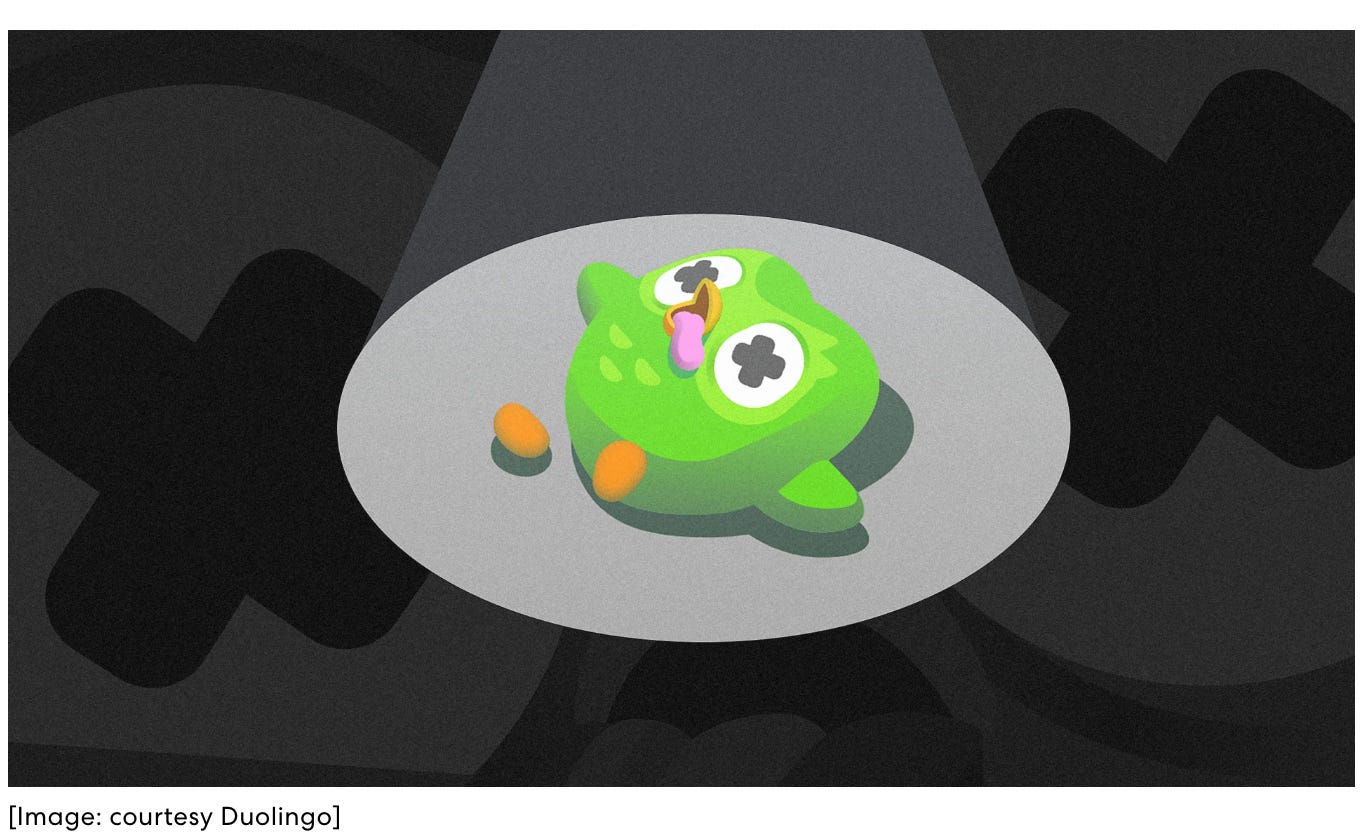
Duo could only come back to life if users earned 50 billion XP collectively.
That’s roughly 5 billion completed language lessons. Duolingo built a microsite, bringback.duolingo.com, with a live global tracker showing XP progress by country.
Every impression became an invitation to open the app. Every article in the 450+ publications covering Duo’s death carried the same implicit prompt: go complete a lesson.
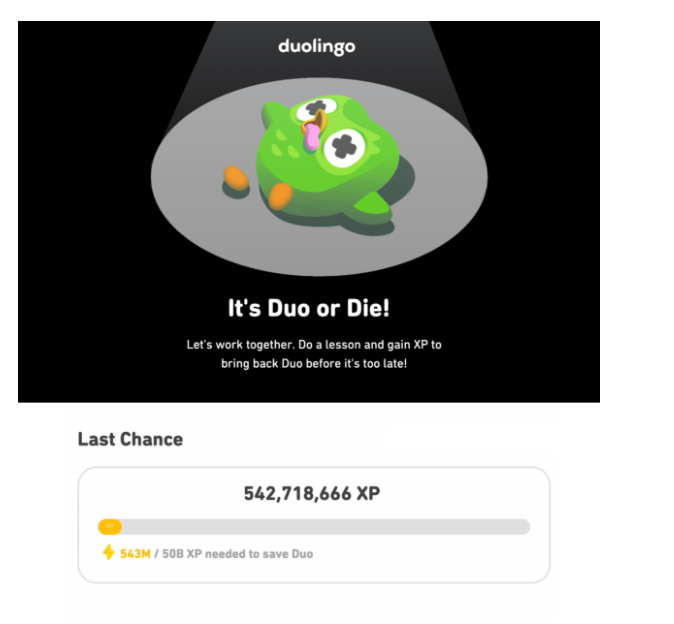
Screen shot from PR Daily - here.
This is the pattern. I’m calling it the Resurrection Quest.
Stage dramatic jeopardy around a brand asset users genuinely care about. Tie the resolution entirely to communal behavior that advances the core business. The story fuels the virality.
The quest converts it into product usage, habit, and revenue.
Users completed 50,921,342,438 XP worth of lessons. Duo walked out of a coffin on February 24. “LEGENDS NEVER DIE.” (Why does Babe Ruth’s line from the Sandlot, “Follow your heart,” comes to mind.?)
Duolingo raised its annual revenue guidance to $1 billion.
How they built the loop, and why the sequence mattered
 Tiktok failed to load.
Enable 3rd party cookies or use another browser
Act I was the shock. Death announcement. Icon change.
“He probably died waiting for you to do your lesson.”
It mourned and recruited in the same breath.
Act II was the mystery and the mission. Duolingo withheld the cause of death and monitored the comment section as editorial brief. When fans landed on the Tesla Cybertruck theory, the team officially adopted it. Then the bringback.duolingo.com progress bar launched. Passive observers became participants with a clear target: 50 billion XP to save the owl.
Act III was the resurrection. The community crossed 50.9 billion XP. Duo emerged in a neon-green suit. The participation loop closed.
This isn’t a Duolingo trick. 3 other industries ran the same play.
1. Tinder’s Swipe Night
Tinder built a version of this in 2019.
Swipe Night was an interactive episodic story where user choices fed directly into match logic.
The story ran inside the app. In the in the video above, we’re led through a catastrophic end-of-the-world scenario. What if you only had three days left to live? Who would you be matched up with, and who would you spend that time with?
The choices players made shaped who they’d match with next. Twenty million people participated. Matches spiked 26% on a typical Sunday. Messages increased 12%.
The narrative and the product action were the same thing.
2. The Whopper Detour
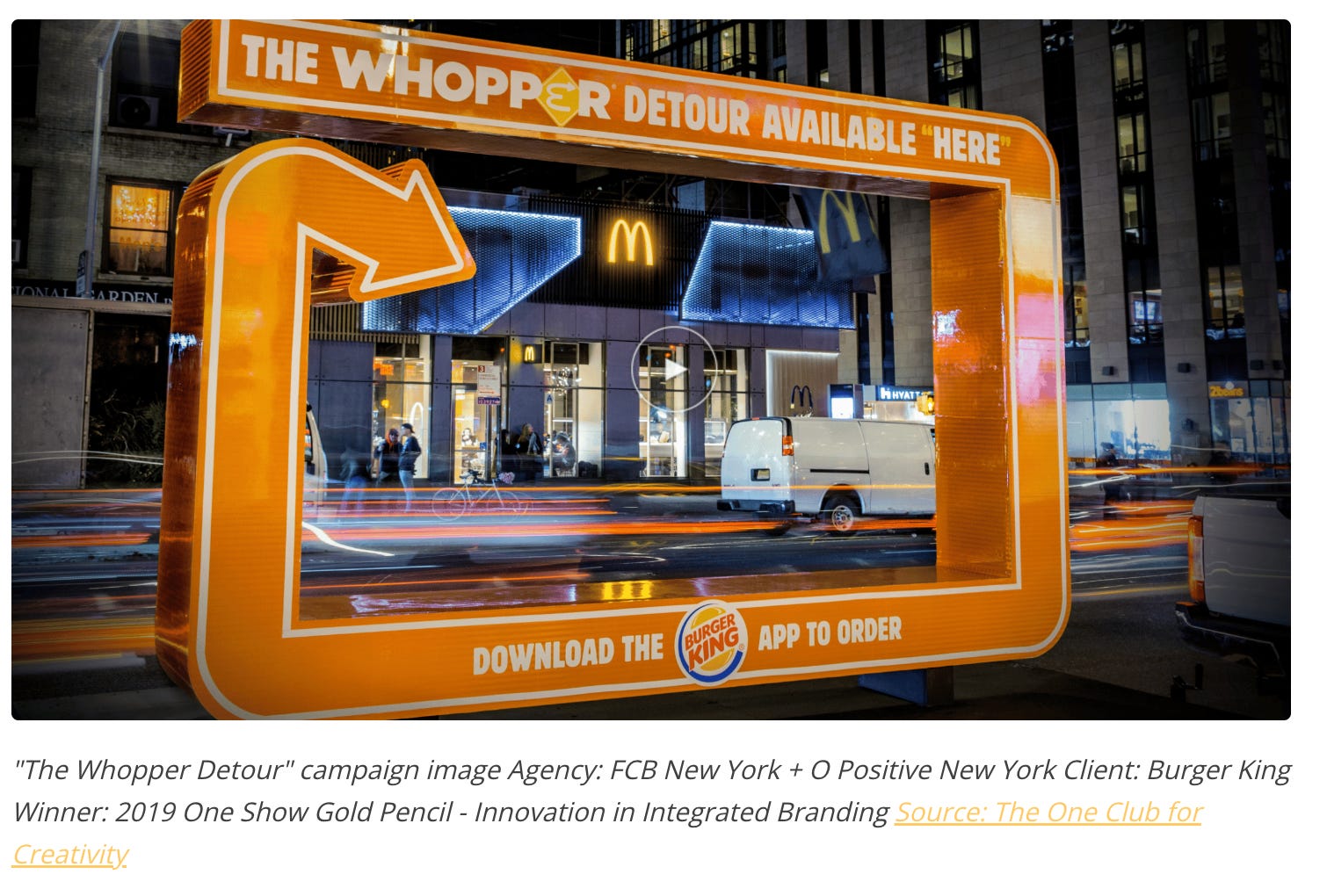
Burger King ran an earlier version in 2018.
The Whopper Detour offered a 1¢ burger. But only if you ordered through the BK app while standing within 600 feet of a McDonald’s. The competitor’s location became the trigger. The app became the reward mechanism.
1.5 million downloads in nine days. Mobile sales tripled. 3.3 billion impressions. 37:1 ROI. The One Show gave it a Gold Pencil.
The quest required a physical action to unlock the product. You had to stand within 600 feet of a competitor. And that required the app. Smart….eh?
The stunt and the product bridge were the same decision.
3. Deadpool Consistently Breaking the 4th Wall
Ryan Reynolds played the character in the film and in the marketing and breaking the fourth wall, mocking the studio, running PSAs about testicular cancer.
The absurdity worked because Deadpool violates every convention of his genre.
When the campaign violated every convention of film marketing, audiences read it as out of the box and truly innovcative. The film earned $782 million worldwide against a $58 million budget, becoming the highest-grossing R-rated film in history at that point.
Reynolds built a marketing philosophy around creative constraint because the budget forced him to.
He possessed persona. Audacious execution, which lead to an authentic result with audiences.
And if I may so, he killed Dead pool (his fav mascot) over and over again.
The pattern breaks the same way every time
For this we’ve got 2 examples for you.
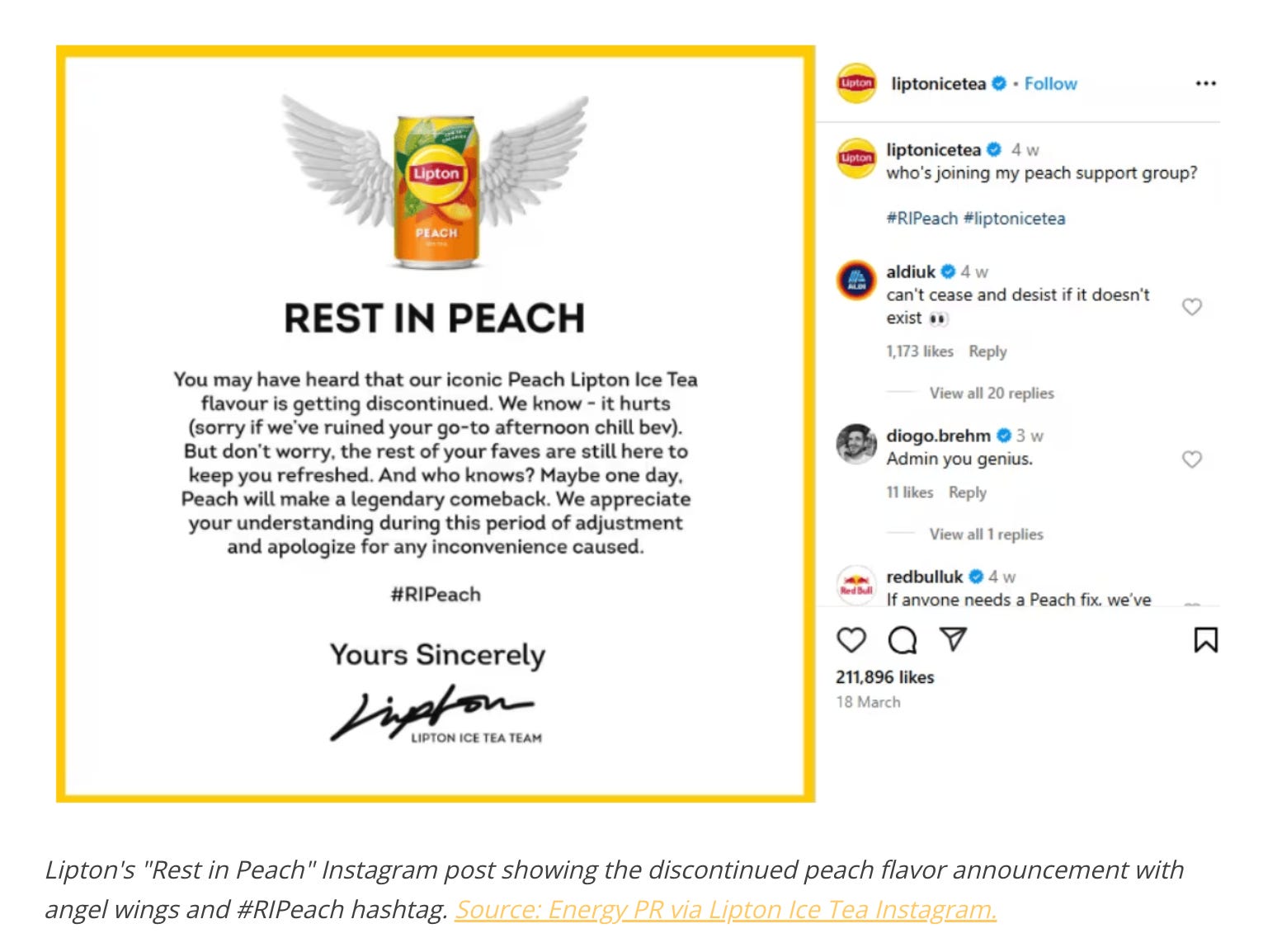
1. Lipton Ice tea “rest in peach.”
Lipton Ice Tea announced the “discontinuation” of its peach flavor a few days after Duolingo’s campaign.
They got mocked immediately. The campaign was pulled within 24 hours. The UK’s Advertising Standards Authority later ruled the posts misleading.
Lipton had no equivalent character. No years of personality-building with their audience. No product action to wire the stunt to.
They borrowed the form without possessing what the form requires.
2. Volkswagen Death of Gas
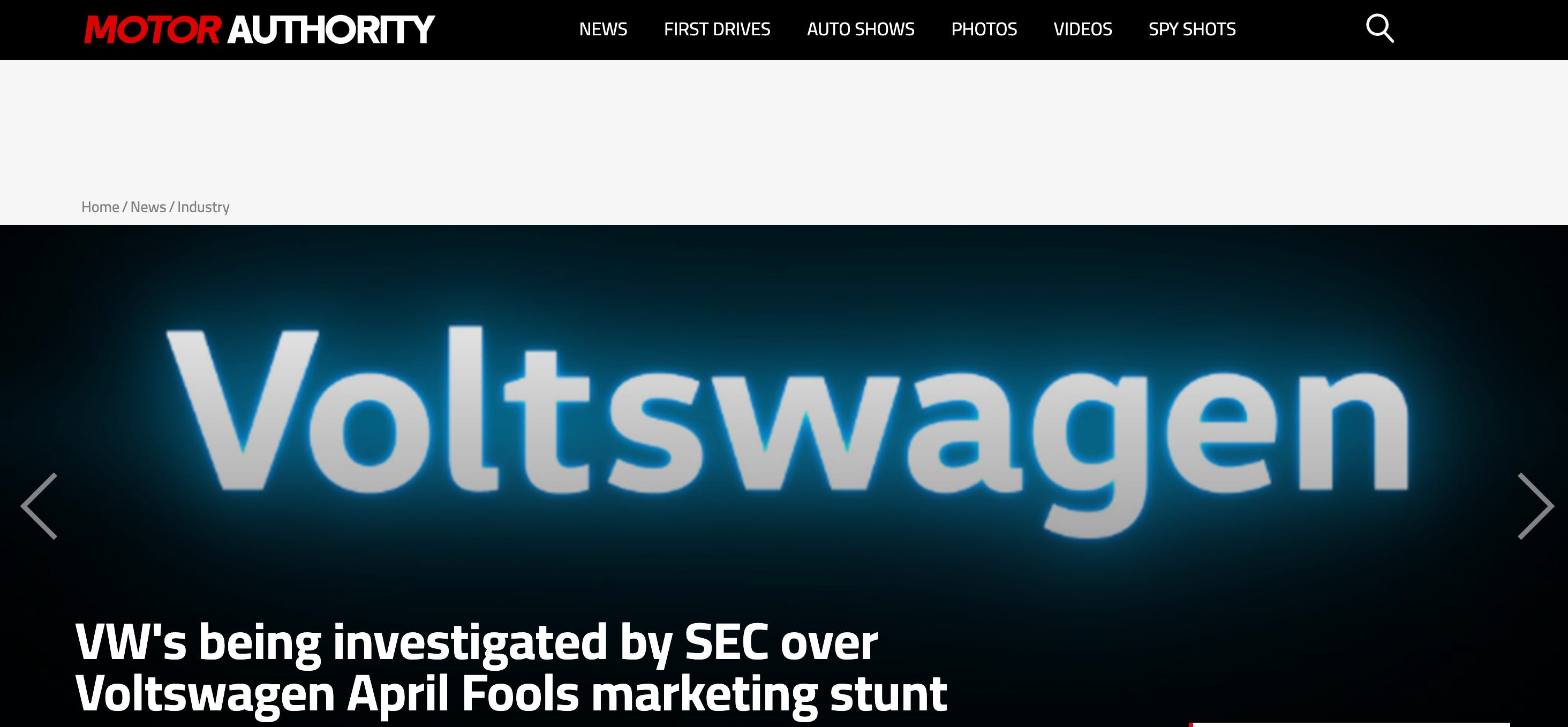
Image from MotoAuthority
Volkswagen tried the same thing a different way.
In March 2021, they leaked a press release announcing they were renaming US operations to “Voltswagen” to signal their EV commitment. Major outlets ran it as real news.
The stock moved 8%. Then VW admitted it was an April Fools joke. The SEC opened an investigation.
Here’s the bigger problem, though.
VW had just spent six years rebuilding trust after Dieselgate. The scandal was built on systematic corporate deception. Their answer to “how do we prove we’re serious about EVs” was to deceive the press again.
No participation path. No product bridge. No brand permission to play with truth.
The stunt and the brand’s actual situation were pulling in opposite directions.
The part of this that can’t be fast-tracked
Many marketers might look at this Death to Duo campaign and see a bold creative decision.
But the decisive call happened 4 years earlier, when Duolingo’s social team started leaning into the “unhinged owl” persona instead of softening it. Under Armour got this right in 2021. By 2025, they’d forgotten why. →
That investment created the emotional equity that made the death actually land.
There’s a concept in cognitive psychology called the Zeigarnik effect.
An unfinished task stays in your working memory until it’s resolved. The brain keeps returning to it. The death announcement was an open loop. The 50 billion XP goal was the only available close. And the only way to close it was to complete a lesson.
The loop was engineered. That takes a different discipline than running a campaign.
And the death-and-resurrection arc isn’t random.
Carl Jung argued that every person carries a deep need for what he called “revolution, inner division, and renewal.” The resurrection story is the oldest narrative structure in human consciousness, from Osiris to every folk tale that ends with a return from the underworld.
When Duolingo ran that arc, people were participating in more than a marketing stunt and they recognized the story at a level below conscious thought.
What happens when a brand generates 1.7 billion impressions with no product bridge?
Nothing measurable. The party ends and the audience goes home.
The Keystone (that’s what I’m calling the signal you build your marketing strategy) upon which they built this: 50 billion XP, lessons required, real-time tracker.
That converted viral attention into a business outcome.
5.1 billion lessons.
40% year-over-year daily active user growth.
A run rate toward $1 billion in revenue.
And here’s what the Lipton example actually tells us. Their campaign felt wrong before anyone could explain why.
David Benner, writing about authentic presence, puts it plainly: genuine presence requires “integrity of character, where there’s a congruence between my inner life and my outer life.”
Duolingo had that congruence.
What they performed externally matched exactly what they’d built internally over four years. Lipton performed the stunt without possessing the persona behind it. Audiences decoded the gap at a gut level, before they had words for it.
You can’t retrofit the Resurrection Quest onto a brand that hasn’t done that interior work.
The viral attention was available to anyone willing to stage the stunt. The product bridge took years to build. The real-time tracker. The XP mechanic. The four years of “unhinged owl.”
Watch the breakdown on YouTube
This week’s video goes deeper on three things the newsletter can’t fully show: the real-time pacing of how Duolingo released information across the two weeks, the visual mechanics of the bringback.duolingo.com tracker, and why the Lipton and Volkswagen failures are actually more instructive than the Duolingo win.
If you read the newsletter and you want to see the pattern in motion, start there.
[Watch this episode on The Strategy Signal Just Below]
Apply this to your clients (Free GPT)
The Resurrection Quest only works under specific conditions. The right brand equity. The right product action. The right cultural permission.
I built a GPT that runs your client’s situation against this pattern — and every other campaign pattern in The Strategy Signal library. Give it the client’s industry, their core product behavior, and what emotional equity they’ve built with their audience. It’ll tell you whether the Resurrection Quest is available to them, and if it is, what the Keystone decision needs to be.
[Use the Pattern Applicator GPT →](LINK TO GPT)