The Private Mint: How a Finnish retailer quit the ad auction and paid for attention in iPhones
What happens when your media budget and your product inventory become the same line item?

Here is what this newsletter covers:
The campaign that reportedly racked up 344 million impressions in a country of 5.65 million people
The Private Mint: how a brand stops bidding for attention and starts issuing its own currency
The three structural moves that turned a price list into the ad itself
The same playbook showing up in luxury beauty, auto, and QSR over the last decade
4 converging forces pushing this pattern to the surface right now
The graveyard: four campaigns that ran a version of this play and bled out
The dignity signal hiding in the search data, and the 2007 precedent that explains it
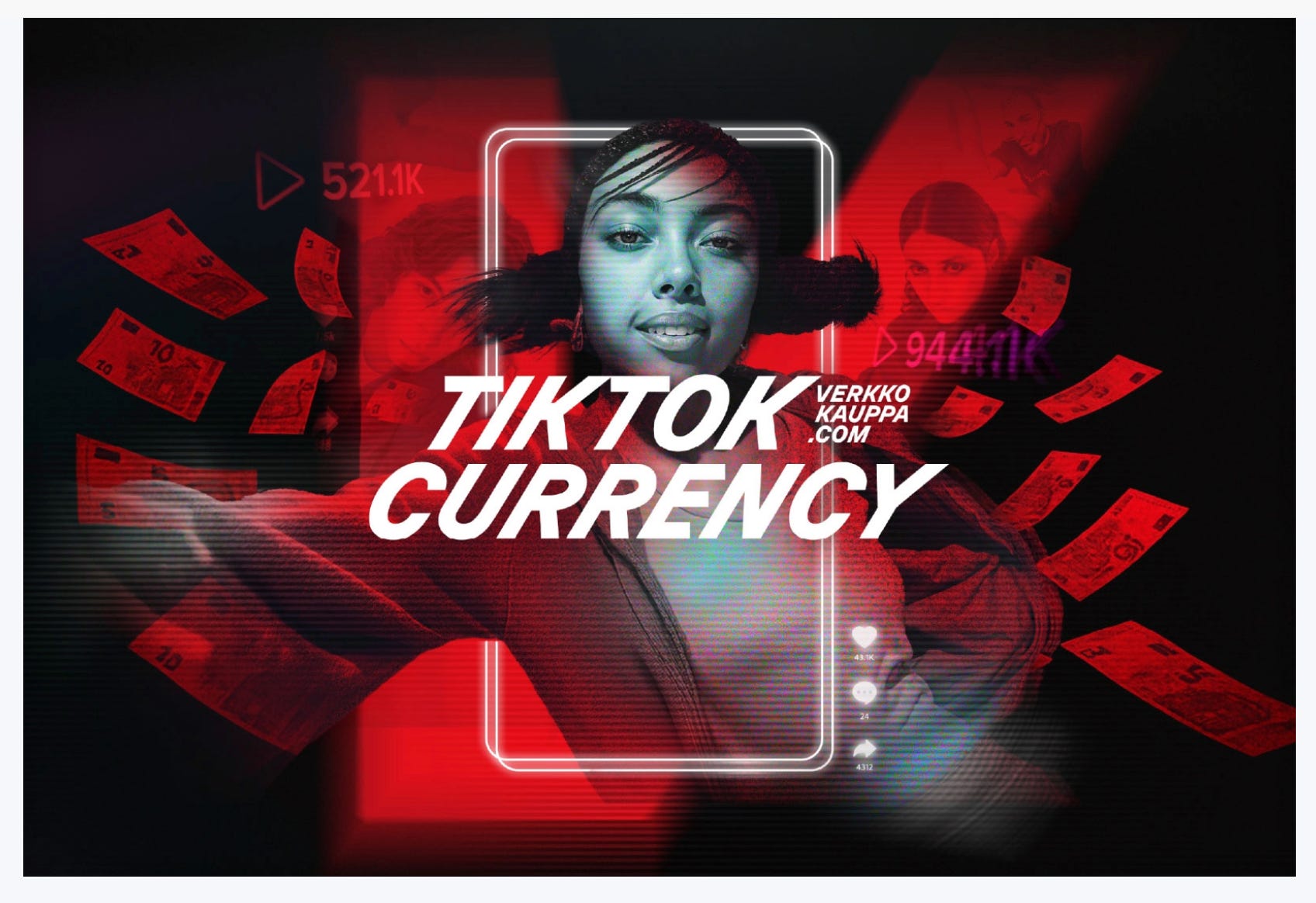
In August 2025, Verkkokauppa.com, the Finnish consumer electronics retailer, told TikTok users it would pay them in products for views.
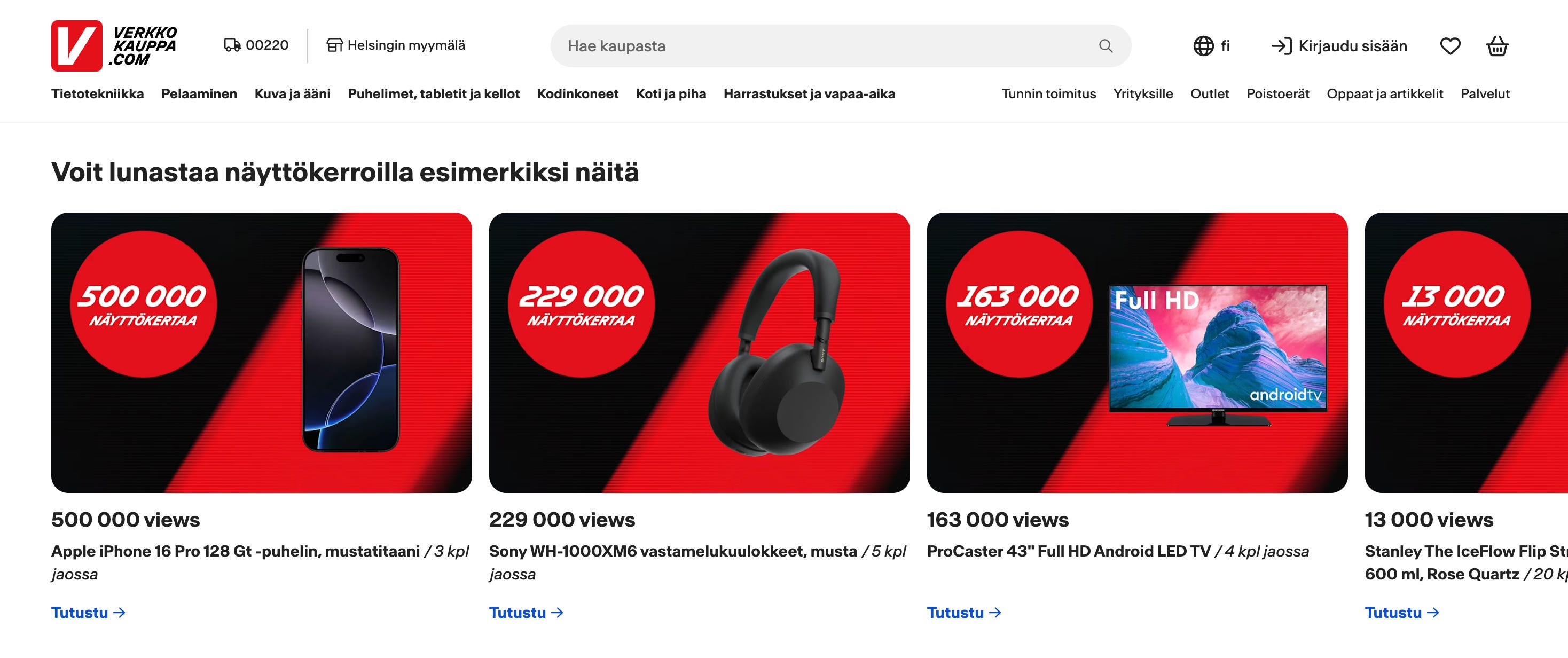
200 views earned a tripod. 500,000 views earned an iPhone 16 Pro.
Post a video mentioning the brand, and on one Saturday in September, walk into the Helsinki flagship store and collect.
The award-entry numbers:
344 million total reach,
11.7 million organic views,
700+ pieces of user-generated content,
a +3,883% spike in brand mentions,
a +114% lift in ad awareness.
Every figure is self-reported in award submissions.
None of it is independently audited.
And Finland has 5.65 million people, so read that 344 million as cumulative impressions, screens lighting up over and over. Even heavily discounted, the campaign collected a Cannes Lions Silver in Media, the Grand One 2026 Grand Prix, a One Show Bronze, and a TikTok Ad Awards Nordics win.
But the trophies are the least interesting part. The interesting part is the accounting.
The Private Mint: stop bidding for attention, start issuing it
I call this pattern The Private Mint: monetise the audience’s native currency.
Here’s the core move.
When you cannot afford an audience’s attention at the market-clearing price, stop bidding for it. Mint a proprietary currency instead, backed by an asset you already control at wholesale cost, and let the audience earn that currency by producing your media.
You become the issuer.
Every competitor stays a bidder.
Verkkokauppa made three structural moves that make this work, and each one deserves its own line in your notebook.
First, the media budget and the cost of goods collapsed into a single act. The brand paid for media in gross-margin product, and the media itself was manufactured by the very people being paid.
One transaction bought both the inventory movement and the impressions.
Second, the physical store became the anti-fraud settlement layer. A Finnish body, standing in a Helsinki queue, on one day only. The official account “liked” each video to mark the currency as spent. A bot farm can inflate views.
A bot farm has a much harder time standing in line in Jätkäsaari on a Saturday.
Third, the exchange rate IS the creative. 200 views buys a tripod. 500,000 views buys an iPhone 16 Pro. The price list did the job an ad normally does. People shared the rate card because the rate card was the story.
The plumbing, per the campaign rules that are still live: Finland residents 18+, only Finnish-located views counted, videos had to mention Verkkokauppa.com and “Viral Payback” and tag @verkkokauppacom. TikTok TopView placements and in-feed influencer videos seeded it, then decentralized UGC took over.
The brand even covered the Finnish lottery tax.
Paid ignition still mattered. The mint needed a match.
Prefer to watch? The full breakdown of The Private Mint is on YouTube.
Watch the 12-minute breakdown →
Why it worked: the loop that feeds itself
Every video was simultaneously an ad for the brand and an invoice to the brand.
Each creator was the media channel, the media buyer, and the payee, all in one person. The more the audience produced, the more media existed. The more media existed, the more people learned the exchange rate. And the more people learned the exchange rate, the more the audience produced. Verkkokauppa set the peg and let the loop run.
Underneath the loop sits the arbitrage.
The iPhone 16 Pro is the most valuable line on the rate card in the viewer’s eyes. The brand acquires it at wholesale.
That gap funds the entire currency.
If you read my May issue on Duolingo’s Dead Duo stunt, this will feel adjacent. Both campaigns convert platform-native virality into value. Duolingo converted it into earned attention.
Verkkokauppa converted it into literal, fixed-rate settlement. One is a headline. The other is a ledger.
Now for the honesty you deserve.
The budget is genuinely undisclosed. No media spend, no production cost, no ROI, no CPA, no in-store turnout, no count of products redeemed. That gap is permanent, the same wall I hit on the AXA issue. And here’s the harder admission: no public data proves this strategy outperformed an ordinary discount.
We simply cannot know.
The pattern travels: perfume, hatchbacks, and pizza ran the same mint
The Private Mint has been minting in other industries for a decade, and the anchor case is luxury beauty.
In 2014, Marc Jacobs opened the Daisy Tweet Shop, a pop-up where social posts were the only accepted tender. Roughly 13,500 tweets and 4,300 Instagram mentions later, it walked away with a CLIO.
Auto ran it in 2017.
Opel’s “Pay With Views” in the Netherlands pegged YouTube views to actual vehicles. An Astra cost 922,800 views. The campaign generated 34.4 million impressions, roughly EUR 842,000 in earned media value, and a reported 29% lift in orders for its Online Edition models. That order lift is the closest this pattern has come to a commercial receipt.
QSR ran it in 2024.
Pizza Hut UAE’s “Pay With Your Trend” traded a TikTok trend video for a free My Box, gated behind a purchase. It took Bronze at the TikTok Ad Awards GCC and Gold at the MMA Smarties MENA.
Luxury beauty, auto, consumer electronics, QSR. Same mint, four wildly different economies backing the currency.
One marketing pattern per week. Each issue breaks down what worked, why it spread, and what it means for the next 12 months. Free.

Why now: attention got too expensive to rent
Four forces are converging.
CPMs keep climbing, which raises the market-clearing price of attention and makes issuing your own currency comparatively cheaper.
Ad-aversion has gone structural; audiences skip, block, and scroll past anything that smells like a bid.
The AI and bot trust crisis has made proof of personhood scarce, which is exactly what a physical redemption event supplies.
A human in a queue is the one metric a bot farm cannot fake. And in consumer electronics, product parity means the retailer sells the same iPhone as everyone else, so the differentiation has to live in the strategy.
Trust now requires proof over posture.
The graveyard: four brands that minted their own disaster
Every pattern I publish comes with its body count, because the failures show you the load-bearing walls. These four brands ran a version of this playbook, and each one snapped a different wall.
Build-A-Bear’s “Pay Your Age Day” in 2018 offered a beautiful exchange rate and no capacity cap. Stores shut down mid-day under the crowd. The settlement layer collapsed. Verkkokauppa’s one-day, one-store design is the direct answer to this failure.
Hoover’s “Free Flights” promotion in 1992 offered a reward worth more than the product it was attached to. Arbitrageurs extracted value until the losses became historic. Hoover inverted the arbitrage and paid for it.
Pepsi’s “Refresh Project” in 2010 generated enormous participation while share slipped and sales stayed flat. Engagement decoupled from the P&L entirely. Participation is a means. It was treated as the end.
Walkers’ “Walkers Wave” in 2017 invited open selfie submissions with no moderation gate, and the crowd promptly weaponized it. A mint without a settlement checkpoint invites counterfeiters.
One clarification, because these two get cited constantly: #McDStories and Starbucks’ “Race Together” do NOT belong in this graveyard. Neither had a payment strategy. They are hashtag failures, a different species of wreck.
Would this work for your client?
Run the diagnosis before you run the pitch.
Start with the currency: what does your client’s audience already produce and prize on its own? If the audience has to be taught to value the asset, you have no mint, you have a chore.
Then check the backing: does the client control inventory whose perceived value runs a healthy multiple above wholesale cost?
Then pressure-test the settlement layer with 3 questions from the graveyard.
The Build-A-Bear question: what breaks if ten times the expected crowd shows up?
The Hoover question: what breaks if professional arbitrageurs show up?
The Walkers question: who moderates the submissions before they moderate you?
And finally, does one dominant platform exist where your client’s ordinary customers can plausibly go viral, and is the brand willing to hand them the megaphone?
If any answer makes you wince, the wince is the finding.
You have clients in a half dozen industries. Every one of them is waiting on you to tell them where their market is heading, and which move to make before their competitors make it.
That’s the job. Read the signal, name the pattern, hand them the play. Running that research by hand for every client and every trend is the slow part.
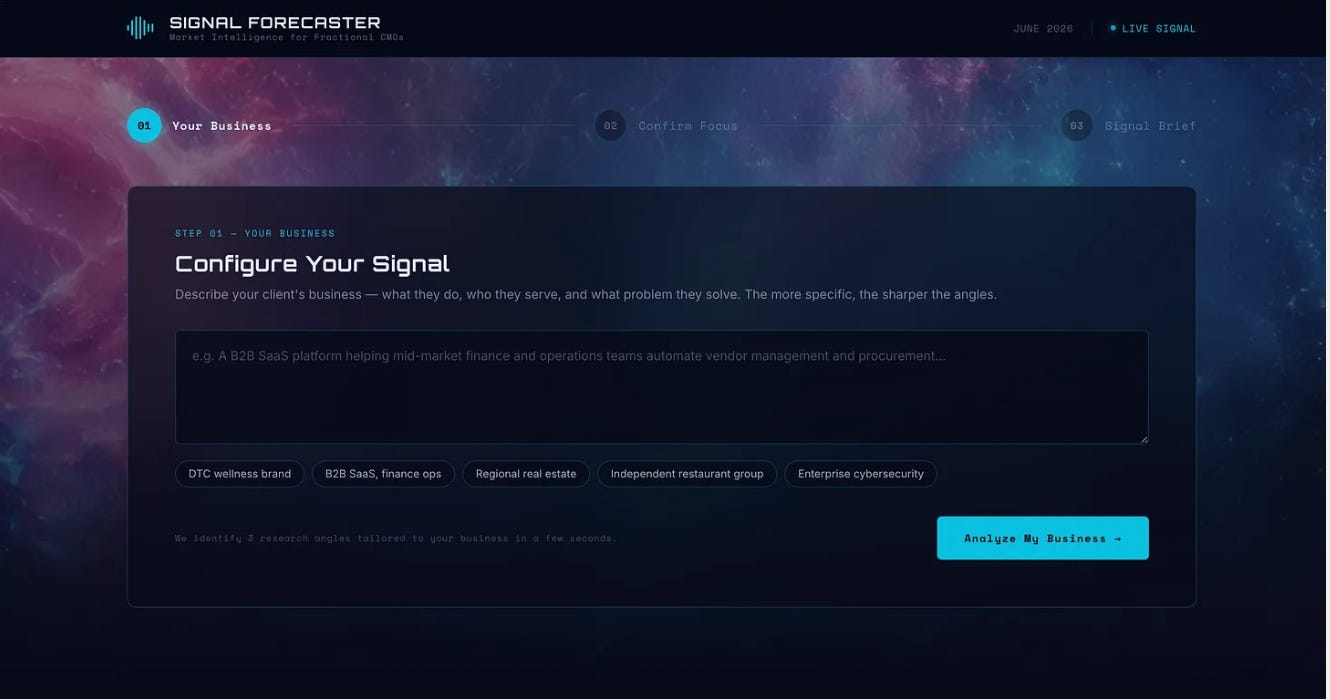
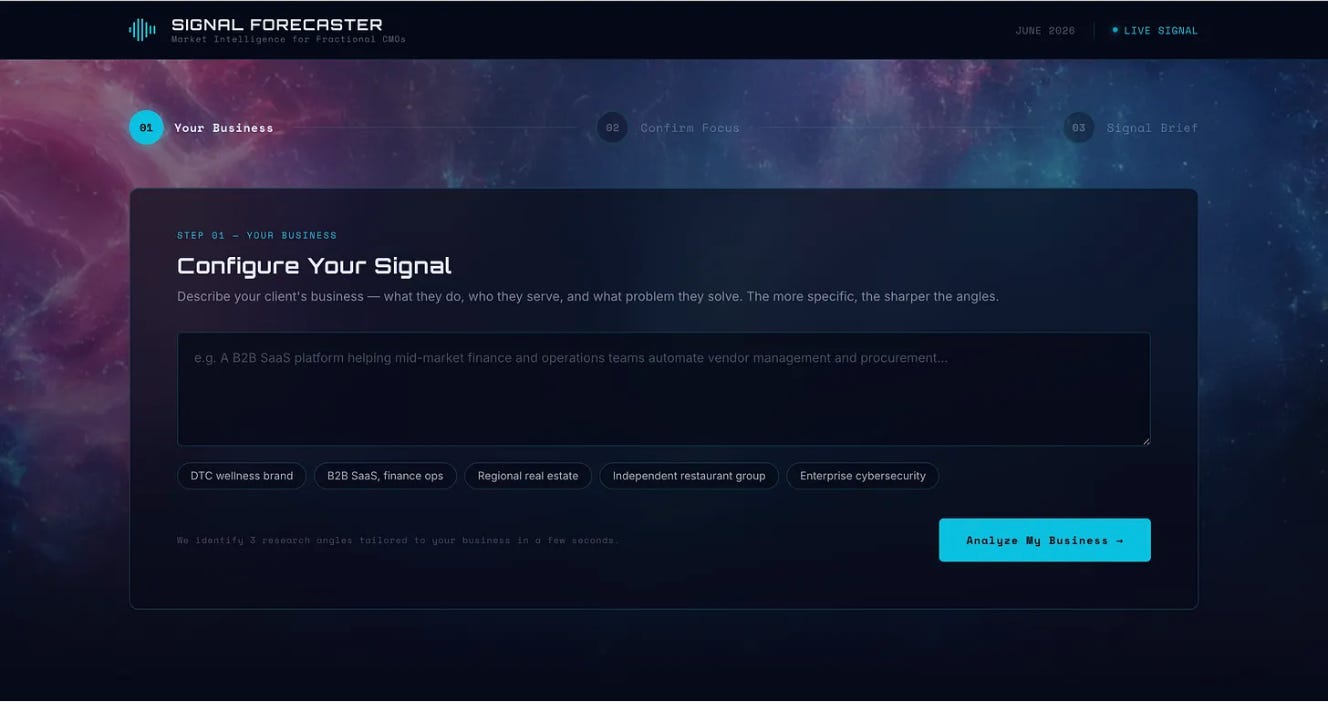
The Signal Forecaster does the research for you. Type any campaign or trend, and it searches the live web and returns a Signal Brief in about three minutes: the pattern name, a three-scenario Forward Hypothesis, and the recommended move. The same structure you just read, for any topic a client throws at you. You walk into the meeting already holding the answer.
I’m opening 5 pilot spots to fractional CMOs at no cost, in exchange for a 20-minute feedback call.
Matt’s take
The Rational Narrative: The Case Study Every Agency Will Pitch and Almost No Client Can Run
This pattern is peaking as a novelty stunt.
The underlying principle sits earlier in its lifecycle, between emerging and growing. Here is the forecast for the next 6 to 12 months, in three scenarios.
Scenario A, at roughly 75% and high confidence: The Private Mint stays a decorated one-off. Over the next 6 to 12 months, more awards arrive, replication stays near zero, search demand stays flat, and no ongoing paid presence appears. Verkkokauppa confirmed this reading themselves. Their May 2026 Capital Markets Day framed TikTok Currency as a reputational win, with no plans to repeat it. The campaign is absent from their 2024-2028 growth strategy. Award momentum and commercial momentum are two different currencies. Management declined to convert one into the other.
Scenario B, at 20%, is the emerging direction worth watching: direct individual compensation for engagement, creator-economy payout logic. The confirmation trigger sits inside 90 days. Watch for a brand or platform paying audiences directly, in cash or open credits, for hitting engagement thresholds. A TikTok Shop cash-out feature would confirm it.
Scenario C, at 5%, is the watch-list call: a platform lets audiences cash out natively. TikTok’s 2026 roadmap points at agentic AI and Smart+ Catalog Ads, so I am not calling it.
What would change this assessment: the “no copycat” evidence is bound to the literal phrase.
Replication may already be running under other names, loyalty points, creator discounts, engagement-gated drops. If those surface at scale inside the 90-day window, Scenario A weakens and Scenario B becomes the story.
I will review this call on October 12.
The Signal: The Audience Reclassified Itself in 2007, and This Campaign Missed the Memo
Here is what I did not expect to find.
When people search “views” and “payment” together, they are looking for one thing: how to get paid for the attention they already give away. The search data reads as a dignity signal. People want their attention treated as labor with a wage.
Sit with that, because it quietly undermines the whole play.
“Pay with views” assumes the audience is the payer, spending their virality like scrip at the company store. Actual behavior shows the audience reframed itself as the earner years ago. The precedent has a date: 2007, when the YouTube Partner Program named the principle that views are worth money to the creator.
That single semantic shift is why the creator economy scaled past every brand-routed “engagement as currency” gimmick since.
15 years of chaplaincy taught me that people know, at a level below language, whether they are being valued or being used. They forgive a lot when they feel valued. They forgive nothing when they feel used.
Verkkokauppa built a brilliant play on a pre-2007 assumption about who owes whom.
The Keystone: Which Economy Are You Buying?
Before any client copies this, they owe you an answer to one question: which economy are we buying, reputation or acquisition?
Verkkokauppa bought reputation, and their own investor deck says so. That is a legitimate purchase. It is also a different purchase than growth, and the award case studies will blur the two.
Then make the deeper cut.
Trace where the value finally lands. Does the strategy pay the audience directly, or does it credit your own ledger with rewards that only spend at your store? A brand-locked currency says your attention is worth something to me. A payout says your attention is worth something, period. The first is a coupon with better PR.
The second is the durable version. The mint that lasts is the one where the audience keeps the money.
Before you go
If The Private Mint sparked a client situation you’re wrestling with, hit reply and tell me about it. I read every response, and the replies regularly shape which pattern I chase next.
Thank you. Have a great week. We’ll see you on the flip side.
Matt
P.S. The Signal Forecaster turns any campaign or trend into a full Signal Brief in about 3 minutes, so you can run this play for any client, on demand. I have 5 free pilot spots open for fractional CMOs, in exchange for a 20-minute feedback call. Request a pilot spot