

44 billion impressions. Then silence.
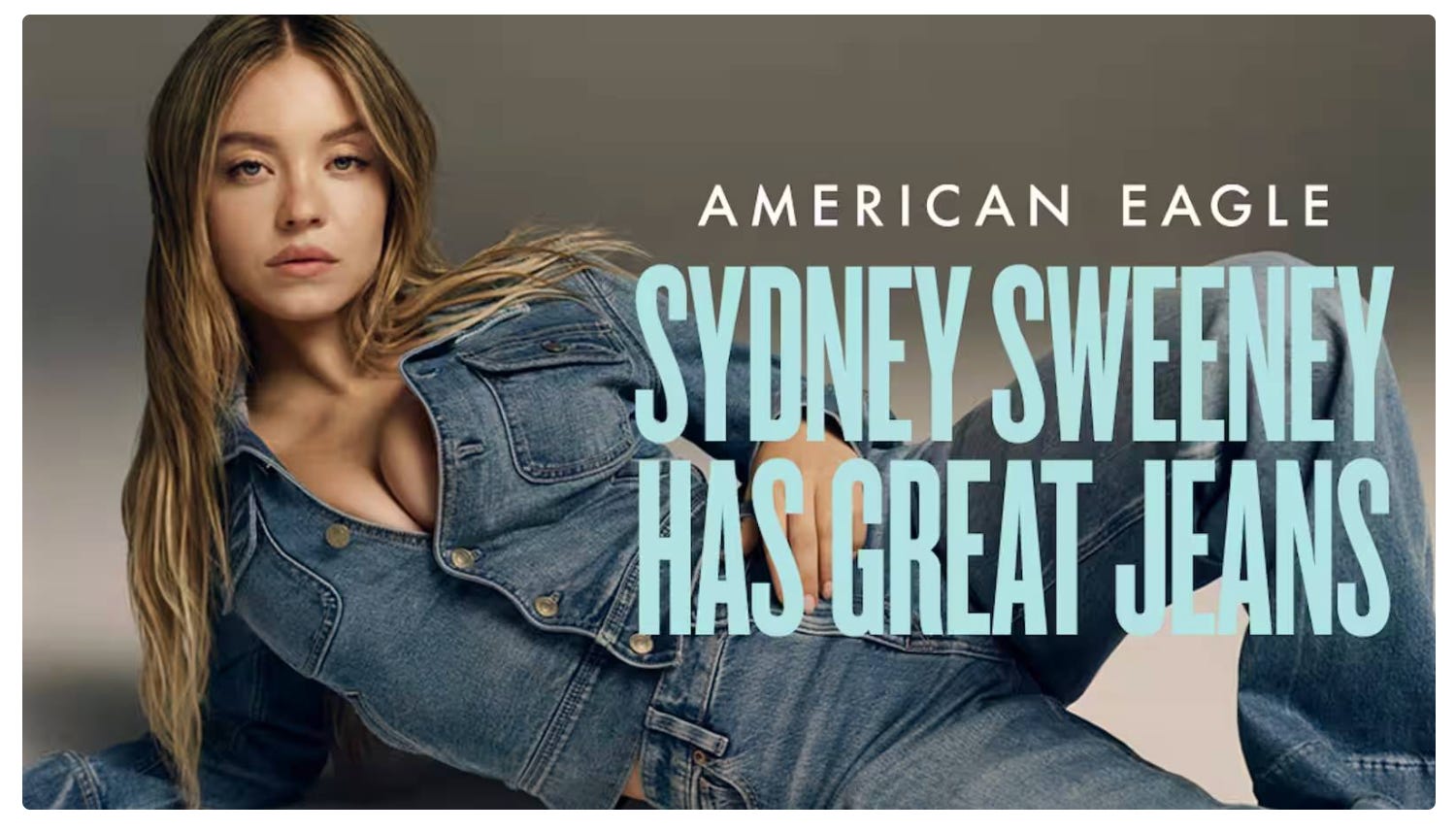
American Eagle launched a celebrity campaign in July 2025.
They got 44 billion impressions.
Not a typo. Forty-four billion. About five and a half impressions for every person on earth. A hundred politicians, columnists, and outrage merchants generated them by fighting about the campaign. AE paid none of them.
The results: $1.36 billion in Q3 2025 revenue and a stock that surged between 23 and 38% in the days after launch. Ten months later, AE has zero active US Meta ads and no visible US TikTok paid creative.
That’s the Lightning Rod Strategy.
Until this newsletter, it had no name.
The Lightning Rod Strategy
Here’s the play.
A brand selects a culturally polarizing creative choice (a celebrity, a tagline, an image) that divides the audience. The controversy generates earned media at a scale no ad budget can buy. And the controversy itself is the distribution mechanism.
The brand never defends the campaign. They let the argument do the work.
I searched YouTube for “lightning rod marketing strategy.” Nothing. Reddit marketing forums: nothing.
This pattern is real, repeating, and completely unnamed in any industry discourse I could find across five research platforms.
So let’s name it.
The primary case study: American Eagle / Sydney Sweeney (July 2025)
American Eagle launched “Sydney Sweeney Has Great Jeans.”
The tagline was a genetics pun. Sweeney, whose political leanings were no secret, was a deliberate creative choice. AE’s CMO Craig Brommers confirmed as much in a 42-minute Semafor podcast interview with chapters titled “What could go wrong?” and “Did they know about Taylor Swift?”
The campaign dropped. Ted Cruz endorsed it. Donald Trump endorsed it. Eugenics accusations came from the left. Every major political commentator in America had a take.
Verified results:
44 billion impressions
~1 million new loyalty members (some sources attribute this to the combined Sweeney/Kelce celebrity campaign, not Sweeney alone)
Stock up ~25% immediately post-launch (23.84% in after-hours at launch, ~25% on subsequent trading days)
Q3 2025 revenue: $1.36B (record for the brand)
YouGov data from the period showed the ad was more often judged appropriate than inappropriate, and approval actually increased as the discourse expanded. The controversy attracted defensive adoption from people who were already going to buy jeans anyway
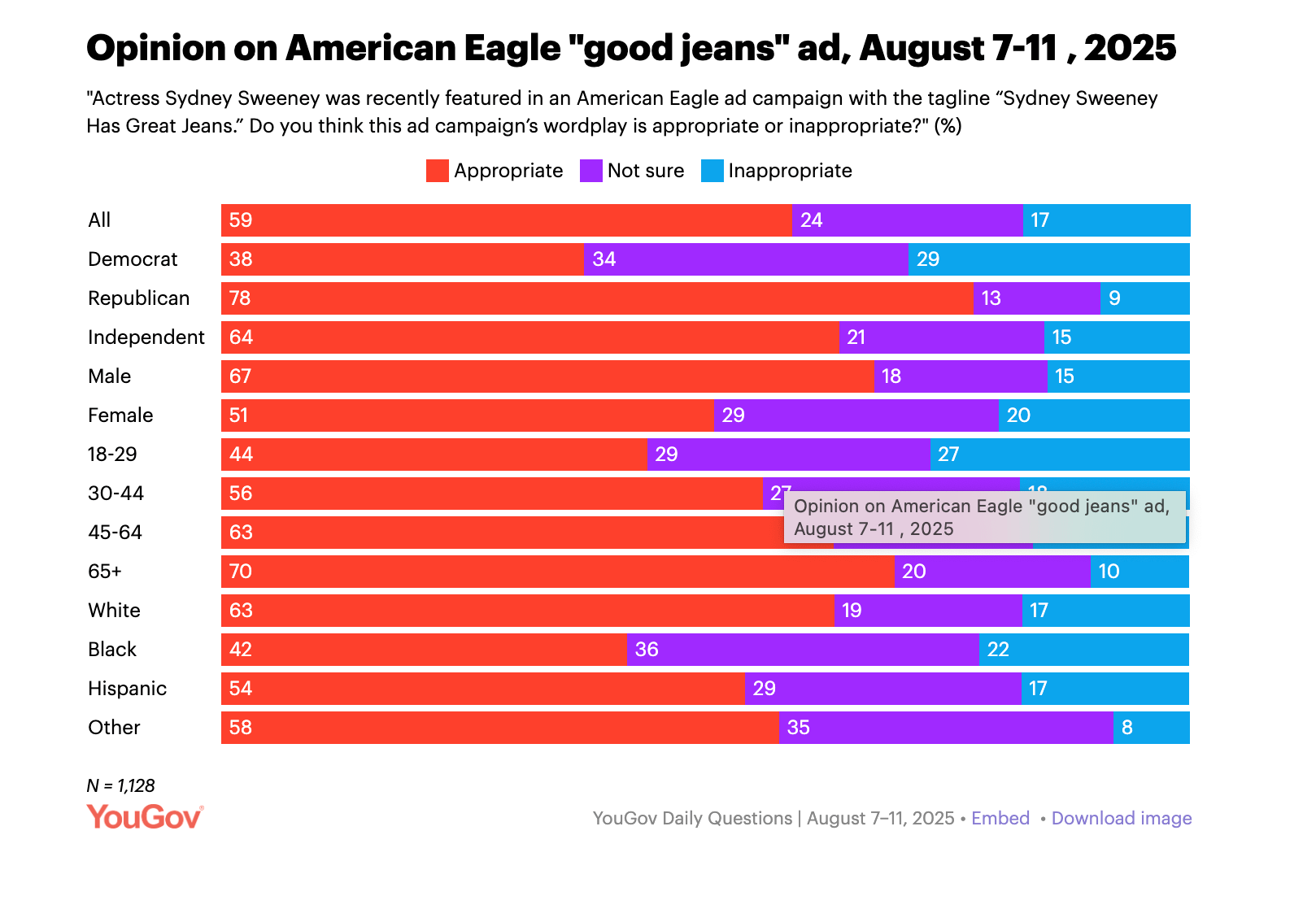
YouGov graph found here.
10 months after the campaign launched, AE has zero active US Meta ads and no visible US TikTok paid creative. (more on this below)
Martha Stewart replaced Sweeney for the next campaign. A spring shorts campaign called “Syd for Short” kept the Sweeney association alive but stripped out every controversy play.
The Lightning Rod was lit. The lightning struck.
They put it away.
Cross-industry proof
The Lightning Rod predates social media by about 96 years.
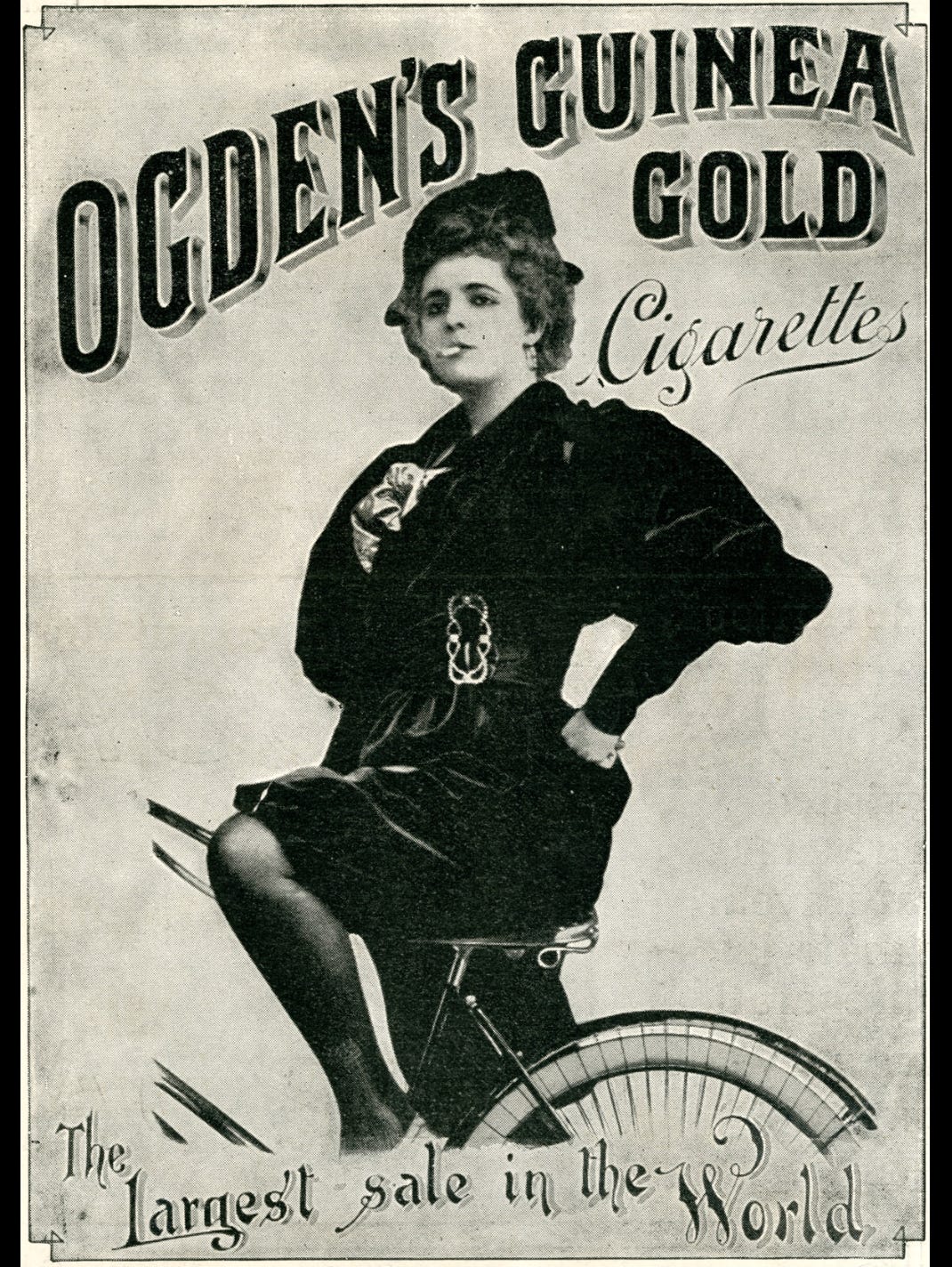
Image from wikipedia here.

Edward Bernays, 1929.
The American Tobacco Company hired Bernays to make smoking acceptable for women. He staged a group of women smoking in New York’s Easter Parade, called their cigarettes “torches of freedom,” and notified journalists in advance. The New York Times ran it on the front page. Bernays never bought an ad. He dropped a provocative creative choice into an existing cultural tension (women’s growing social independence) and let the discourse distribute it.
Structural DNA: identical to AE/Sweeney.
Levi’s, Fall 2025.
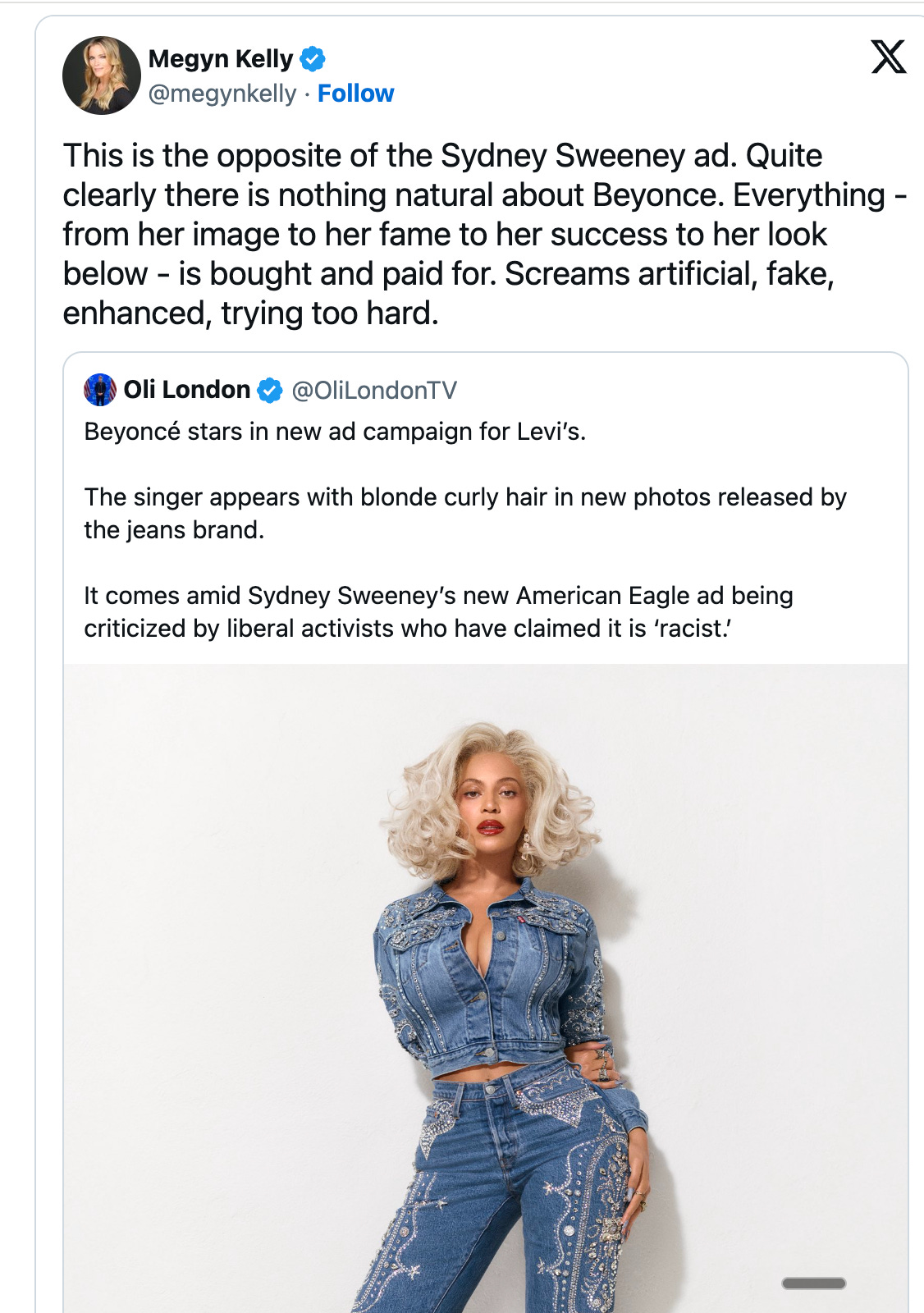
Levi’s cast Beyoncé wearing a blonde wig and red lipstick.
Megyn Kelly called it cultural appropriation of Marilyn Monroe. Piers Morgan weighed in. Neither Megyn Kelly nor Piers Morgan was paid to say that.
The earned media play ran exactly the same way.
Sebastian Siemiatkowski (Klarna CEO), 2024–2025.
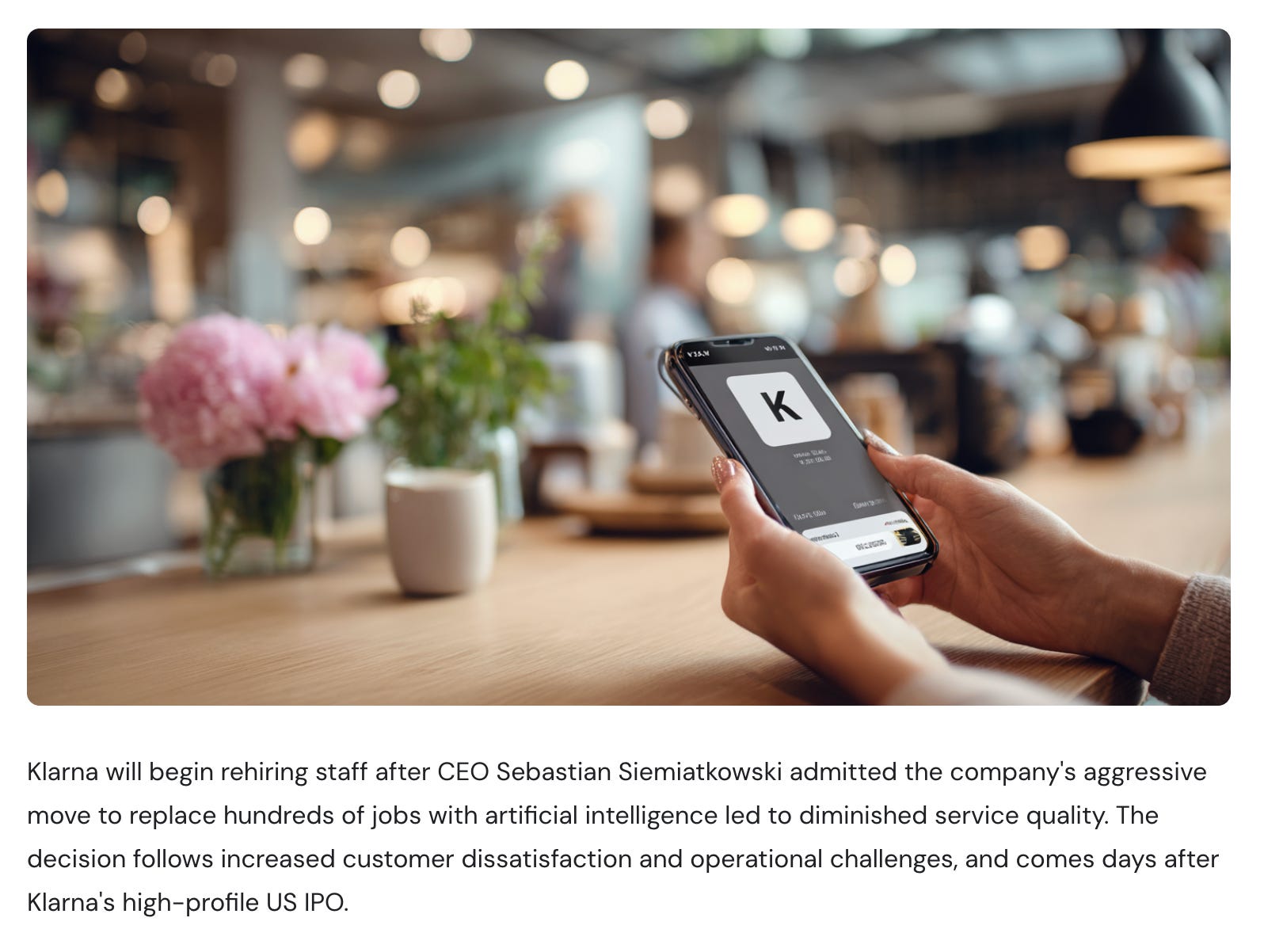
This is the B2B version. Siemiatkowski announced that AI was doing the work of 700 employees. Then announced he was dropping Salesforce as their CRM.
Then did an AI avatar of himself in an earnings call. No celebrity. No fashion. Just a founder willing to say the thing the industry didn’t want to hear. Global news coverage every time. The Lightning Rod works in B2B. The celebrity is replaced by an idea. The structure is identical.
One marketing pattern per week. Each issue breaks down what worked, why it spread, and what it means for the next 12 months. Free.
Why it works now
Three forces converged in 2025 to make the Lightning Rod Strategy work at AE’s scale.
Platform enforcement hollowed out.
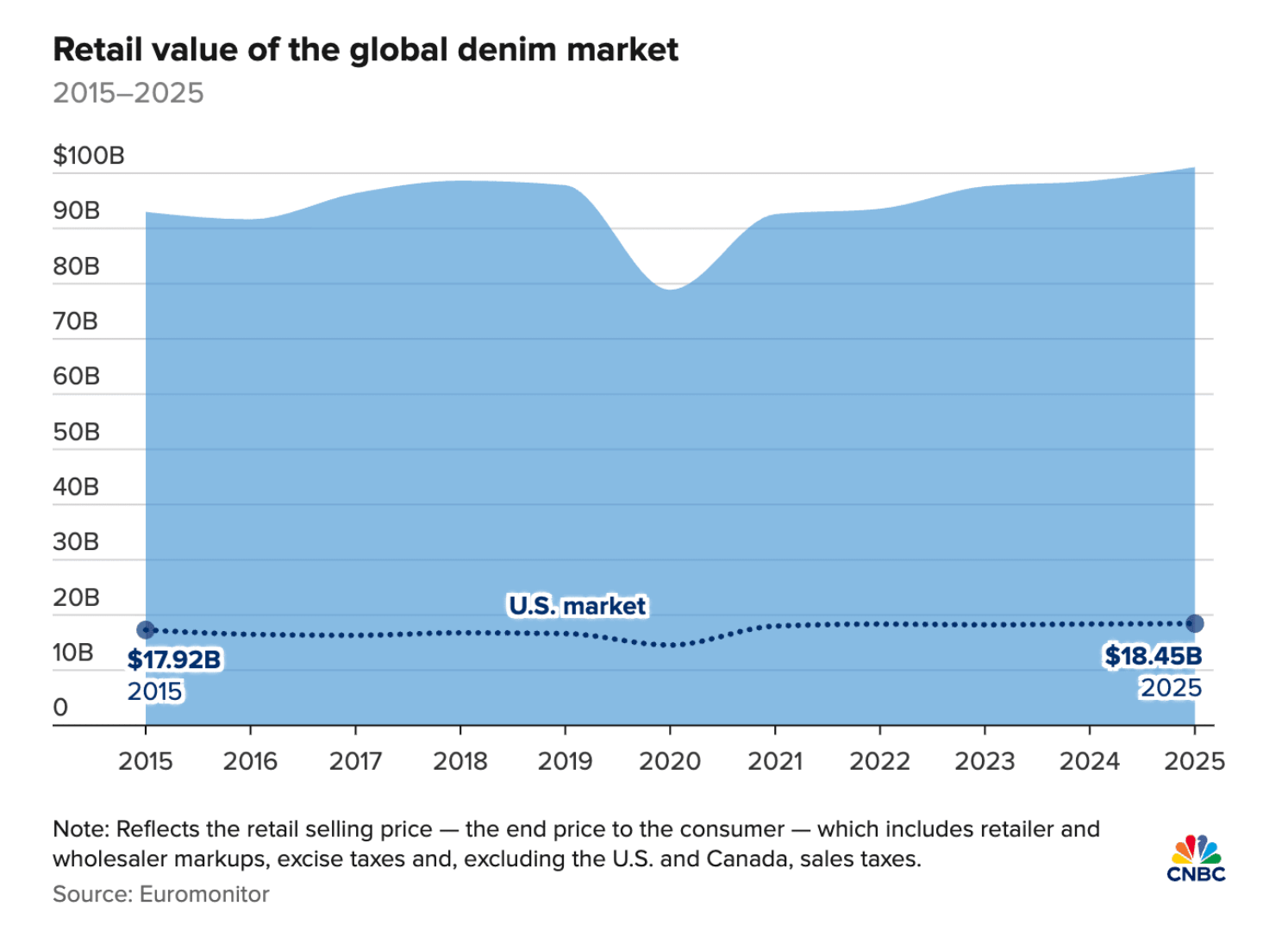
From CNBC
Between 2023 and 2025, long-standing brand safety industry working groups dissolved.
Platforms loosened content enforcement. Community Notes supplemented human moderation on X. When the infrastructure brand safety departments relied on gets dismantled from the outside, the entire calculus for controversial advertising changes. The gatekeepers stepped back.
The conditions for this play shifted with them.
Bot-amplified outrage.
Threat intelligence firm Cyabra analyzed the AE Sweeney campaign and found that 15% of the accounts driving the most negative backlash were fake. The brand didn’t engineer the bots. But the bots amplified the controversy into a far larger media cycle than organic outrage alone could sustain. The Lightning Rod generates algorithmic amplification from both real and manufactured engagement. The brand collects the impressions either way.
The media-political ecosystem needed content.
July 2025 was peak culture war velocity. Every major political voice was hunting for symbols to fight about. A blonde actress in jeans with a genetics pun was a perfect container.
They dropped a creative choice into an environment primed to combust.
Where the pattern failed
Bud Light’s 2023 Dylan Mulvaney campaign is the counter-case. And the structural difference reveals everything about when the Lightning Rod works.
Bud Light’s backlash hit actual buyers. Bud Light lost the top US beer spot permanently, Modelo rising to replace it. The outrage turned the brand’s own core customer base into boycotters.
AE’s backlash hit political commentators, not denim shoppers. The people most outraged about the Sweeney campaign were the least likely to have been buying American Eagle jeans. The brand’s buyers watched the controversy, felt the defensive pull, and converted.
e.l.f. Cosmetics featured comedian Matt Rife alongside drag performer Heidi N Closet in 2025, got organized backlash over Rife’s history of domestic violence jokes, and apologized. That apology did more damage than the controversy. It confirmed the choice was accidental. Authentic Lightning Rod brands don’t apologize. AE said nothing. They let the cultural argument run.
And there’s a failure hiding inside AE’s own success story. AEO’s Q1 2026 earnings report showed the American Eagle brand declined 2% in comparable sales, with inventory up 27%. Meanwhile Aerie, AEO’s sister brand that ran no controversial campaigns, grew 25% in comparable sales.
The Lightning Rod acquired customers. The Q1 data confirms the retention didn’t follow.
Should you propose this strategy to your client?
Before you propose this pattern for a client, work through these.
Is there a genuine cultural tension, or would you be manufacturing one?
The Lightning Rod works when it drops into an existing argument. Sweeney was already politically polarizing before AE ever called her agent. Forcing controversy without a real underlying tension produces noise, not coverage.
Does the backlash hit watchers or buyers?
Map your client’s customer profile against the political valence of the celebrity or creative choice. If your client sells to Democrats and you’re proposing someone Tucker Carlson will defend, the Lightning Rod hits buyers. That’s the Bud Light failure path.
Does your client have product readiness to convert the spike?
AE’s Q1 denim weakness suggests the awareness spike leaked. The Lightning Rod sends people to the door. They still have to like what’s inside. Inventory, store experience, and a conversion layer all have to be ready before you light the rod.
Can you execute Phase 2?
As of our research date, the top-performing AE ad on US TikTok wasn’t Sydney Sweeney.
It was a creator saying “I’m not sponsored but I wish I was @AmericanEagle” — 40K likes, Top 5% CTR, flagged High Budget by TikTok Creative Center.
AE is running that post as paid creative. The brand’s best-converting ad is explicitly anti-celebrity, anti-controversy, and anti-Phase-1 in format. Many brands copy Phase 1 and miss Phase 2 entirely.
If you are working with a client who has Lightning Rod Strategy potential, the paid tier includes the full client-ready strategy deck for this pattern — plus the growing library for every pattern in the archive. Built for practitioners who need to walk into a meeting with this.
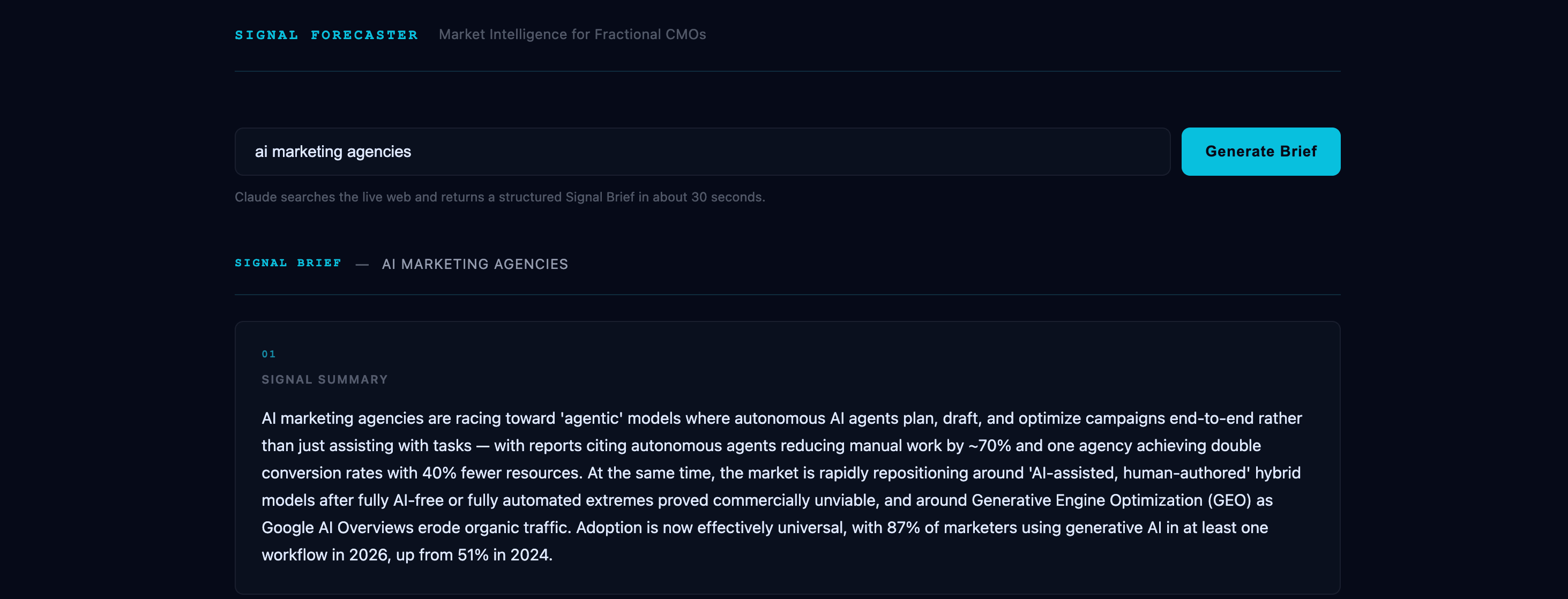
The Signal Forecaster runs this research for you.
Type any campaign or trend, then the webapp searches the live web and returns a Signal Brief in about 30 seconds: the pattern name, a three-scenario Forward Hypothesis, and a recommended move. The same structure you just read, for any topic your clients are asking about.
I’m opening 5 pilot spots to fractional CMOs at no cost, in exchange for a 20-minute feedback call. → Request a pilot spot
Matt’s take
The Rational Narrative: The brief every agency is about to pitch your competitors
The Lightning Rod Strategy is Peaking. High confidence. 3 independent signals point toward the same lifecycle stage
Google Trends
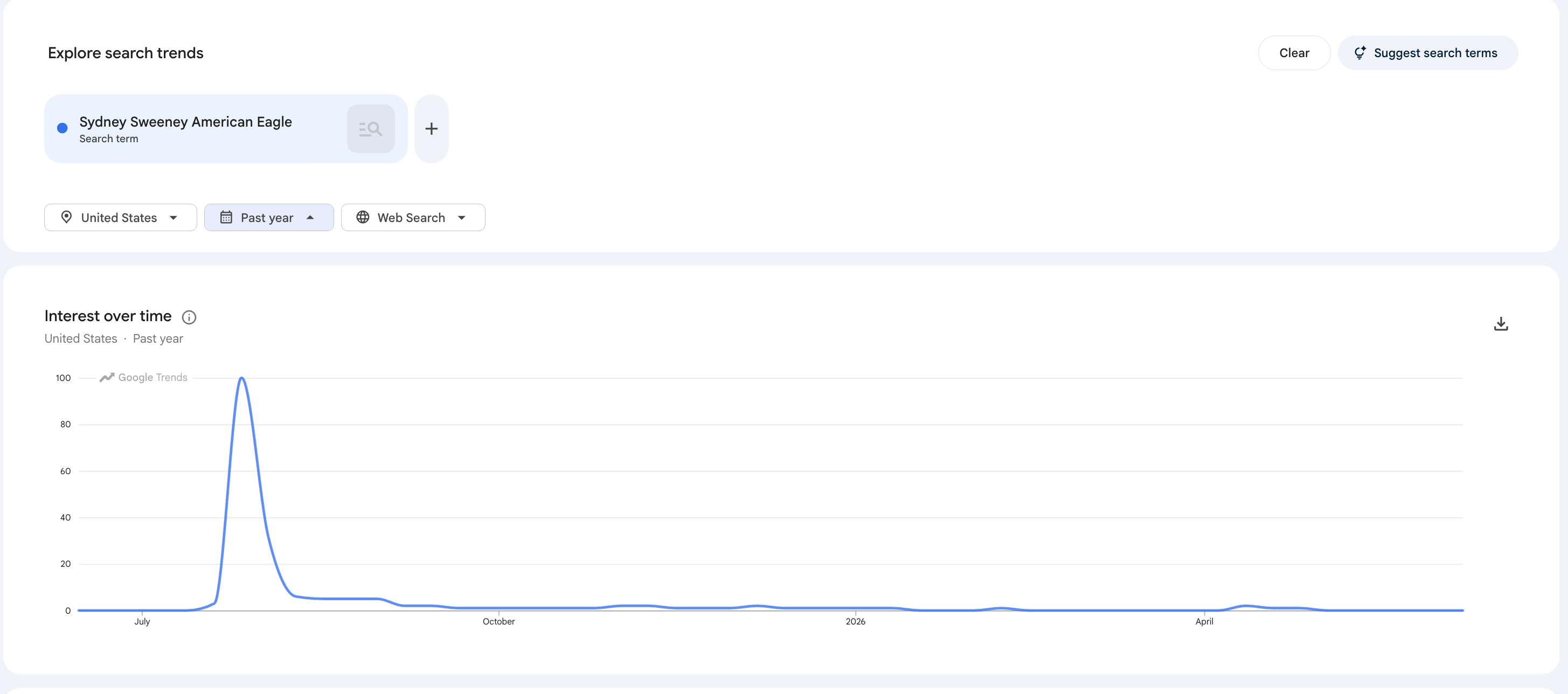
The “American Eagle” brand search hit 100 in July 2025 and returned to baseline ten months later. The lightning struck. The ground discharged.
Meta Ad Library: as of June 2026, AE has zero active US ads. Abercrombie and Fitch, which ran no controversy campaign, has dozens of active US ads. A&F is spending.
AE is coasting on brand equity now ten months old.
AEO Q1 2026 earnings: AE brand comparable sales declined 2%, inventory rose 27%, while Aerie grew 25%.
The non-controversy brand outperformed the Lightning Rod brand in the same quarter.
So here’s what I see happening in the 6-12 months on this strategy.
Scenario A carries the highest confidence.
The Lightning Rod generates an awareness spike that peaks, converts partially, and fades in 90 to 120 days. Brands that followed the spike with strong UGC conversion creative captured the second half of the ROI. Brands that went dark without Phase 2 watched acquired customers churn. AE’s Q1 data confirms this pattern with high probability.
Scenario B is worth watching.
The Lightning Rod is becoming visible to practitioners without being named.
Once it has a name (this newsletter is that moment) copycat attempts will arrive within twelve months. The quality of those attempts will determine whether the pattern spreads or collapses. If two or three major brands execute weak versions in Fall 2026 and produce Bud Light outcomes, the pattern gets retired fast.
Watch celebrity casting news from Gap and any major fashion house in Q3 2026 to see if this emerges.
One signal could change the entire assessment.
Cyabra’s analysis showed 15% of the Sweeney backlash came from fake accounts.
If that figure becomes widely known, the “authentic earned media” framing collapses. The Lightning Rod looks less like cultural resonance and more like manufactured outrage with bot amplification.
Academic interest in advertising desensitization would accelerate. The playbook would be retired before it was ever officially named in the trade press.
What changes this? If AE’s Q2 and Q3 2026 show AE-brand comparable sales turning positive, Scenario B strengthens.
If AE stays flat while Aerie keeps growing, Scenario A is confirmed by the end of the calendar year.
The Signal: why 44 billion impressions didn’t sell more jeans
I expected to find AE running aggressive paid follow-up after the largest earned media moment in recent retail history.
As of June 2026, ten months after the campaign: zero active US Meta ads. No visible US TikTok paid creative in the past 180 days.
A brand confident in its retention invests in amplification. AE went quiet.
And then the Bernays parallel landed. In 1929, Bernays generated front-page New York Times coverage for the American Tobacco Company with a single staged event. My read on Bernays: he was a better PR man for his own campaign than he was an advertiser for his client. The 44 billion impression figure may be AE’s version of that. A metric that travels farther than the product it was supposed to sell.
ChatGPT’s adversarial read put it cleanly: “The Lightning Rod Strategy doesn’t fail when people get mad. It fails when the argument travels farther than the product.”
The Q1 2026 earnings confirmed it. The argument got everywhere. The jeans didn’t.
The Keystone: the argument travels farther than the product
Here’s what the research found that no three-scenario model captures on its own.
The Lightning Rod Strategy is a top-of-funnel event. The brands that will use it well are the ones that already have Phase 2 built. The UGC engine. The creator network. The affiliate loop. The conversion system that catches the customers the controversy sends to the door.
For a fractional CMO, the pattern is useful in exactly one client context: a brand with strong product fundamentals that has become culturally invisible and needs a single awareness event to reintroduce itself. AE fit that brief in July 2025. The brand had spent years losing cultural relevance in a crowded denim market. The Lightning Rod was a rescue vehicle, and it worked as a rescue vehicle.
But the Klarna CEO tried the B2B version of the same play: 700 employees replaced by AI, Salesforce dropped, an AI avatar of himself in an earnings call. Then quietly reversed the 700-employee claim as AI limitations became real. The announcement traveled farther than the capability.
The pattern is identical. The argument gets everywhere. The underlying product has to actually be there when people arrive.
If you’re proposing this pattern to a client, the first question is: “what happens 90 days after the controversy dies?” If Phase 2 doesn’t exist, the Lightning Rod is a press release with impressive metrics and soft retention.
Build Phase 2 first. Light the rod second.
Before you pitch this to a client
If you’re a fractional CMO, the question isn’t whether the Lightning Rod Strategy worked. It did. In the quarter it ran.
The question is whether it worked for the reason you think. And whether those conditions exist for your client.
Hit reply and tell me: are you getting asked to replicate this? And if so, what’s your read on whether the product fundamentals are actually there?
See you next week.
— Matt
Prefer video? Here's the full breakdown on YouTube. [ Watch]
Really interesting read, and great tips on what to look for and think about before suggesting this strategy to a client.