

Your customers freeze when you give them options. Fate is how the best brands melt the freeze.
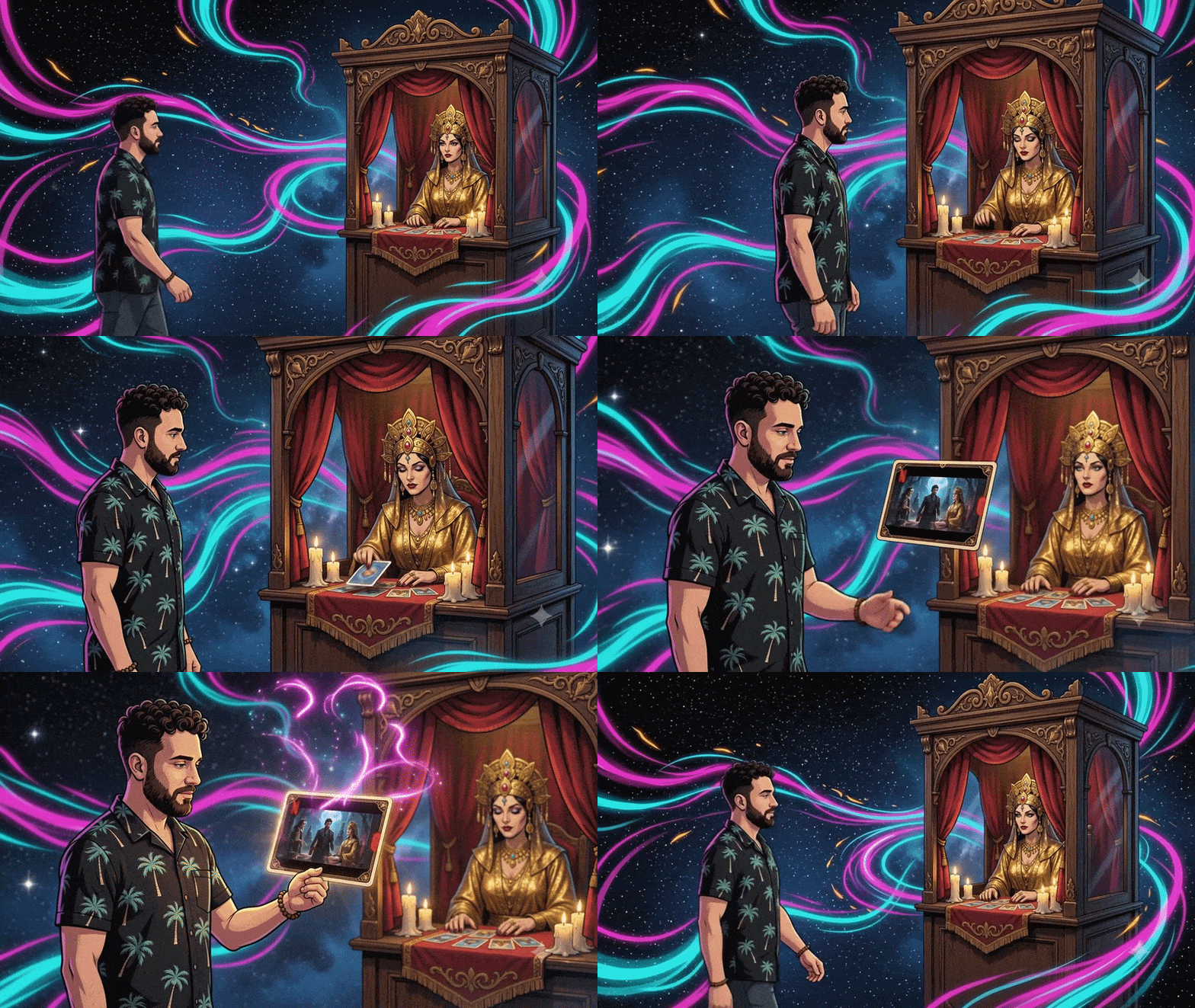
You already know this feeling.
You open an app to pick something.
A show. A moisturizer. A contractor. A software vendor.
20 options become two hundred. 45 minutes later you close the tab and pick nothing.
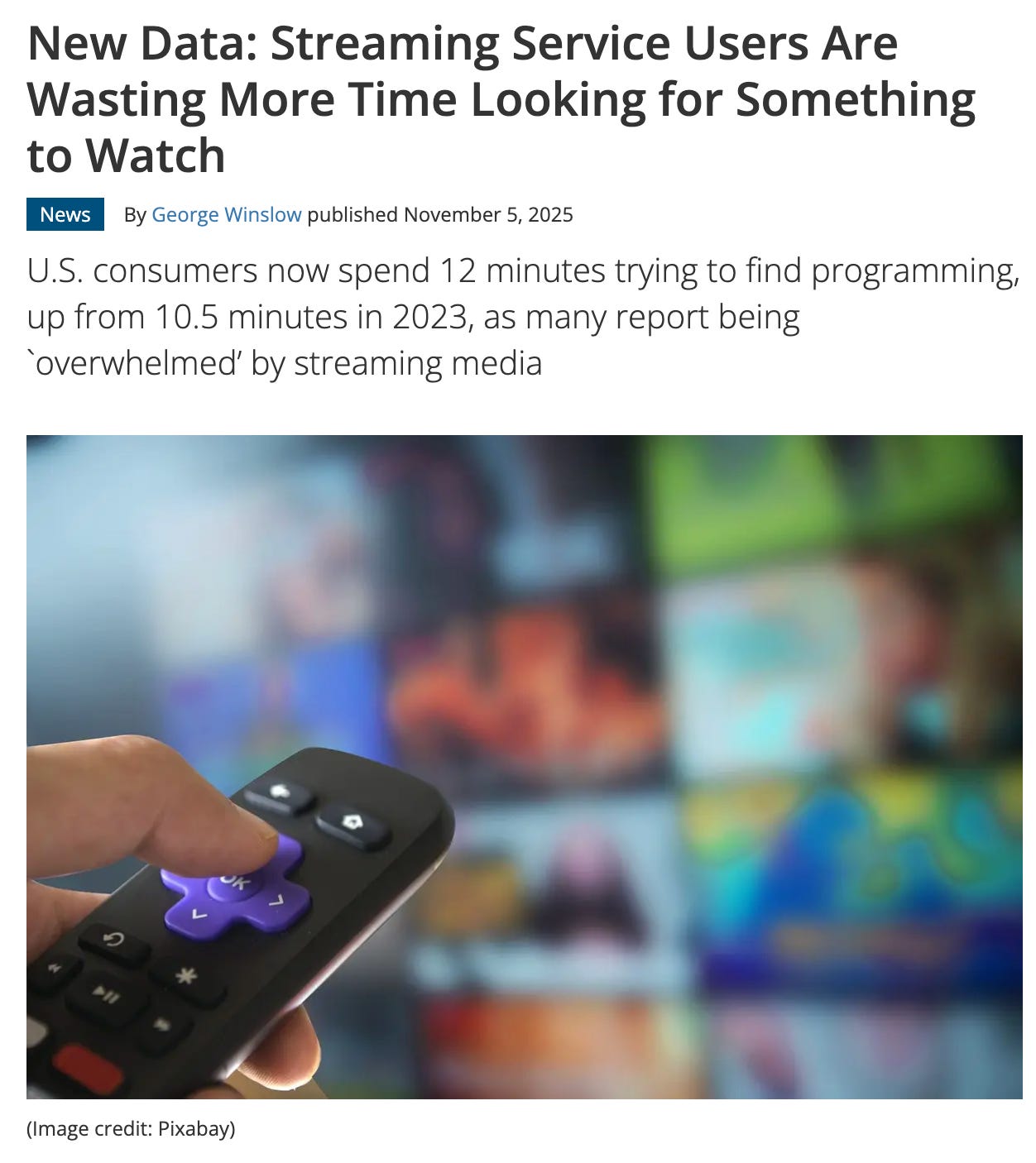
Image from TVtechnology here.
Gracenote studied this in 2025.
About 45% of streaming viewers say they feel overwhelmed by how much there is to choose from. The average viewer spends close to 14 minutes searching before committing to anything.
Roughly 19% give up and leave when the search fails.
Here’s the part marketers can easily miss.
It likely has nothing to do with content. You can add filters, better tags, smarter sorting, a slicker grid. The person still freezes. So you build a bigger menu, and the freeze gets worse.
Choice overload runs on anxiety.
When you hand someone ten thousand options, the real bottleneck is permission. The person is waiting for something to tell them it’s okay to stop looking and just pick.
That is the problem the smartest brands of the last two years quietly solved. And they solved it with a tool older than any algorithm.
Prefer to watch? The full breakdown of the Fate Disguise is on YouTube.
Watch the 8-minute breakdown →
(Substack embed: paste the YouTube URL on its own line right here and Substack auto-embeds the player.)
The proof of concept: Netflix in January 2026
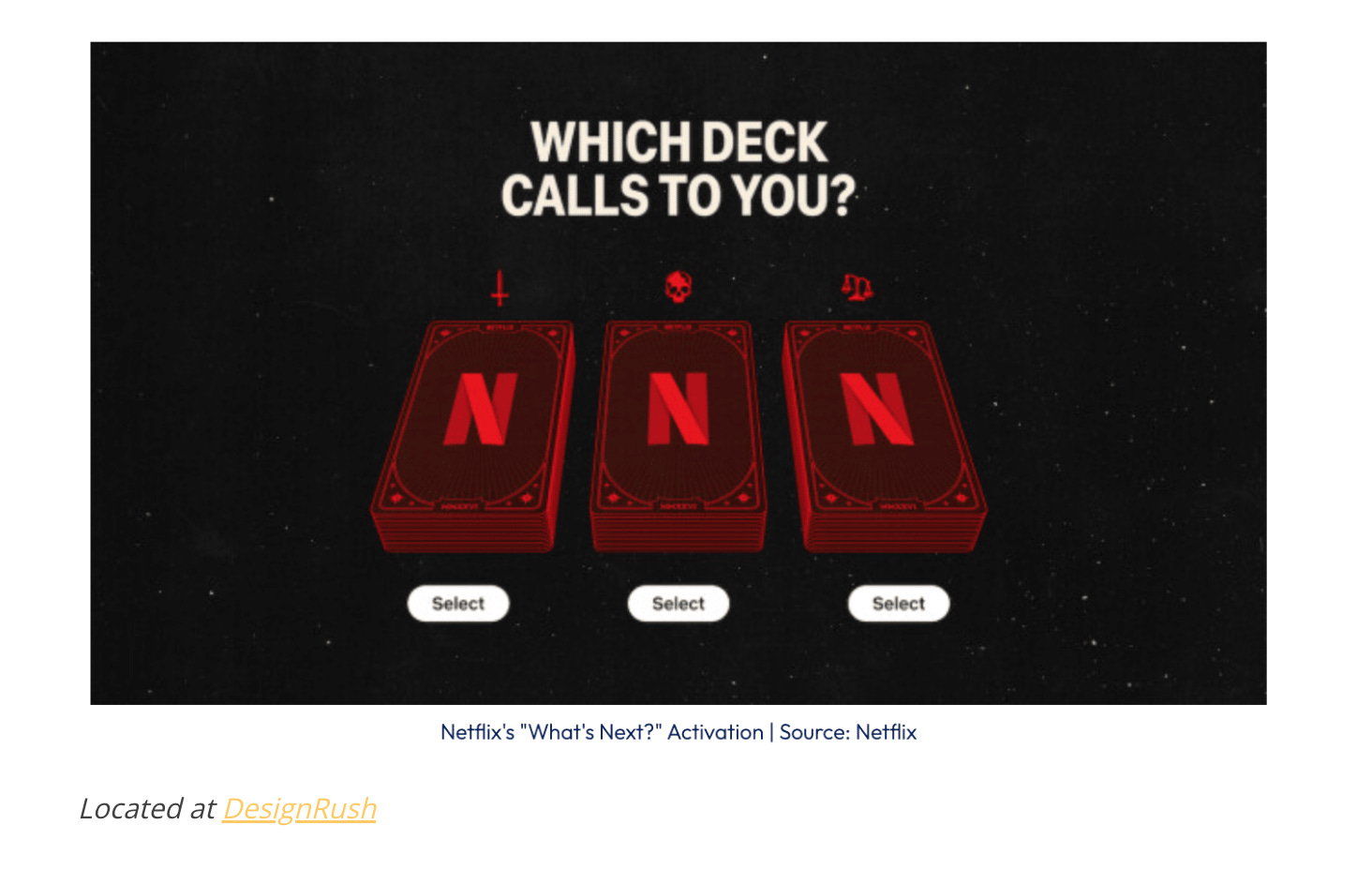
In January, Netflix wrapped its 2026 slate in a tarot reading.
Teyana Taylor played a fortune teller. Users visited the Tudum site, chose a focus like Career or Love, drew three cards, and each card revealed a show that was “meant” for them. A lifelike animatronic of Taylor read cards for commuters in Grand Central.
Netflix reported 104 million owned social impressions and called January 7 the best traffic day Tudum has ever had. Those are Netflix’s own numbers, so hold them loosely. No third party verified them.
But the metric was never the point. Here’s what Netflix actually did.
Their recommendation engine already works.
It already knew what you’d probably finish. The tarot gave you permission to trust the engine that was already there. The shift from “we recommend this” to “this was meant for you” is the whole move.
The pattern: the Fate Disguise
I’m calling this the Fate Disguise.
You take an algorithmic or data-driven recommendation, and you wrap it in fate-based language so the person feels personally chosen, the way a good gift feels picked just for you. “The algorithm picked this for you” becomes “the universe meant this for you.” Same recommendation.
Completely different experience on the receiving end.
The mysticism is the decision architecture itself.
It does the one job a better filter can never do. It gives the anxious chooser permission to stop choosing and start trusting.
Rory Sutherland has a line for this.
The airline that fixes a baggage-claim complaint doesn’t always make the bags arrive faster. Sometimes it just makes the walk to the carousel longer, so the bag is already there when you arrive. The bag shows up at the same moment either way. What changes is the experience of waiting for it.
Netflix changed what it felt like to receive a recommendation from its catalog, without touching the catalog.
And mysticism is the most loaded version of that move. Fate carries borrowed authority a brand cannot claim on its own.
The cards get to say “this is right for you,” and people believe them. That’s the disguise doing the work.
Watch it repeat across four brands
The Fate Disguise shows up everywhere once you see it.
Spotify Wrapped.
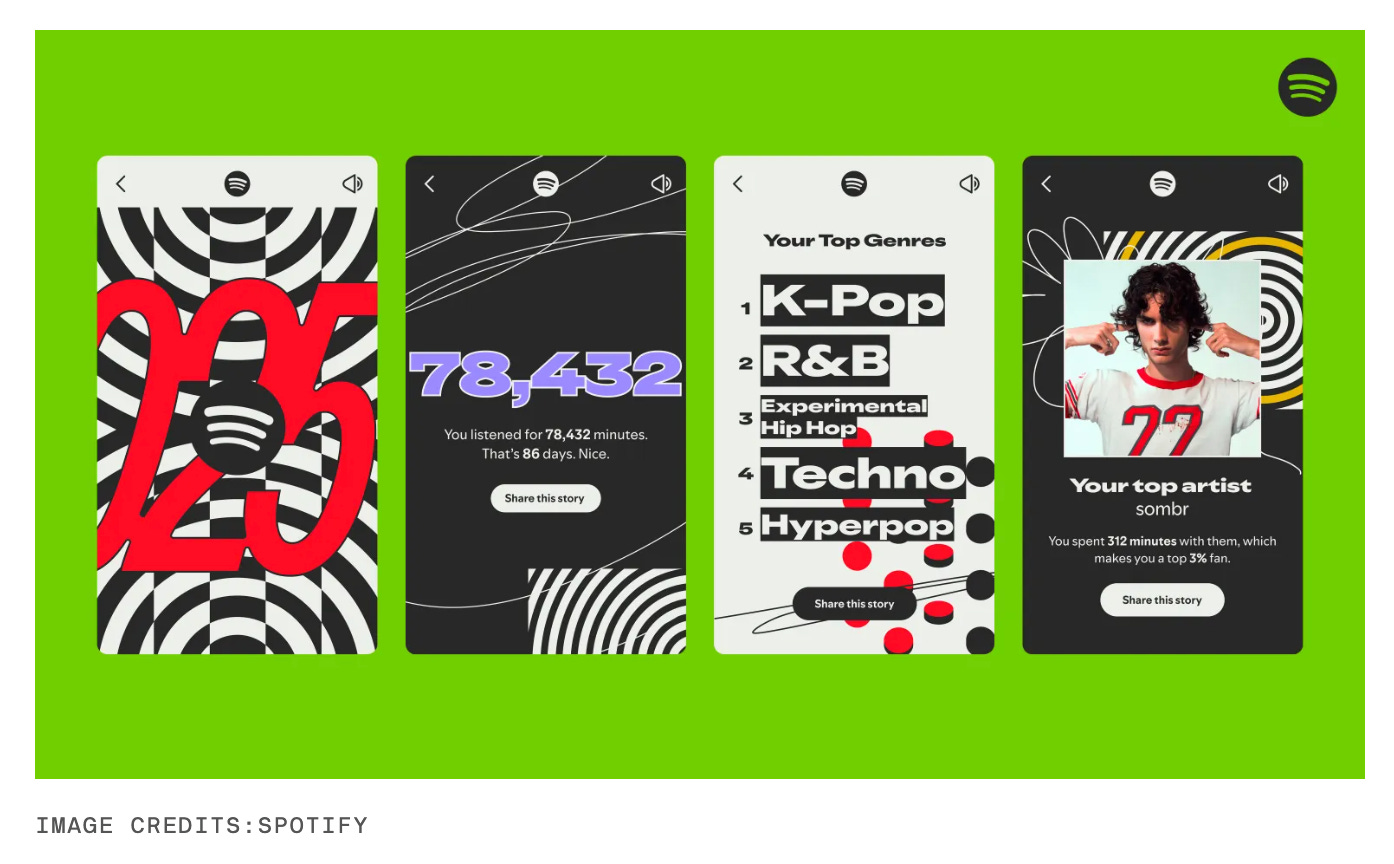
Screenshot from Techcrunch.
This is the canonical version.
Spotify takes your raw listening data, which is pure math, and hands it back as a revelation about who you are, down to your “listening age” and which “Wrapped group” you belong to. More than 200 million people engaged with Wrapped within 24 hours of the 2025 launch, and they shared their results like personality-test outcomes. Wrapped turns what you listened to into a verdict on who you are.
That’s the fate layer sitting on top of a database query. You can check out the full breakdown on this approach here.
Lucky Charms Charmology.
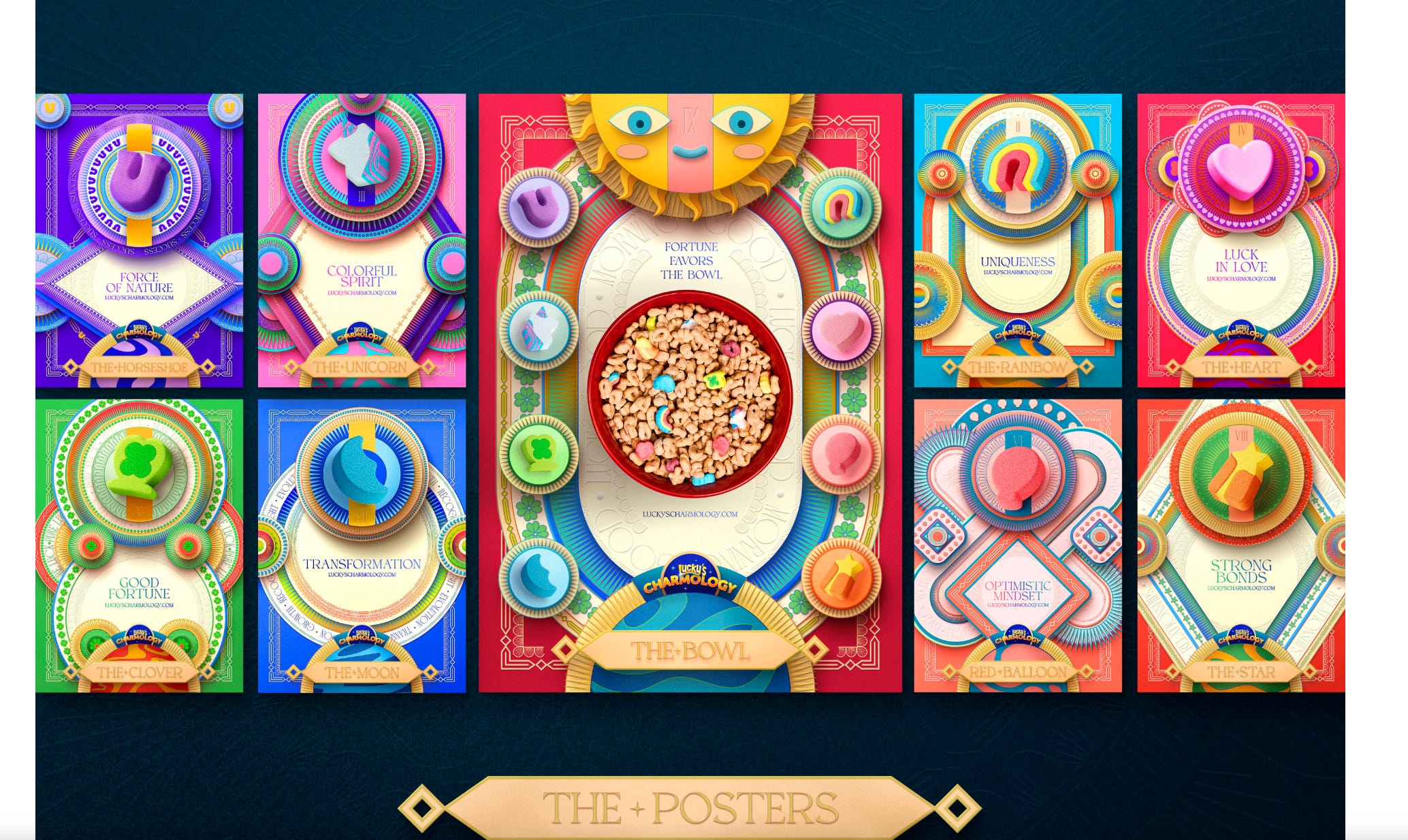
Screenshot from VML.
General Mills and VML built a campaign that scanned your cereal bowl, identified your marshmallow charms, and turned them into a personal fortune, with live “Charmology readings” from working astrologers.
Buying a box became a ritual of finding out what the charms say about you. VML reports the campaign drove a 37% lift in sales for a cereal that Gen Z had outgrown.
Mysticism as decision architecture for a grocery aisle.
Dior’s Le Château du Tarot.
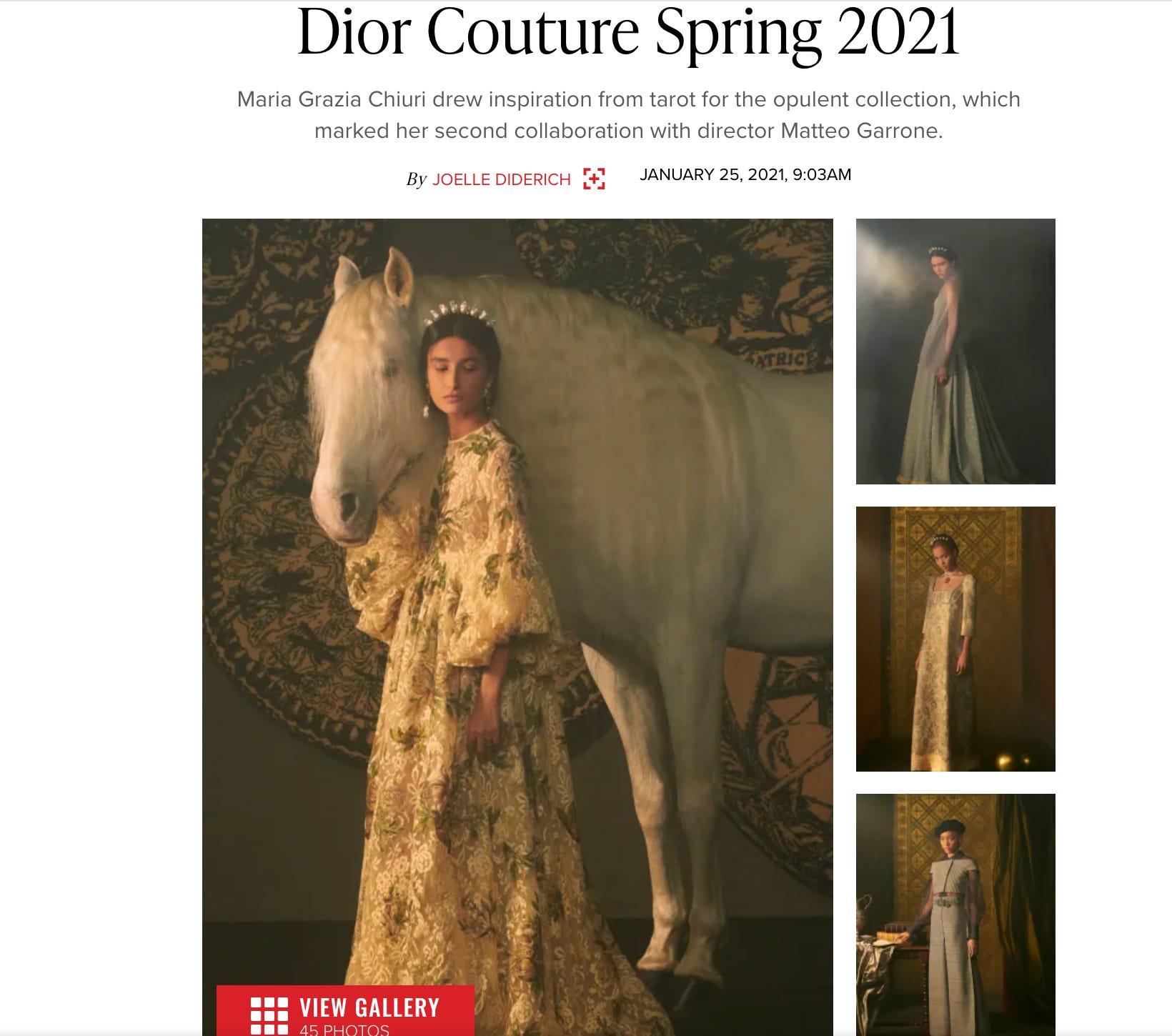
Screenshot from Women’s Wear Daily.
Dior built an entire tarot-themed world around its haute couture collection, using the iconography to position the clothes as oracular discovery.
The luxury frame fits, because tarot readers were historically gatekeepers of hidden knowledge, and Dior gatekeeps taste.
High-end, deliberate, and certainly earned.
Febreze CARstrology.
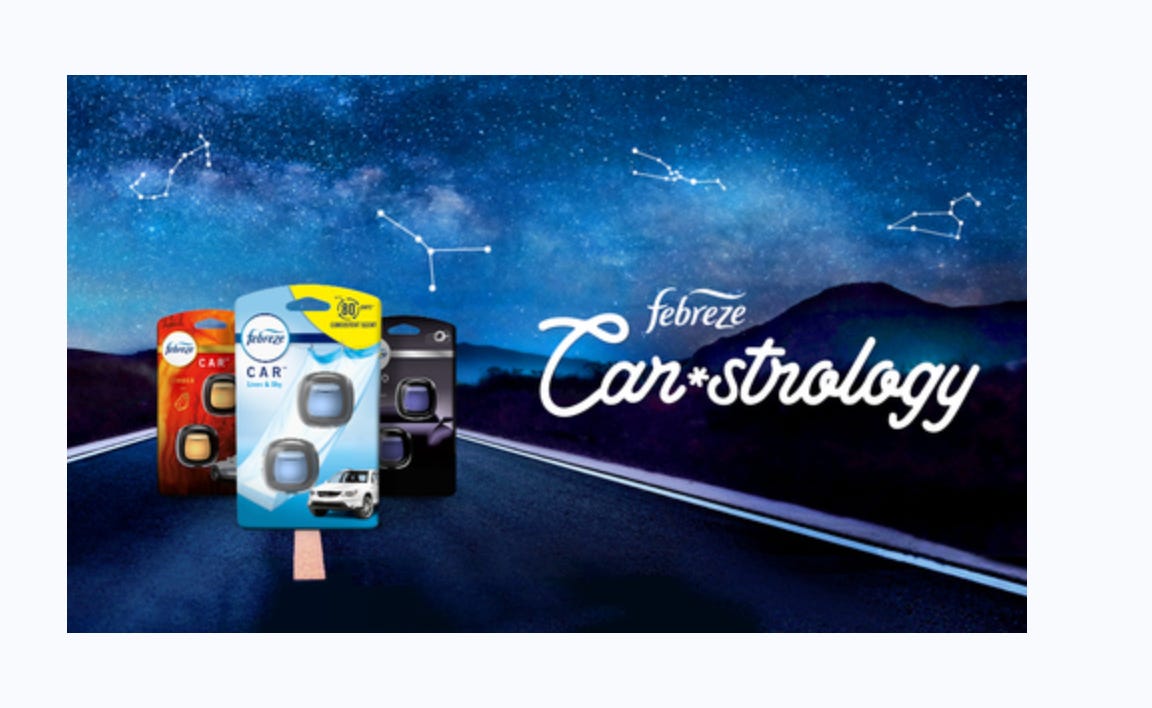
Screenshot from businesswire here.
P&G paired 12 Febreze car scents to the 12 zodiac signs and brought in astrologer Aliza Kelly to match each sign to its scent. Your sign tells you which one is yours.
A car air freshener, a low-stakes buy with a dozen near-identical options, became a question of cosmic fit.
The zodiac does the choosing.
Streaming, cereal, couture, car fresheners. Different price points, same psychological machine.
One marketing pattern per week. Each issue breaks down what worked, why it spread, and what it means for the next 12 months. Free.
Subscribe to The Strategy Signal →
Why this works right now
3 forces are converging to make the Fate Disguise land in 2026.
The first is cultural.
Mysticism is mainstream. The spiritual-products market hit roughly $186 billion in 2025, and the generation doing the buying treats astrology, tarot, and personality typing as normal vocabulary.
The aesthetic stopped being fringe years ago.
The second is technological, and it’s the interesting one.
We’re all drowning in “our AI recommends this.” Every app does it now, and every app is transparently trying to sell us something. So people are starting to distrust the algorithmic voice. Fate framing reads as more neutral than a recommendation engine. The cards don’t have a quarterly target.
The universe is doing more than trying to upsell you. Mysticism gets stronger precisely as algorithmic fatigue gets worse.
The third is economic.
Every platform is adding inventory faster than humans can process it. The choice problem compounds every quarter. As the menu grows, the value of anything that gives permission to stop scanning grows with it.
There’s a quieter truth underneath all three. The oldest move in caring for another person is to create the conditions where they can trust what they already sensed was right. The Fate Disguise works because it sits closer to that than to a sales pitch.
It accompanies the anxious chooser and stays beside them through the decision.
Where the Fate Disguise breaks
The pattern fails in 3 predictable ways. Each one is a rule in disguise.
The thin disguise.
When the mystical wrapper is pure aesthetic and the recommendation underneath is weak, people feel the manipulation.
The cards are beautiful and the algorithm is still bad. Netflix could run this because its engine genuinely surfaces things people finish. A brand with weak personalization underneath gets exposed the moment the fate layer over-promises and the product under-delivers.
The rule here? The disguise can only be as strong as what it’s covering.
The cultural trespass.
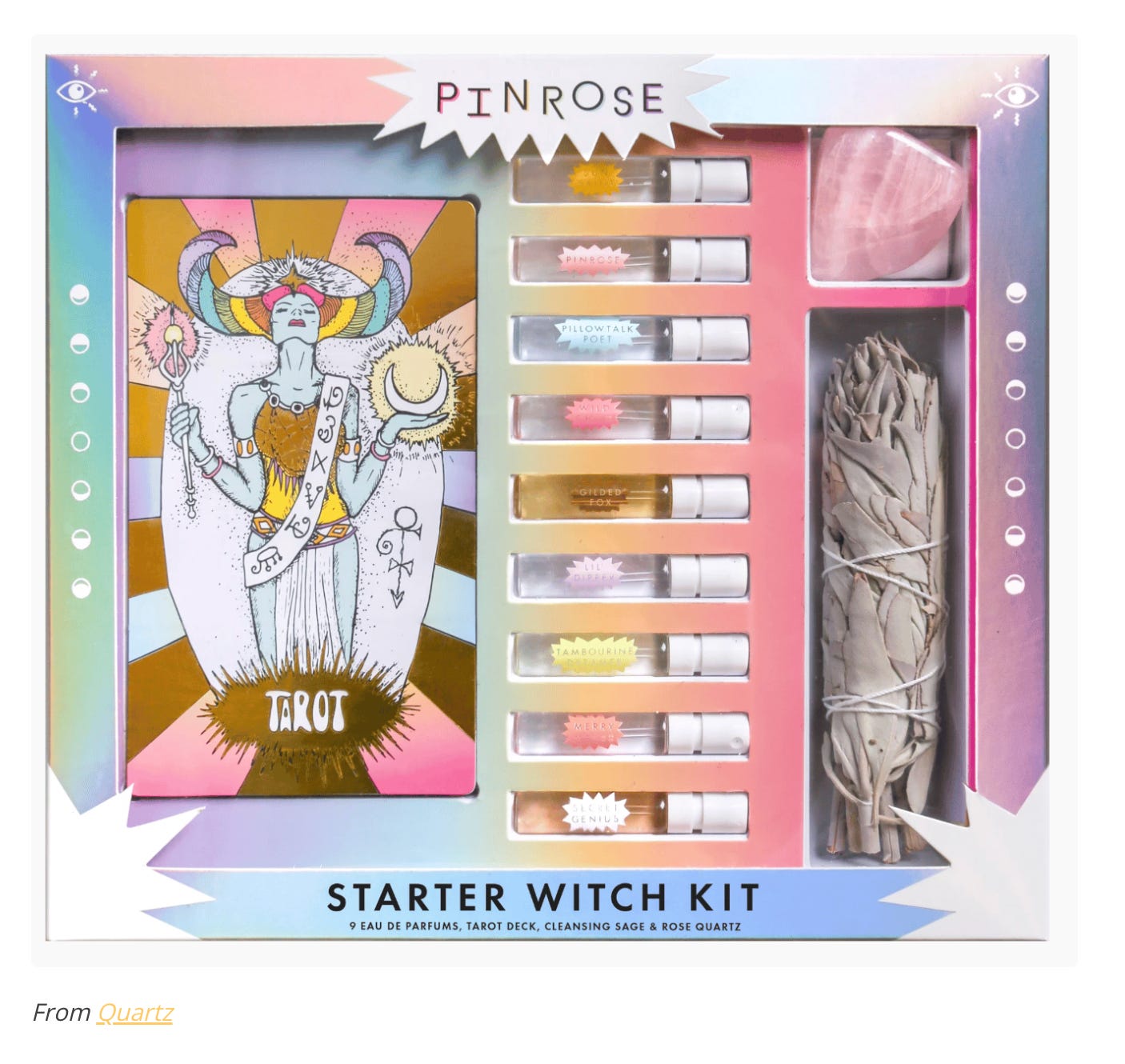
Tarot reading carries centuries of divinatory tradition.
Zodiac systems carry deep cultural and astrological lineage. Deploy these without fluency or a credible connection and you get accused of appropriation. Sephora learned this in 2018, when its “Starter Witch Kit” with Pinrose got pulled after backlash over commodifying sacred practice. Dior earned the tarot frame through decades of fashion-as-ritual positioning.
A value-meal promotion using tarot iconography would not.
The rule: you need a real entry point, or the mysticism reads as costume.
Fate without follow-through.
The Fate Disguise front-loads meaning.
“This was meant for you” raises the emotional stakes on the product. If the experience then disappoints, normal buyer’s remorse curdles into something sharper. Fate lied to me.
The rule: the mysticism is only as strong as the post-purchase experience that has to honor it.
Questions to ask before you deploy this
If you’re a fractional CMO holding this pattern, run your client’s situation through these:
Where in the customer journey are people drowning in options and quietly wishing something would just choose for them? That high-friction discovery moment is where fate goes.
Is the recommendation underneath actually good? If the personalization is weak, the mystical frame just speeds up the disappointment.
Does the brand have a credible entry point into the mystical frame you’re considering? A founder story, an audience, a genuine connection to the tradition?
Can the post-purchase experience honor the promise the fate layer makes?
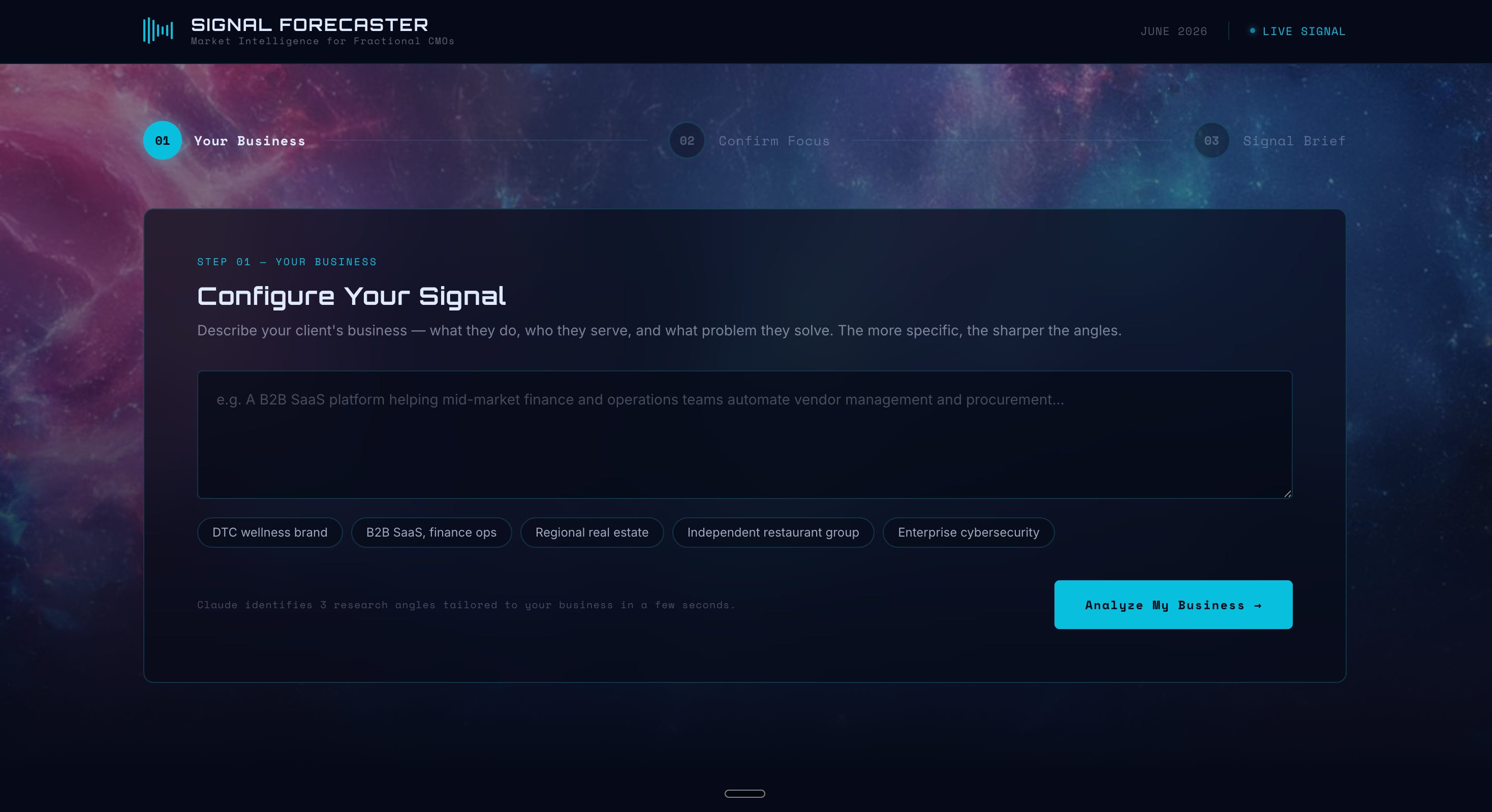
You have clients in five different industries. Every one of them is waiting on you to tell them where their market is heading, and which move to make before their competitors make it.
That’s the job. Read the signal, name the pattern, hand them the play. Running that research by hand for every client and every trend is the slow part.
The Signal Forecaster does the research for you. Type any campaign or trend, and it searches the live web and returns a Signal Brief in about 30 seconds: the pattern name, a three-scenario Forward Hypothesis, and the recommended move. The same structure you just read, for any topic a client throws at you. You walk into the meeting already holding the answer.
I’m opening 5 pilot spots to fractional CMOs at no cost, in exchange for a 20-minute feedback call.
Matt’s take
The Rational Narrative: the discovery feature your competitors copy by Christmas
The Fate Disguise is emerging.
No practitioner has named it. No brand is running it in paid media yet. That short gap is the opportunity, and the runway is short before it becomes table stakes.
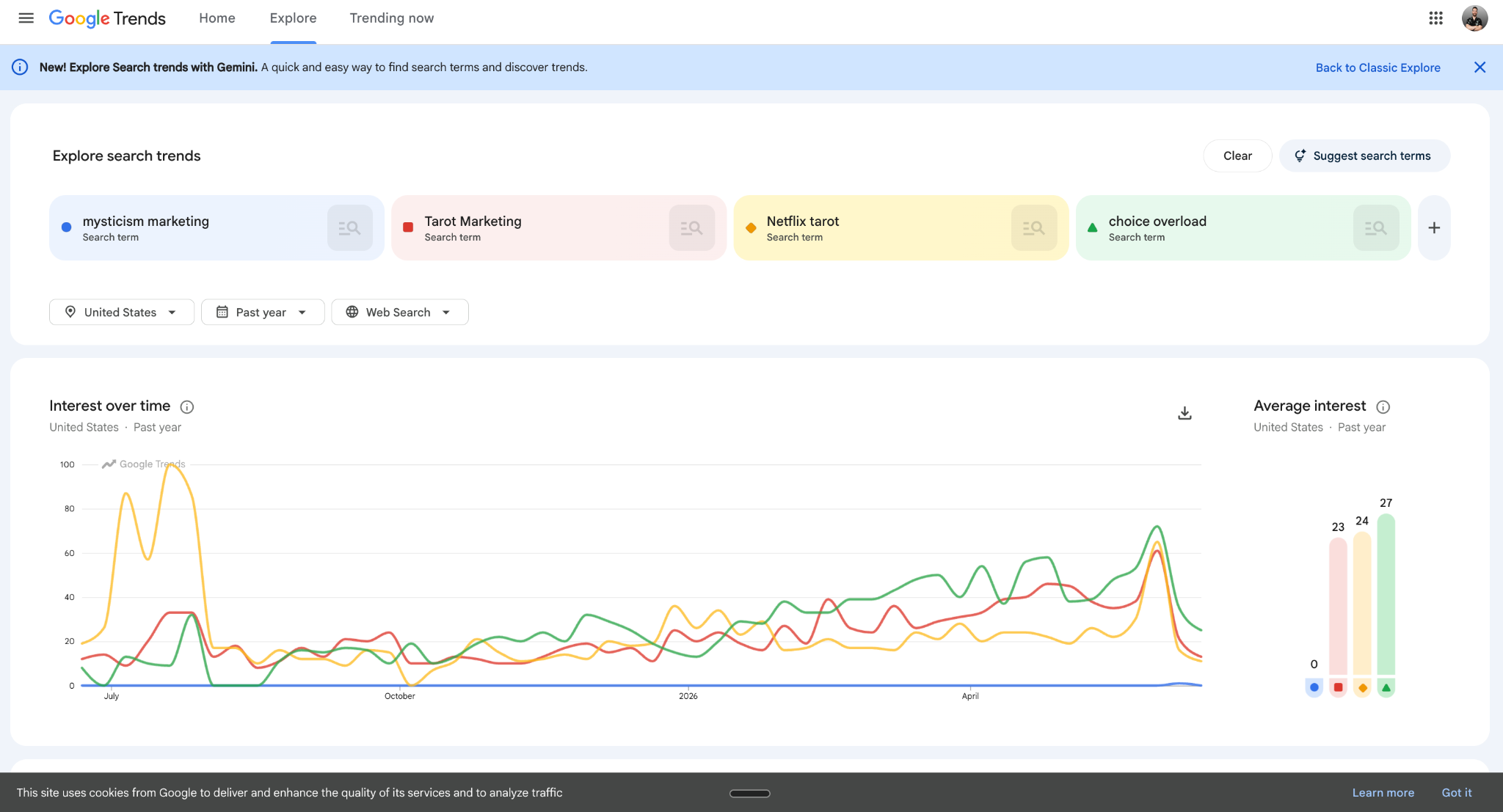
First, the read on the signals. Netflix reported the 104 million impressions itself, so treat that as reach, not proof. The Meta Ad Library shows zero brands buying fate-based paid creative, which measures paid inventory, not demand. YouTube returns nothing for “mysticism marketing strategy,” which tells us the practitioner conversation has not started. Three independent signals, all pointing the same way.
Scenario A is the most likely.
Call it 60 percent, over the next 12 months. The Fate Disguise moves from experiential PR into paid media and product UX. Streaming and luxury run it first. Premium categories approach saturation by late 2027, which opens the door for B2B versions.
Scenario B is the one to watch.
Call it 25 percent, over 18 months. A high-profile brand deploys the move without the product quality or cultural fluency to back it. “Mysticism washing” becomes the shorthand, the way greenwashing did. The pattern gets poisoned before it reaches the mainstream. A visible misfire plus that phrase showing up would confirm it inside 90 days.
Scenario C is the long shot, and it closes the window fastest.
Call it 15 percent, inside 6 months. Another publication names this pattern first. I am not calling that yet. Watch for a named version of fate-based marketing in a major marketing newsletter.
What would change this read: a quiz platform shipping a “destiny quiz” template before Q4.
That pushes Scenario A straight into commoditization, and the first-mover window closes early.
Watch the Klaviyo and Typeform template libraries.
The Signal: the best part of Netflix’s campaign was not the tarot
Here’s what I didn’t expect to find.
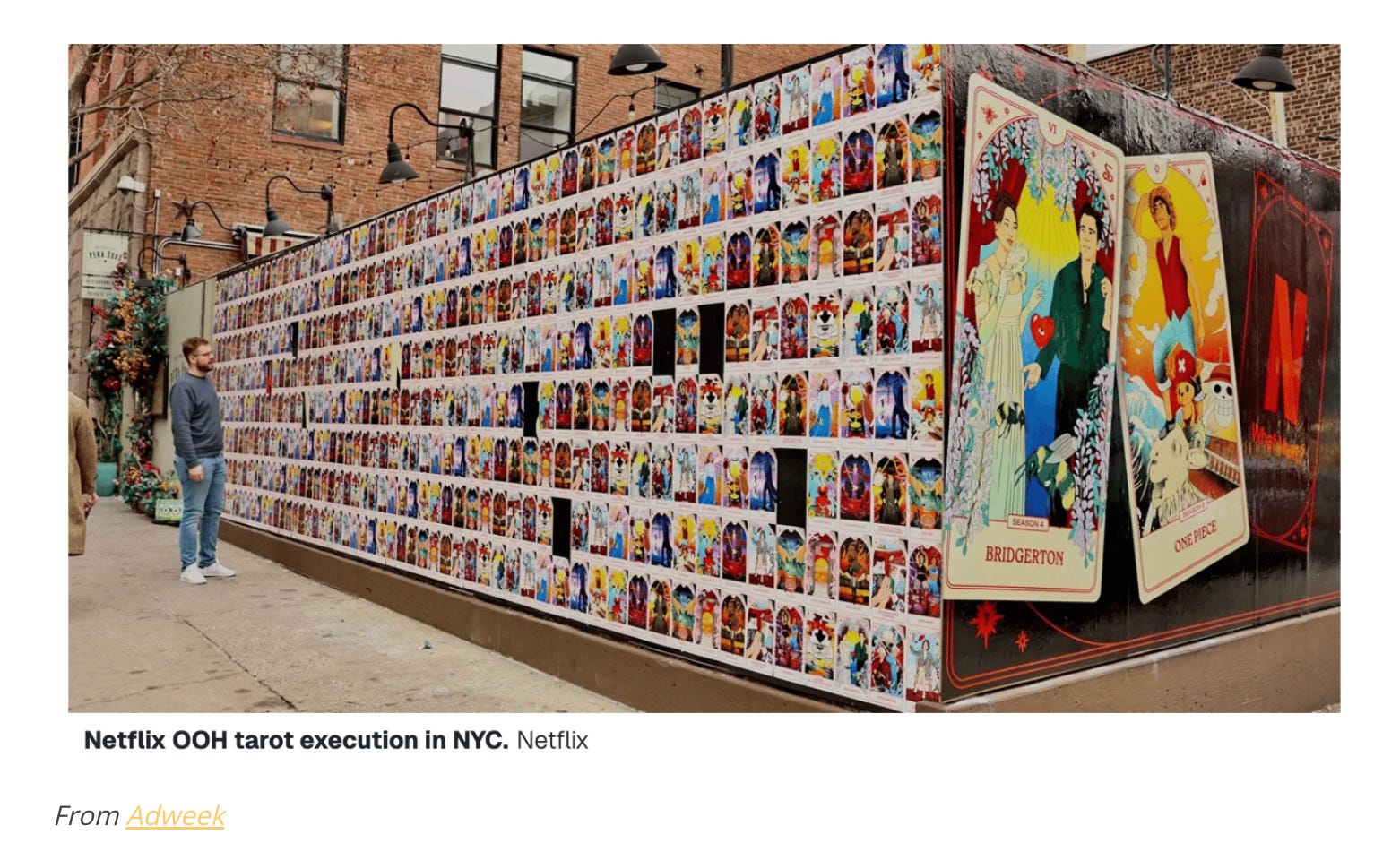
Netflix’s strongest element was Teyana Taylor in Grand Central. A live human. A specific voice. A scarce, in-person moment that people lined up for. Rational analysis says the infinitely scalable digital oracle should have been the hero. The crowd showed up for the person.
There’s a precedent that should make every marketer pause. December 2019, The Mandalorian. While the whole industry was over-optimizing for user control and infinite choice, Disney+ did the opposite. One weekly drop. No binge. Parrot Analytics clocked it at 31.9 times average demand, the most in-demand show on the planet at the time. They handed control back to a single weekly story, and demand exploded.
So here’s what it changes. The smart play might be smaller and more human. One real person with taste who looks you in the eye and says “trust me, watch this.” That beats a prettier oracle.
The Keystone: the Fate Disguise is really paying down trust debt
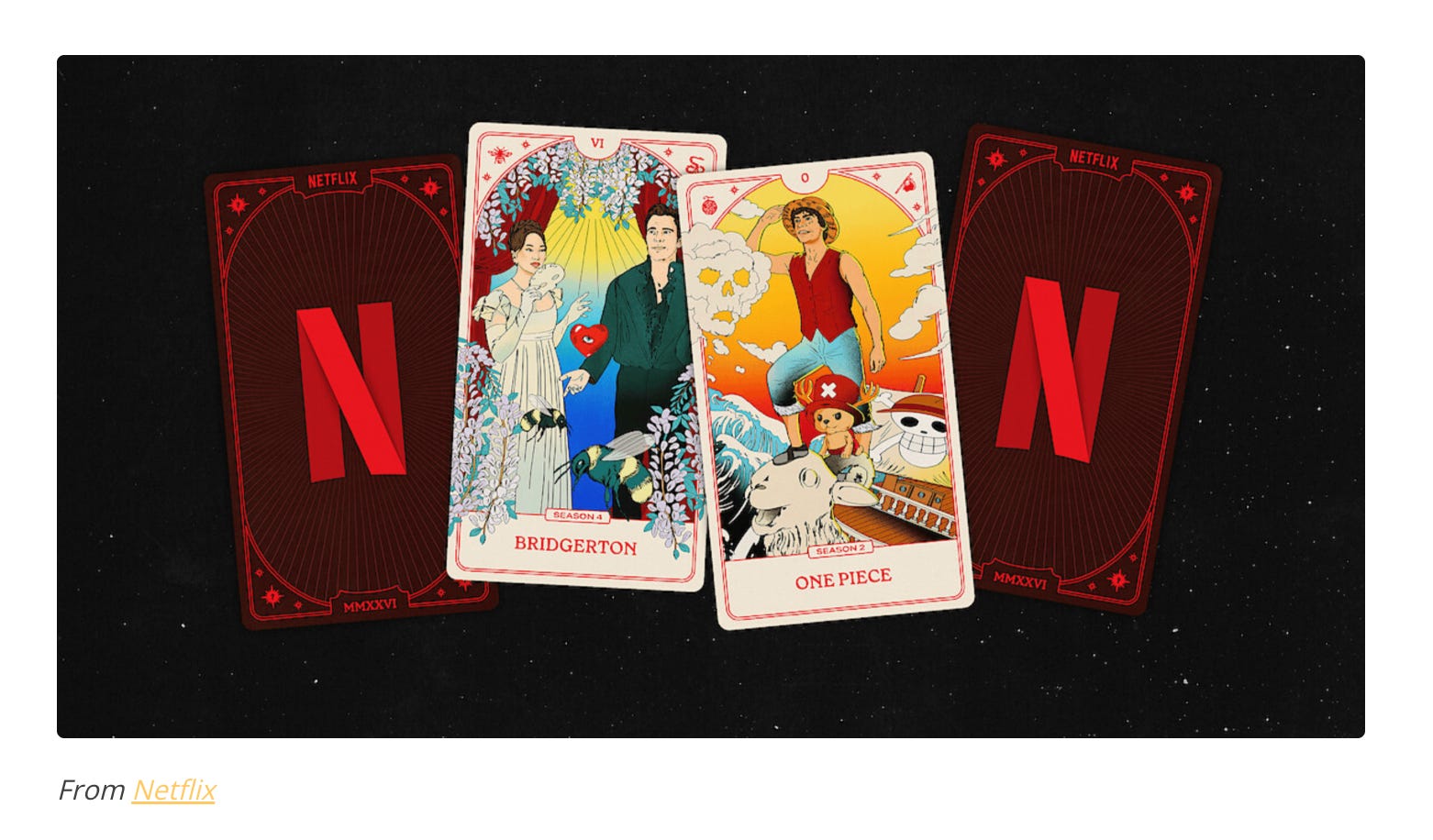
Netflix’s algorithm has been sorting people for years. Everyone knows it. The tarot campaign gave people permission to believe in the algorithm anyway. That move, from “we recommend this” to “this was meant for you,” is a trust move wearing a mysticism costume.
Underneath the choice problem is a permission problem. People want a human they trust to say “this one.” You earn that. A model can compute a recommendation, but it cannot hand you permission.
So if every brand scales mystical UX, the one with the most credible human voice behind the oracle wins. The sentence your client needs to be able to say out loud is this: the algorithm didn’t choose this. A human with taste did. And they picked it for you.
Where in your client’s customer journey are people drowning in options and waiting for permission to choose?
Hit reply and tell me. I read every response.
Thanks for reading. Have a good week. See you on the flip side.
P.S. The Signal Forecaster turns any campaign or trend into a full Signal Brief in about 30 seconds, so you can run this play for any client, on demand. I have 5 free pilot spots open for fractional CMOs, in exchange for a 20-minute feedback call. Request a pilot spot →
Where in your client’s customer journey are people drowning in options and waiting for permission to choose?
Hit reply and tell me. I read every response.