

The maturation pivot
How Chime’s Jason Momoa gamble reveals the new rules of challenger brand strategy, and the one question every CMO should answer before the next big spend
Here’s what this newsletter covers
The Maturation Pivot: why growth-stage disruptors have a narrow window to shift from performance to brand and why most miss it
Chime’s Jason Momoa campaign dropped CAC while running a massive brand spend… here’s the mechanics behind that
How Klarna, Dollar Shave Club, and Mailchimp ran the same play across three different industries
Three brands that made this pivot too early, during a trust crisis, or with the wrong messenger and what collapsed
Five diagnostic questions for your next campaign brief, including the one that changes the whole brief
Why this pattern gets crowded in the next 6–12 months, and what a quietly running Chime product suggests about where the real move actually is
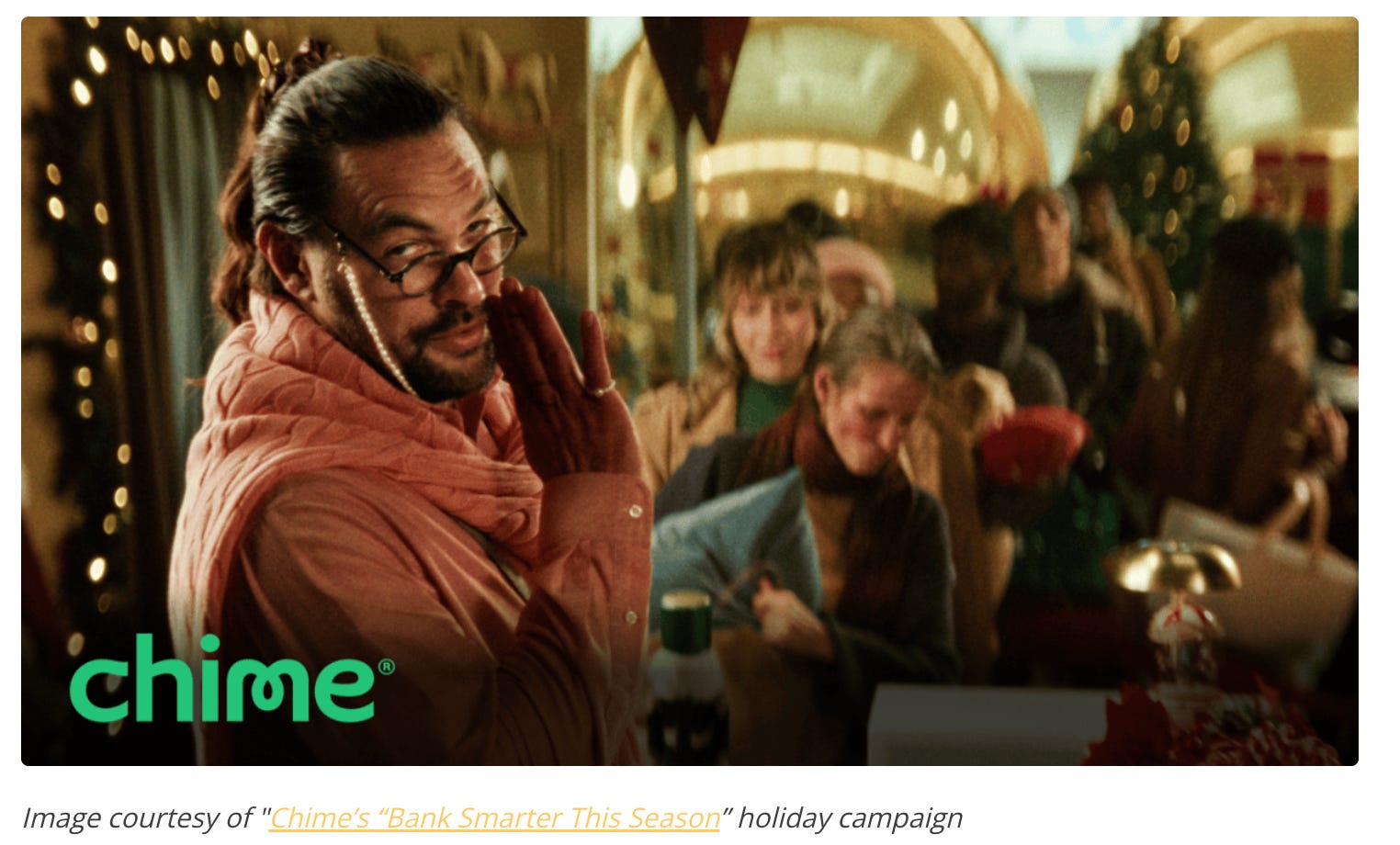
Chime spent a small fortune putting Jason Momoa in a mall cop costume.
Their customer acquisition cost dropped 10% anyway.
That’s not what’s supposed to happen. The conventional case for big brand campaigns is built on a trade-off: you buy awareness now, you accept short-term efficiency loss. Performance numbers take a hit.
You trust the long game.
But Chime’s Q3 2025 numbers broke that pattern. Revenue up 29% year-over-year. Active members up 21%. Marketing spend trending down as a percentage of revenue: 42% in 2022, roughly 26% by mid-2025. And the CAC dropped for the 3rd consecutive quarter.
Something else is going on here.
The maturation pivot
What you’re watching is a pattern I’m calling The Maturation Pivot.
It’s the strategic shift every growth-stage disruptor eventually has to make. Most of them time it badly.
Here’s the idea.
When you’ve proven product-market fit and unit economics are genuinely improving, a window opens. Brand investment starts to compound faster than marginal acquisition efficiency gains. The brands that recognize that window and move are the ones that build moats. The brands that miss it win the feature war and still lose the market.
Chime saw the window. And when they moved, they claimed emotional territory competitors couldn’t touch.
What Chime actually did
To understand the campaign, you have to understand what Chime was working against.
Chime went public on Nasdaq in June 2025 at roughly $11.6 billion fully diluted. The IPO raised $864 million. With that came real pressure: quarterly scrutiny, analyst coverage, institutional investors comparing Chime’s growth trajectory to every other fintech that went public and watched their valuation collapse.
The story Chime needed to tell? We’re building a durable consumer franchise with real brand moats.
At the same time, the competitive landscape had shifted underneath them.
Fintechs had been running a feature war for years: no overdraft fees, instant transfers, high-yield savings. By Q4 2025, every meaningful player had a version of every feature. The whole category had become a Signal Graveyard: same benefits, same no-fee messaging, same acquisition creative, and an audience that had learned to tune all of it out.
The functional differentiation that got you your first 5 million users doesn’t get you to 15 million.
So on October 22, 2025, Chime launched “Bank Smarter This Season”: their first-ever holiday campaign, starring Jason Momoa in three character transformations: mall cop with a mullet, balding mattress salesman, all-pink department store associate.
Agency: Mojo Supermarket, an independent known for earned-media-first creative.
The insight driving the campaign?
The holidays are when the money relationship gets most chaotic. Every single consumer feels it. Traditional banking refuses to acknowledge it, pushing aspirational imagery of perfect holiday tables or running credit card promotions that amplify the stress.
Chime stepped into that gap with humor and recognition. Momoa’s characters are there in the chaos, nodding, pointing at Chime as the calm in the middle of it all.
How did it do?
Chime’s unaided awareness in online banking reached 41%, a 12-point climb since 2023. The fastest growth came among Americans earning $50K–$100K annually, exactly the demographic Chime identified in their S-1 as the primary growth engine. Stock moved up 7.36% in aftermarket trading after earnings. And the CAC dropped for the 3rd consecutive quarter.
CMO Vineet Mehra calls his framework “performance storytelling” which could be defined as brand creativity run with direct-response analytics discipline.
The Momoa campaign ran brand and performance as one system.
The same pattern across 3 other industries
Klarna ran this play six years earlier, and the mechanics are worth studying.
By 2019, Klarna’s BNPL product was excellent.
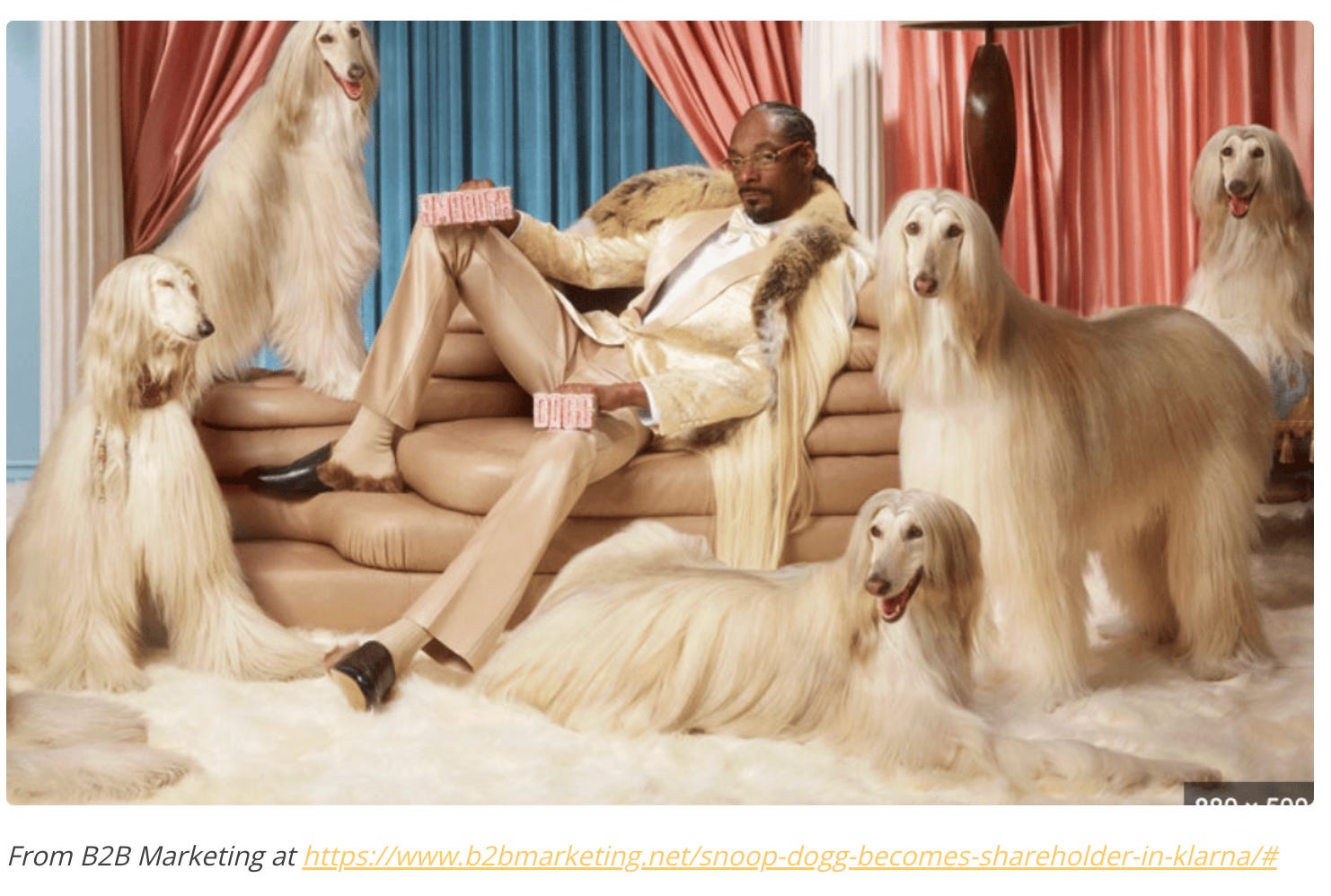
Afterpay and Affirm were replicating it fast. The feature moat was closing. Klarna had built its brand around B2B merchant relationships. The consumer-facing identity barely existed. So they hired Snoop Dogg, made him a creative partner and shareholder with genuine skin in the story, and built a campaign around a golden retriever named “Smoooth Dogg.” The creative was deliberately absurdist, built for earned media, impossible to explain rationally.
Results? 16 million new consumers in the year following launch. Merchant sign-ups up 140%. User growth from 10 million to 85 million over the campaign period. Valuation from $20B to $50B.
The pattern? You claim emotional territory when rational territory is getting crowded.
Dollar Shave Club had $4,500 and a warehouse.
In 2012, their founder walked into it, said “Our Blades Are F***ing Great,” and walked through increasingly absurd scenarios. 12,000 orders in 48 hours. 3.2 million YouTube views in 72 hours. Four years later, Unilever paid $1 billion for the company and Gillette launched a competing subscription model.
DSC recognized something early: competing on blade technology against Gillette’s R&D claims had diminishing returns.
Nobody actually decides on a razor because of blade geometry.
They decide based on how the brand makes them feel about themselves.
Mailchimp pulled it off without a celebrity at all.
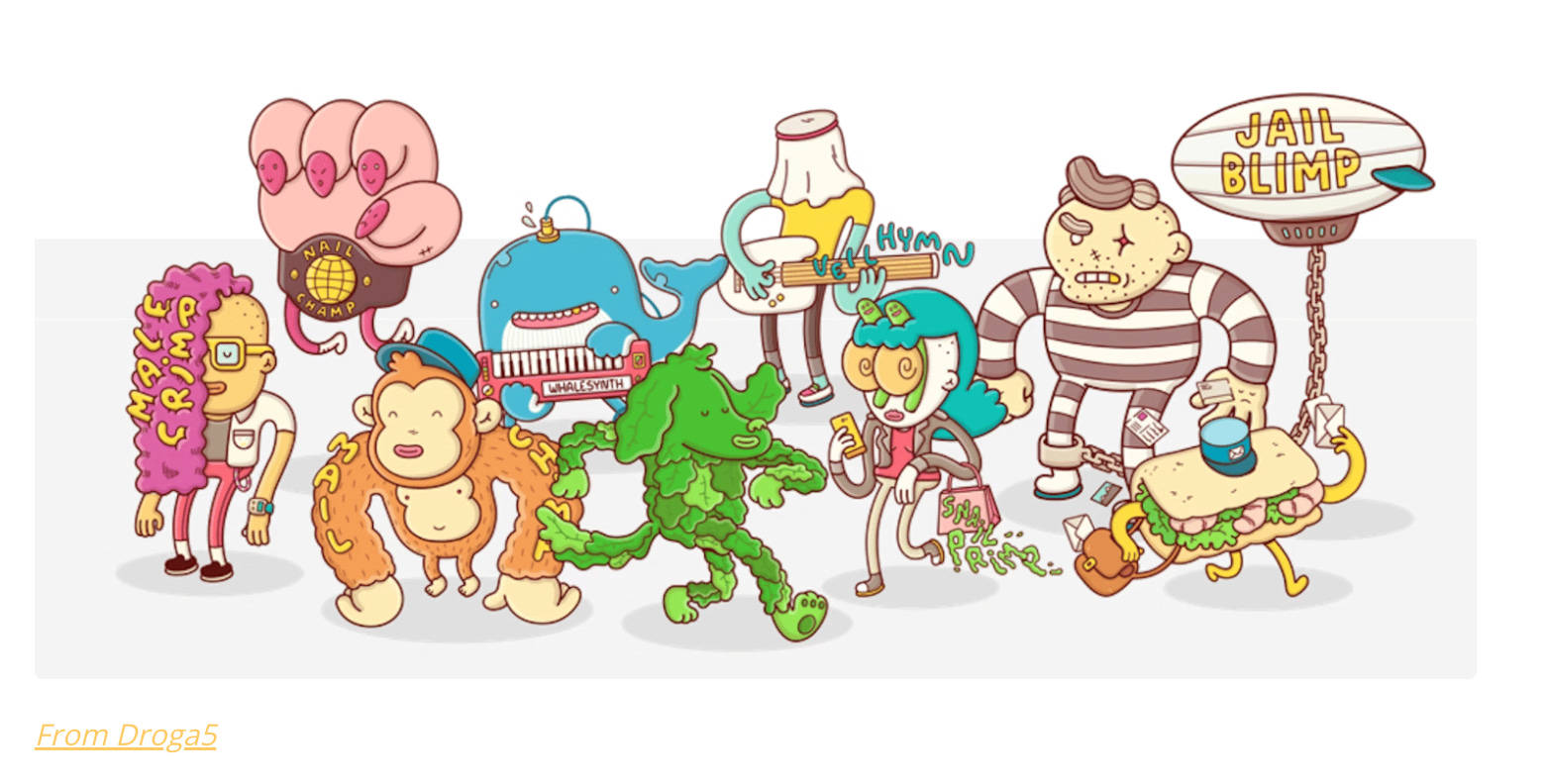
“Did You Mean Mailchimp?” ran in 2017, a campaign built entirely on deliberate mispronunciations: MailShrimp, KaleLimp, FailChips. No feature showcase, no spokesperson, just brand work that made the category feel different.
The campaign won a Cannes Cyber Grand Prix and reached 334 million people. When Intuit acquired them in 2021, the price was $12 billion, the highest ever paid for a bootstrapped company.
3 different industries.
3 different execution styles.
1 underlying pattern: when your product works and competitors are catching up on features, the game shifts from functional differentiation to emotional territory.
Why this pattern is more valuable right now
3 forces are converging that make the Maturation Pivot more powerful in 2025–2026 than it was even five years ago.
AI-generated content is flooding every channel.
The volume of generic content in every category has exploded, and most of it is indistinguishable from everything else. The premium for genuinely human storytelling is climbing: high production value, authentic creative collaboration, ideas that couldn’t have been generated by a model. Chime’s Momoa campaign is a signal that this brand invests in human creative work.
In categories where trust is the primary purchase barrier, that signal matters.
Look, feature parity is accelerating everywhere. SaaS, healthcare, consumer brands. The competitive timeline from “we have a unique product advantage” to “everyone has that advantage” has compressed significantly. Brands that wait until features are commoditized to invest in emotional equity are already too late.
And public markets are increasingly rewarding brand narrative.
Investors distinguish between growth and durable growth, between brands that have users and brands that have loyalty. Chime’s IPO timing wasn’t incidental. The holiday campaign was partly designed to shift the analyst narrative from “unprofitable tech growth story” to “consumer franchise with brand moats.”
That framing affects multiples, analyst ratings, and institutional conviction.
2 ways the pattern fails
The Maturation Pivot has specific failure modes. Both are instructive.
Pivoting too early.
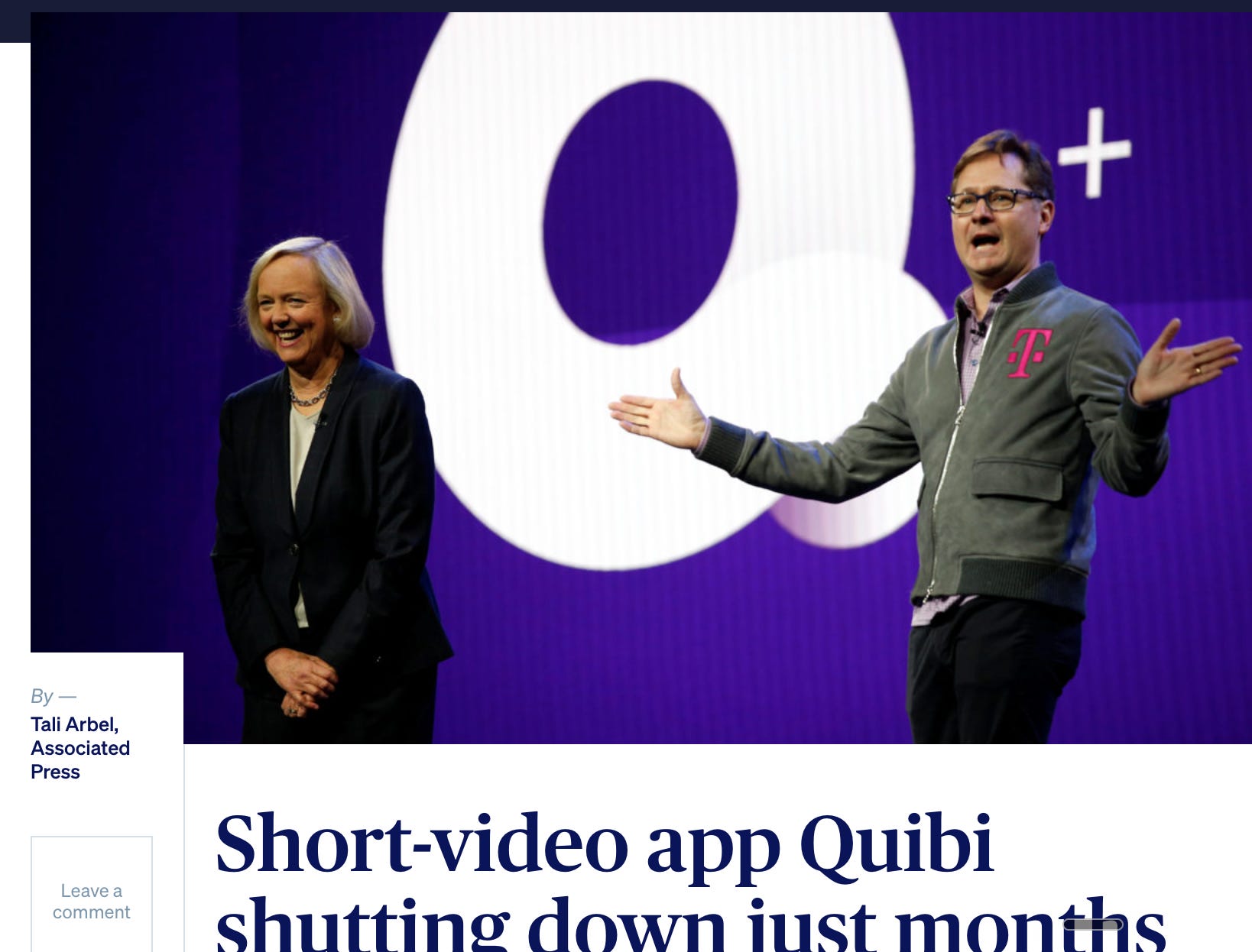
Image from PBS News.
Quibi launched with $1.75 billion, celebrity IP from Spielberg and Reese Witherspoon, and massive brand investment before anyone had proven that consumers wanted premium mobile-only content. No product-market fit.
Nothing to amplify. 6 months after launch, Quibi closed.
Brand investment needs existing momentum before it can compound.
Running brand during a trust crisis.

Image captured from Marketing Dive.
After the GameStop trading halt in 2021, Robinhood launched “We Are All Investors,” aspirational brand work emphasizing democratic access and financial empowerment. The product had just demonstrated exactly the opposite. Running inspirational messaging while users were actively experiencing product failure created cognitive dissonance. The campaign amplified skepticism.
The stock fell 75% post-IPO.
Here’s what connects both…brand investment came without the conditions that make the pivot work.
Proven product.
Improving unit economics. A cultural entry point the brand legitimately owns.
A partnership with genuine skin in the story.
Momoa described it plainly in a Men’s Journal interview: “Our values align. I work hard. I could probably use a little help with my own personal banking... I’m a relatively authentic person, and it was a perfect match.”
That’s what creative collaboration looks like. Momoa talked about his actual banking situation in press interviews. Audiences feel that difference.
5 questions for your next campaign brief
Before the team opens a creative brief, work through these.
Has product-market fit been proven, or just assumed? Measurable primary adoption, low churn, unit economics improving for multiple consecutive quarters. Brand investment before this point is noise.
Is your feature differentiation compressing? If your top three product advantages could be replicated by a well-funded competitor in 18 months, the window for feature-led marketing is narrowing.
Do you have a cultural entry point the brand legitimately owns? Holiday financial stress is Chime’s. It connects to their product mission and actual customer base. The territory you claim should live at the intersection of what you believe and what your customers are genuinely experiencing.
Is the creative collaboration authentic? Snoop Dogg became a Klarna shareholder. Momoa talked about his own banking in press interviews. When talent has genuine skin in the story, audiences feel it.
And the diagnostic question that cuts to the core: is this an acquisition problem or a depth problem?
Matt’s take: the identity mirror campaign
Here’s what the research doesn’t surface cleanly. What many CMOs will miss when they study this campaign.
The Rational Narrative: the brief every agency is about to pitch your competitors
The conventional playbook when a challenger brand IPOs is settled wisdom: invest in celebrity-driven brand campaigns to build mainstream awareness and drive acquisition among new demographics.
Hire the right talent, claim the emotional territory competitors abandoned, let the brand halo lower downstream CAC. Every agency in the world would have written the same brief for Chime.
The signal data over the next 6–12 months runs parallel to that logic. And points toward where the pattern gets crowded.
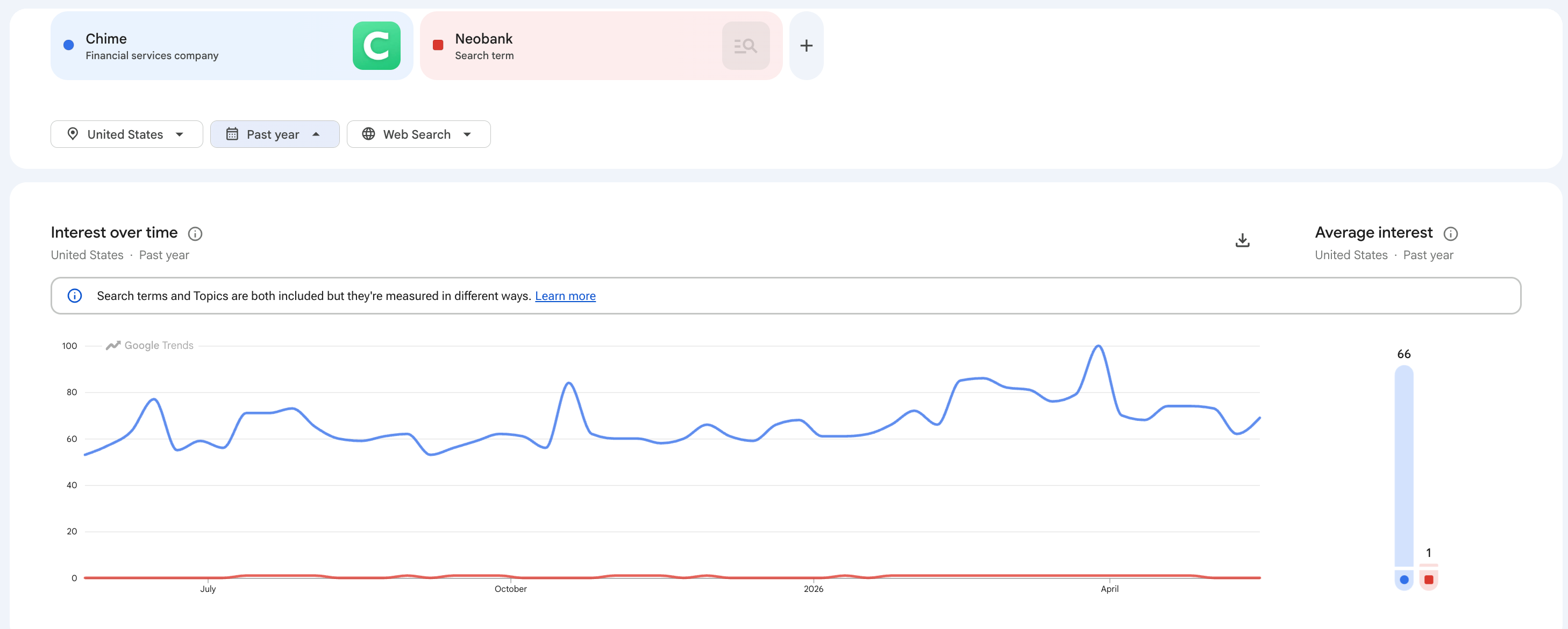
Google Trends shows Chime at search stability. People look it up when they need it. The discovery phase is over. The “neobank” category label is flat to declining, and consumers identify with specific brands now, not category labels. YouTube data shows “It’s a whole new Chime” (two weeks old at the time of this research, 854 views) running alongside active casting calls.
Chime is mid-pivot.
The Momoa era appears to be cycling out before the trade press has even finished analyzing it.
And that practitioner silence is the most significant signal of all.
The Adweek CMO panel featuring Chime’s marketing leadership: 48 views.
Basically nothing.
The Tatari case study on Chime’s TV strategy: 101 views. Both under the 500-view threshold that marks uncrowded analytical territory. When credible practitioners are covering a topic and nobody is watching, the framing window is open. Over the next 6–12 months, 2–3 direct competitors will run celebrity banking campaigns of their own.
The analytical framing of this pattern will get crowded fast. First mover in that framing owns the territory.
This issue is that move.
The Signal: the mirror Chime is holding up, and why their best customers aren’t looking
But here’s what the data can’t show, because the question was never asked.
Chime’s existing users chose the product because they were already right about something. Traditional banks were extracting from them. Chime gave them proof they’d been right to be skeptical. The Momoa campaign holds up an aspirational mirror: people like you, savvy and financially confident, bank with Chime.
But that’s a different identity than the one Chime’s existing base chose when they signed up. They came for pragmatic vindication.
The mirror reflects who they might want to be. The real question is whether they want to become someone new, or whether they want confirmation they were right all along.
Signal collection found the Reddit gap that makes this concrete.
r/personalfinance’s top Chime posts of the past year: account security incidents, financial hardship narratives, “I want to move on from Chime” threads. Zero posts engaging with the Momoa campaign, celebrity creative, or “Bank Smarter.” The brand aspiration and the consumer reality are operating in completely separate conversations.
And buried in Meta Ad Library URL patterns (invisible to every analyst and trade publication), Chime is quietly running paid ads for a subscription tier called Chime Prime: direct-deposit loyalty benefits, higher savings APY, cash-back rewards. No announcement. No coverage. Just ads running.
If Chime Prime is what it appears to be, the Maturation Pivot is a business model transition. The Momoa campaign is the surface layer.
The Keystone: why the best acquisition campaign in neobank history is solving the wrong problem
The single decision that restructures everything else.
Before the creative brief, before the talent search, before the media buy ask
Is this an acquisition problem or a depth problem?
Acquisition problems require aspiration: introducing new audiences to an identity they could step into with your brand. Depth problems require vindication: meeting existing believers at the identity they already chose and asking them to complete it.
These demand opposite campaigns. Running aspirational acquisition creative against a depth problem is one of the most expensive mistakes in brand strategy. You attract new users into the same shallow behavioral pattern you’re trying to escape. The existing believers, the ones who already understand the premise and made the pragmatic choice, don’t see themselves in the mirror you’re holding up.
Chime’s Momoa campaign is excellent acquisition creative. It does exactly what it was designed to do. But the revenue unlock sitting inside the existing user base requires a different kind of mirror entirely. The mirror that works there says: you were right about banks. Here’s what going all the way actually looks like.
Chime can’t say that yet. The Reddit conversation (the security incidents, the hardship posts, the starter-bank churn) means the product experience at depth doesn’t yet support the full commitment ask. The Maturation Pivot, for Chime, is unfinished.
Chime Prime might be how they finish it. We’ll find out when the announcement lands.
The forward forecast: What will happen with this pattern?
The Maturation Pivot is a growing pattern. It has been proven across multiple decades and four industries. Most categories have not reached this moment yet. The window to move first is still open.
Here is where the data points.
The most likely scenario: fintech competitors run celebrity campaigns in 2026
Three independent signals point here.
First, the neobank category is losing its search identity. The category label “neobank” has gone flat to declining in search. Searches for Chime, Cash App, and SoFi specifically are growing. When a category label fades and brand searches rise, the competition has shifted. Features have stopped differentiating. Identity has started.
Second, Chime’s playbook is now visible. The Adweek CMO panel and the Tatari case study on Chime’s TV strategy are both public. Both sit under 100 views at the time of this research. Every agency with a fintech client can access them. The first-mover advantage on this strategy has a short shelf life.
Third, Cash App, SoFi, and Ally each carry the same conditions Chime had before the Momoa campaign. Proven product. Improving unit economics. Investor pressure to show a durable brand story.
My call: two to three of Chime’s direct competitors launch celebrity-driven brand campaigns in the second half of 2026. The analytical framing of this pattern gets crowded when they do. Right now, every credible practitioner source I found on this sits under 500 views. That is the window. First mover in that framing owns the territory.
The emerging signal: SaaS brands follow next
Two signals, not three. Consider this a watch, not a call.
The structural conditions in SaaS today match fintech six months ago. AI-generated content is flooding every category. Feature advantages are compressing faster than brand investment is following. Duolingo’s owl character and Notion’s creator-partnership model are early indicators that the pattern is crossing into software.
The confirmation event is specific. If a B2B SaaS brand runs non-functional creative at a major moment in the first half of 2026, the pattern has crossed categories.
What I am watching but cannot call yet
One signal sits in the Meta Ad Library. Chime is running paid ads to a URL with “prime” in the path. The ads point to a subscription tier with direct-deposit loyalty benefits, higher savings rates, and cash-back rewards. No announcement. No coverage. Just ads running.
One signal is not enough to confirm this. It is enough to watch.
If Chime Prime launches publicly, the interpretation of the Maturation Pivot changes. The Momoa campaign was the acquisition layer for a tiered membership model. The playbook for challenger brand IPOs rewrites from there.
What would change this assessment
If Chime’s competitors report performance-only creative through Q4 2025, the case for celebrity campaigns in fintech weakens. Investors may not be pushing for brand investment the way I am projecting. If no major B2B SaaS brand runs non-functional creative in the first half of 2026, the SaaS timeline slides to 2027. If Chime Prime goes public before Q3 2026, everything under the third signal above becomes the headline story.
Tracked call, May 2026. Pattern: The Maturation Pivot, growing. Primary direction: two to three fintech competitors run celebrity campaigns by Q4 2026. Confidence: high. Review date: August 2026.
Watch the breakdown
If this landed for you
The Signal Architect’s build is the read that arrives before the headline does. Every issue is one campaign: the pattern, the proof, the failure cases, and the forward hypothesis the category won’t name for another quarter.
If a colleague is asking “should we invest in brand or performance right now?” this issue is worth forwarding.
And if you’re watching a campaign in your category that deserves this kind of analysis, hit reply. The best issues often start with someone asking “did you see what [brand] just did?”
The acquisition-vs-depth diagnostic didn’t exist in your vocabulary an hour ago. Now it does. That’s what Signal Architects carry into the room that everyone else leaves outside.
See you next issue.
— Matt
