
The Strategy Signal — About
You’re flying blind on your next client pitch.
You have the experience. You have the instincts. But when a client asks what is working right now, you’re pulling from memory, gut feel, and whatever showed up in your LinkedIn feed last Tuesday.
That’s the gap. Marketing leaders, fractional CMOs, agency strategists: you are expected to walk into every room with a current, cross-industry read on what is actually moving the needle.
And the honest answer is: who has time to do that research?
I do.
Every week, I spend 7+ hours breaking down one real campaign. You get the mechanics, verified metrics, a named pattern and a client-ready checklist — all in under 10 minutes
What each issue covers
One campaign autopsy with verified numbers.
The high-level strategic pattern, named and made transferable. Cross-industry proof showing the same mechanic at work in completely different sectors. A failure analysis showing exactly where the approach fell apart. A 90-day to 12 month forecast of where the strategy is heading and which industries will feel it first. And a checklist you can bring to your next strategy session.
Past breakdowns have covered campaigns from WhatsApp, Under Armour, Liquid Death, Nike, and Chime, all within the last two months, so the metrics have had time to mature.
Who this is for
Marketing leaders who work with clients.
Fractional CMOs.
Agency strategists.
VPs running multiple brands.
People who need to walk in prepared, with a cross-industry read built from actual marketing intelligence research.
If clients call you for a strategic recommendation by Thursday, this is your Monday morning briefing.
Why I built this

I’m Matt Heyn.
In 2024, I was looking for balance.
20 years of bedside work such as grief, crisis, dying which had given me one kind of intelligence. I wanted something for the other side of my brain. I got into ghostwriting. I graduated from the Premium Ghostwriting Academy. I wrote educational email courses for clients, landed two of them within 5 months, and realized I could sell ($18k payout that month). 2 companies asked me to represent them. One I turned down.
The other became an invitation to build an agency.
What surprised me was the part I liked best. Not only the writing. The research.
Specifically: going deep into one market. A single industry, a single campaign, a specific competitor set and staying there until something surfaced that the surface data wasn’t showing. Doing that gives me the same feeling I got in graduate school, sitting with a Hebrew text or a passage of Greek poetry and working it until the structure underneath the structure became visible. The same dopamine. The same sense of connection when the research stops being information and starts being insight.
The methodology is actually the same.
For the past 6 years I’ve used Zettelkasten — Nicholas Luhmann’s method of note-taking, popularized in Sönke Ahrens’ How to Take Smart Notes. Physical three-by-five cards. Deep reading. Notes that connect to other notes. The ideas spread across a table, and I look for what goes together. I used this method working through theological texts. I use it now working through marketing data.
The platform changed. The process didn’t.
When I started covering campaigns for The Strategy Signal, I noticed I kept arriving at the same kind of finding: the data was showing one thing, but the real driver was something underneath the data. The E.l.f. Skin sunscreen campaign had ten million views in the first week. The rational read was: they made a funny video. But the signal underneath was something I recognized. Sixty-four percent of Gen Z skips sunscreen even though they follow dermatologists on TikTok and know their SPF numbers. Logic wasn’t the missing variable. Psychological resistance was.
I wrote this in the issue:
People cannot receive serious information until you’ve first established that you understand their world. Walk into a room with a clipboard and a checklist and the conversation closes before it opens. Sit down, look around, ask about the photograph on the windowsill. The serious things get said. But they get said on the person’s terms.
I wrote that about E.l.f. But I learned it in a hospital room.
That’s the connection for me.
The chaplain’s job and the market analyst’s job are structurally the same: you sit with a specific reality — a patient’s world, a category’s dynamics — without a predetermined conclusion, long enough for what’s actually happening to show up. You learn to distinguish what the data shows from what you want it to show.
You hold the conflicting signals until the pattern becomes visible.
Most market analysis works backward from the conclusion. I was trained to work forward from the evidence.
The tools I use are current. The underlying method is 25 years old. That’s not something a platform or an AI can replicate — the patience to sit with complexity and the discipline not to resolve it too early.
I build content strategies for executives using a therapeutic interview process, 45 minutes of deep-listening conversation that surfaces expertise most people don’t realize they’re sitting on. That same instinct for seeing hidden patterns drives how I research campaigns for The Strategy Signal.
If working together interests you, you can see how here. [Work With Me page]
With the research process I try to be transparent.
Signal collection starts with 5 platforms — Google Trends, TikTok Creative Center, YouTube, Reddit, and Meta Ad Library, mapped against the campaign before a single LLM is opened. That pass surfaces what's rising, what's declining, and where the anomalies are. From there, three LLMs cross-reference across three research phases. Every metric is verified against primary company sources and industry reporting.
Roughly 25–50 relevant only sources per issue across 4+ industry verticals.
I show my work because the process is part of the value.
Subscribe: Here’s what you get
Free — Always
The full issue, every week. No paywall on the core content.
1 campaign breakdown per week — mechanics, named strategy pattern, cross-industry proof where it succeeded, failure analysis (2-3 campaigns where it failed), + a 90-day forecast, and a client-ready checklist
YouTube deep dive for each issue, posted to Substack (not emailed) when you want to go deeper without reading
Reader’s Digest twice a month — newsletters and resources worth your attention, curated for fractional CMOs and senior marketing strategists
Paid — $20/month or $180/year ($15/month)
Everything in Free, plus the application layer for client work.
Pattern Lab — bring real client situations and work through them with practitioners facing the same problems
Client-ready strategy decks — every breakdown formatted for client meetings, with access to the full archive of every issue
Annual Signal Report — full-year retrospective of every pattern covered and where the market is heading
Signal Architect Founder — $300/year
Everything in Paid, plus three things exclusive to founding members.
Founding rate locked permanently, even as the price increases
All future courses included at no additional cost — as the course library grows, founding members have access to everything
First access to The Signal Forecaster at launch — a tool that takes any client brief and matches it to a proven campaign pattern, with cross-industry applications, failure modes, and a 90-day forecast included
If you’re still reading…Here’s Two free resources
1. The Signal Forecaster — Join the Waitlist
A tool built for one thing: take any client brief and match it to a proven campaign pattern — with cross-industry applications, failure modes, and a 90-day forecast of whether the strategy holds.
It’s in development. Founding members get first access at launch. Everyone else can join the waitlist now.
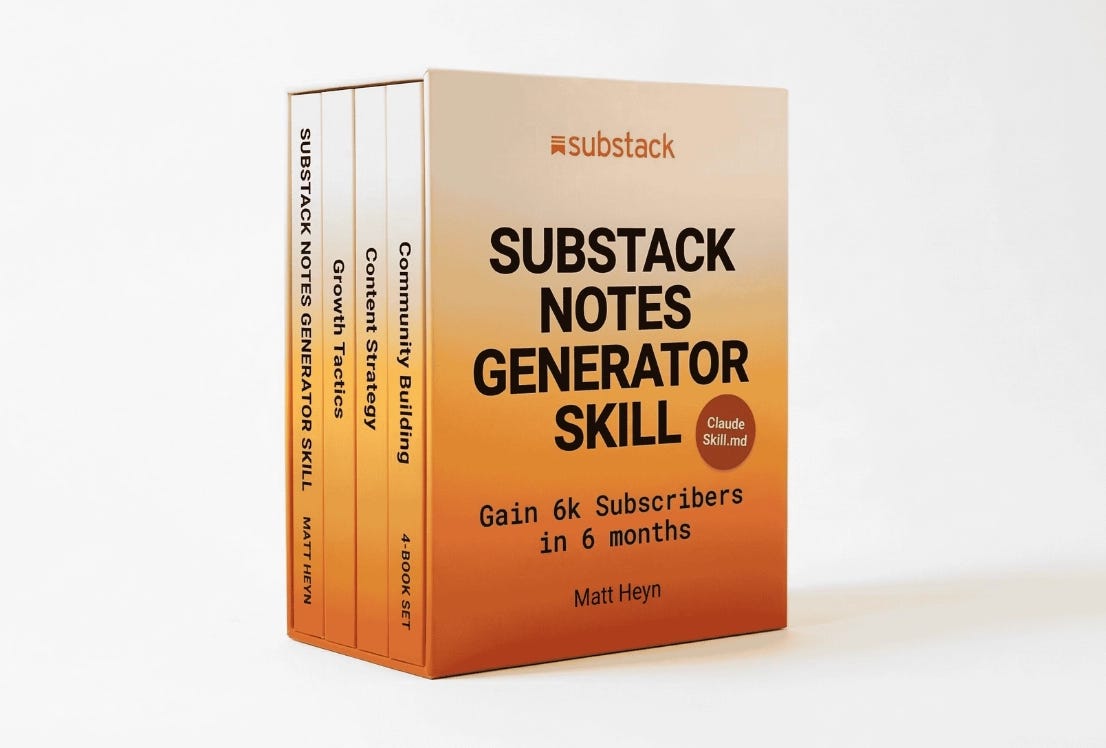
2. The Substack Notes Cowork Skill.
Have you had trouble setting up Claude Cowork?
Tired of endless approaches at writing Substack notes?
Well this does both.
It’s sets your Claude Cowork up so you can build out skills and it gives you the methodology behind 6,000+ subscribers in under six months, compressed into a downloadable skill with 8 Note templates, 5 structural formats, a weekly interview process, and a full posting cadence.
And for my account? It’s given me an average of 4 new subscribers per day since March 17 2026.
Get the Substack Notes Cowork Skill and grow→
Where to start reading?
if you like where this is going and you’d like to know the best issues so far, here are the most popular posts
Under Armour got this right in 2021. By 2025, they'd forgotten why.

In 2021, Under Armour had a new shoe ready, the Flow Velociti Wind.
The Brand That Owned The Hangover, Not The Party

How Coors Light beat the Super Bowl by skipping it
